


Trump Unveils Kennedy Center Renovation Plans: A Controversial Makeover of Washington’s Premier Arts Venue
A First Look at the Redesigned Exterior
President Trump took to social media this Friday to share what Washington’s iconic Kennedy Center will look like after its ambitious two-year renovation project. The images, posted as renderings on Truth Social, offer the public their first glimpse of the planned transformation of one of the nation’s most prestigious performing arts venues. While the announcement generated considerable buzz, the visual changes appear surprisingly subtle at first glance. The building’s fundamental design and layout remain largely intact, suggesting a renovation focused more on preservation and modernization rather than radical reimagining. This approach seems consistent with the President’s earlier statements that he has no intention of completely demolishing the structure. The renovation timeline remains set for completion in 2028, with the center scheduled to close its doors on July 4th of this year for the duration of the project.
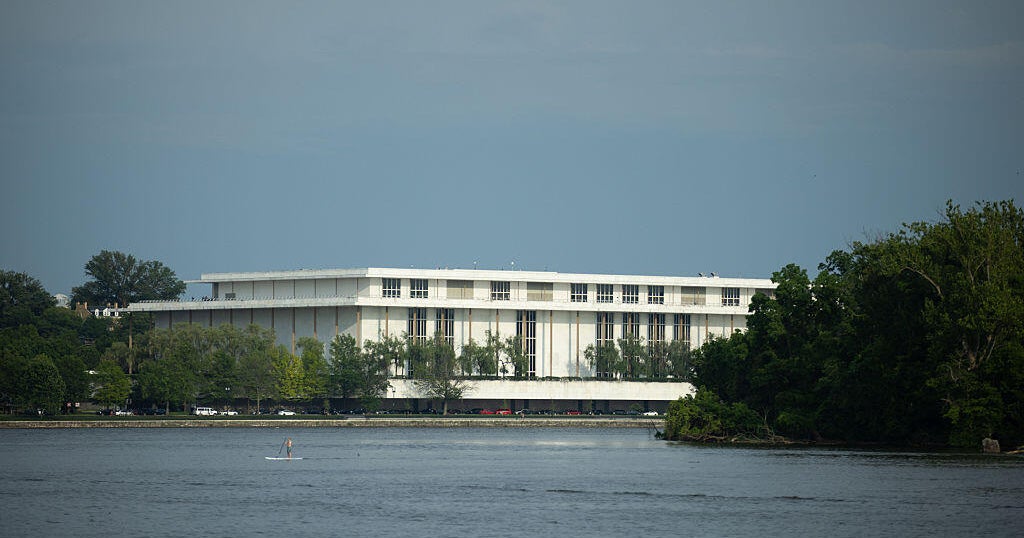
The Kennedy Center has stood as a cultural landmark along the Potomac River for decades, hosting countless world-class performances and serving as a living memorial to President John F. Kennedy. This upcoming renovation represents one of the most significant undertakings in the building’s history, and naturally, it has become a focal point for both arts enthusiasts and political observers alike. The fact that President Trump himself is personally involved in releasing these renderings and discussing the project’s details signals just how important this renovation has become, not just as a construction project, but as a statement about the administration’s priorities and vision for American cultural institutions.
The Details: What’s Changing and What’s Staying
According to the renderings and President Trump’s statements, the exterior modifications will be more understated than some might have expected. One of the most noticeable changes involves the landscape surrounding the building. The willow trees that have graced the terrace overlooking the Potomac River for years—trees that became almost synonymous with the center’s elegant riverside setting—were removed last year and won’t be returning. In their place, cherry blossom trees will be planted, adding a distinctly Washington touch to the venue. These iconic trees, which draw millions of visitors to the nation’s capital each spring, will now frame the Kennedy Center as well, potentially creating stunning seasonal vistas that blend the building more harmoniously with the city’s most beloved natural attractions.
Another visible change already completed before the major renovation even begins is the transformation of the building’s columns from gold to white. This alteration, finished last year, gives the structure a cleaner, more classical appearance that some architectural critics suggest better reflects the building’s marble exterior. The renderings show how this color change integrates with the overall aesthetic of the renovated building. President Trump has been vocal about his approach to the project, emphasizing cost-consciousness and practical reuse of existing materials. He’s made it clear that the building’s steel framework will be retained and that much of the existing marble will be preserved. “I’m not ripping it down. I’ll be using the steel, so we’re using the structure,” he explained in a statement last month, addressing concerns that the renovation might result in the loss of the original building’s character and historic integrity.
The scope of work, while preserving the structure, is still substantial. Plans include installing a completely new roof, replacing portions of marble that have deteriorated over time, and addressing grout issues that have developed throughout the building’s lifetime. The terrace area, which dramatically extends over Rock Creek and Potomac Parkway toward the river, will also see modifications, though specific details about these changes remain somewhat vague. President Trump has projected the total cost at approximately $200 million, which would actually come in under the $250 million budget that Congress authorized for the renovations last year. This fifty-million-dollar savings, if achieved, would represent a significant fiscal accomplishment and align with the administration’s stated goal of completing government projects under budget.
The Controversy: A Name That Sparked Outrage
Beyond the physical renovations themselves, the Kennedy Center has become embroiled in political controversy that has nothing to do with construction plans or architectural aesthetics. Last December, in a move that sent shockwaves through Washington’s political and cultural communities, President Trump’s name was added in large letters above “The John F. Kennedy Memorial Center for the Performing Arts” on the building’s facade. This wasn’t a subtle addition—the lettering was prominent and impossible to miss, fundamentally altering how the building identified itself to the world. The change came after a vote by the institution’s board of trustees, many of whom had been appointed by President Trump himself, raising immediate questions about conflicts of interest and the appropriateness of the decision-making process.
What made this name change particularly inflammatory was that it proceeded without authorization from Congress. The Kennedy Center, while independently operated, receives federal funding and was established through an act of Congress as a living memorial to President Kennedy. Many legal scholars and politicians argued that such a significant alteration to the building’s identity should require congressional approval, especially given the center’s status as a presidential memorial. The reaction was swift and fierce. Democratic lawmakers condemned the move as an inappropriate politicization of a cultural institution that was meant to transcend partisan politics. Perhaps even more significantly, members of the Kennedy family themselves spoke out against the decision, viewing it as disrespectful to President Kennedy’s legacy and an unwelcome intrusion on a memorial specifically created to honor his memory and his support for the arts.
The controversy touches on larger questions about presidential power, institutional independence, and the appropriate role of politics in cultural spaces. Critics argue that adding a sitting president’s name to a memorial dedicated to a former president sets a troubling precedent and transforms what should be a nonpartisan cultural venue into something that appears to bear a political endorsement. Supporters of the change, however, contend that President Trump’s involvement in securing funding for the renovation and his interest in improving the facility justify the recognition. Regardless of where one stands on the issue, the name controversy has certainly overshadowed discussion of the actual renovation plans in many circles, turning what might have been a straightforward infrastructure project into a flashpoint for broader political and cultural debates.
A Venue in Crisis: The Performance Cancellations
The renovation announcement and subsequent closure come at a particularly challenging time for the Kennedy Center, as the venue has experienced a wave of high-profile performance cancellations. While the specific reasons for these cancellations haven’t been fully detailed in public reports, the timing has been noted by observers as significant. Some speculate that artists and performing companies may be making decisions based on the political controversies surrounding the building, including the name change. Others suggest that the uncertainty surrounding the renovation timeline and the impending closure may be making it difficult to schedule performances, as companies plan their tours and seasons years in advance.
Whatever the causes, the cancellations represent more than just empty seats—they signal a potential crisis of confidence in the institution itself. The Kennedy Center has long been considered one of the world’s premier venues for performing arts, hosting opera, ballet, theater, symphony orchestras, and contemporary music acts that draw audiences from across the country and around the globe. If performers begin to view the venue as politically charged or if logistical complications make scheduling difficult, the center’s reputation and its ability to attract top-tier talent could suffer long-term consequences. The two-year closure, while necessary for the renovations, will only compound these challenges. During this period, the center will be essentially absent from the cultural life of Washington, D.C., potentially allowing other venues to fill the void and establish themselves as alternatives in the minds of both performers and audiences.
The Kennedy Center’s leadership faces the delicate task of maintaining relationships with artists, patrons, and donors during this turbulent period while also navigating the political sensitivities that have emerged. When the center reopens in 2028, it will need to rebuild not just its physical structure but potentially its reputation and its network of artistic partnerships. The success of the renovation project will ultimately be measured not just by whether it comes in on time and under budget, but by whether the Kennedy Center can reclaim its position as a welcoming, world-class venue that attracts the finest performers and most enthusiastic audiences. The stakes are high, both for the institution itself and for Washington’s broader cultural landscape.
Looking Ahead: What 2028 Will Bring
As we look toward the Kennedy Center’s projected reopening in 2028, many questions remain unanswered. Will the renovated facility succeed in attracting the caliber and variety of performances that made it famous? Will the political controversies surrounding the name change continue to cast a shadow over the institution, or will time and the impressive renovated space help the center move past these disputes? Will President Trump’s projection of a $200 million cost prove accurate, or will the project encounter the kind of delays and budget overruns that plague many large-scale construction efforts? These uncertainties make it difficult to predict exactly what the Kennedy Center will represent when it reopens—whether it will be celebrated as a successfully modernized cultural institution or remain controversial due to the circumstances surrounding its renovation.
The two-year closure itself will be a test for Washington’s cultural community. Other venues will need to step up to accommodate performances that might have been scheduled for the Kennedy Center. Audiences will need to adjust their habits and explore different spaces. And the Kennedy Center’s staff and leadership will need to stay connected with their stakeholders despite not having an active venue to showcase. When July 4th arrives and the doors close for renovations, it will mark the beginning of a transformative period not just for one building but for the entire arts ecosystem of the nation’s capital. The renderings released by President Trump offer a glimpse of what the exterior will look like, but they can’t capture the full story of what this renovation represents—a convergence of art and politics, preservation and change, tradition and controversy. Only time will tell whether the reopened Kennedy Center in 2028 will be remembered as a successful restoration of a beloved institution or as a cautionary tale about the mixing of politics and culture.