


Cardano Founder Opens Up About Billions in Crypto Losses During Market Downturn
A Founder’s Transparent Moment in Crisis
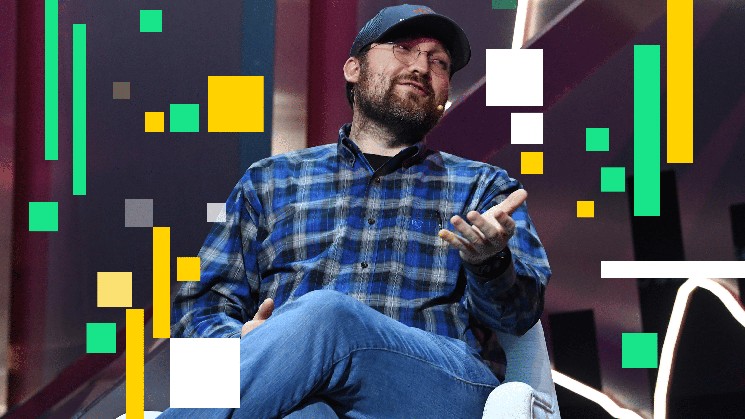
In an unprecedented display of transparency, Charles Hoskinson, the visionary behind Cardano (ADA), recently shared something most cryptocurrency founders would never publicly admit: he’s currently sitting on more than $3 billion in unrealized losses. Speaking candidly from Tokyo during a live broadcast, Hoskinson addressed his community at a time when the entire cryptocurrency market was experiencing significant turbulence. His revelation came during a particularly brutal week for digital assets, with Bitcoin plummeting to approximately $60,000—a staggering 16% decline—while Cardano itself shed 15.6% of its value. The broader cryptocurrency market, as measured by the CoinDesk 20 index, wasn’t faring any better, dropping 17% as investors grappled with forced liquidations and widespread panic selling. Rather than hiding behind corporate statements or remaining silent, Hoskinson chose to meet the moment with raw honesty, offering his followers and the broader crypto community a rare glimpse into the personal financial stakes he has in this revolutionary technology.
Debunking the Myth of Insulated Founders
Hoskinson’s decision to reveal his substantial losses wasn’t made in a vacuum. It was a deliberate response to a persistent narrative in the cryptocurrency world—the belief that founders and early adopters are somehow insulated from the financial pain that regular retail investors experience during market downturns. This perception has long created a divide between those who built blockchain projects and those who invest in them, with many everyday investors assuming that the wealthy creators of these platforms can weather any storm without feeling real consequences. By sharing his $3 billion figure, Hoskinson directly confronted this assumption, making it clear that his financial exposure dwarfs what most people watching his broadcast would ever experience in their lifetimes. “I’ve lost more money than anyone listening to this. Over $3 billion now. It would’ve been real easy to cash out, just walk away,” he stated plainly, acknowledging that he had ample opportunity to exit his positions at higher valuations but chose to remain committed to his vision regardless of personal financial consequences. This admission humanized a figure who might otherwise seem distant from the concerns of ordinary cryptocurrency holders, reminding everyone that even billionaires feel the sting of market corrections.
Principles Over Profits: A Different Kind of Crypto Leader
What made Hoskinson’s comments particularly striking wasn’t just the astronomical sum he’s lost on paper, but his philosophical approach to wealth and success in the cryptocurrency industry. In remarks that took direct aim at the scandals that have plagued the crypto world, he drew a sharp distinction between his approach and that of disgraced figures in the space. “Do you think I honestly care if I lose it all? There’s a reason I’m not in the Epstein files, there’s a reason I didn’t get rolled up in FTX,” Hoskinson declared, referencing both the late Jeffrey Epstein’s connections to various tech and finance figures and the spectacular collapse of the FTX exchange under Sam Bankman-Fried. His point was clear: his refusal to chase wealth at any cost or to compromise his principles for access to power circles has kept him clear of the ethical quagmires that ensnared others. “It’s not because no one likes me, it’s because my default answer is no. I don’t care if I lose money, I don’t care if it means I get put in the little kids’ table and I don’t get to go to the White House and all of these other things,” he continued, painting a picture of someone who values integrity over influence and long-term vision over short-term gains.
The Long Game: Building Beyond Market Cycles
Throughout his address, Hoskinson consistently redirected attention from immediate price action to the larger mission of building sustainable blockchain infrastructure. Rather than dwelling on the painful losses or attempting to predict when prices might recover, he framed the current situation as just another chapter in cryptocurrency’s ongoing evolution. This perspective reflects a fundamental difference in how builders and speculators view the same market movements—while traders see volatility as opportunities for profit or reasons for panic, true believers in the technology view these cycles as natural growing pains in a revolutionary transformation of global financial systems. Hoskinson compared the current downturn to a difficult journey where “every foot forward on that difficult road” represents meaningful progress, regardless of what token prices might suggest on any given day. He emphasized that his commitment to Cardano and the broader blockchain ecosystem isn’t contingent on favorable market conditions or personal enrichment. “I’m here for life, this is who I am and is always going to be who I am,” he stated with conviction, making it abundantly clear that his identity and purpose are intertwined with the technology he’s helping to develop rather than the wealth it might generate.
Viewing Crisis as Transition, Not Catastrophe
Where many investors saw the week’s market carnage as potentially catastrophic, Hoskinson offered a completely different interpretation. He characterized the selloff not as a sign that cryptocurrency has failed or that blockchain technology is fundamentally flawed, but rather as a transitional period—a necessary adjustment as traditional financial systems slowly adapt to incorporate new technological capabilities. This reframing is crucial because it shifts the conversation from “is crypto dying?” to “how are existing systems evolving to accommodate this innovation?” In Hoskinson’s view, the volatility and pain currently being experienced aren’t indicators of terminal decline but rather symptoms of an ongoing transformation that will inevitably reshape how financial infrastructure operates globally. He made clear that he has absolutely no intention of exiting his positions, viewing his holdings not as speculative assets to be traded but as stakes in projects he genuinely believes will deliver value over the coming years and decades. This perspective stands in stark contrast to the “get rich quick” mentality that has characterized much of cryptocurrency’s retail investor base, offering instead a vision of patient capital committed to fundamental technological advancement regardless of short-term price fluctuations.
Real Projects, Real Progress: Looking Beyond the Noise
To illustrate that meaningful work continues despite market chaos, Hoskinson highlighted specific Cardano-based initiatives that exemplify the type of long-term building he values. He pointed to projects like Starstream and Midnight, which focus on critical applications such as data integrity and privacy-focused solutions—the kind of unglamorous but essential infrastructure that rarely generates headlines but could prove transformative in practical applications. These examples served to remind his audience that while traders obsess over price charts and market sentiment, actual developers are quietly building the systems that could eventually justify and exceed current valuations. By directing attention to these concrete developments, Hoskinson reinforced his central message: that the value proposition of blockchain technology extends far beyond speculative price appreciation and rests instead on the actual utility these networks can provide. His comments suggest a future where Cardano’s worth will be measured not primarily by its token price but by the real-world problems its ecosystem solves, the applications it enables, and the users it serves. This long-term, utility-focused perspective offers a completely different framework for evaluating cryptocurrency projects—one based on technological capability and practical adoption rather than market capitalization and trading volume.