
Iran’s Retaliatory Strikes: A Regional Conflict Unfolds
Widespread Attacks Across Multiple Nations
The conflict between Iran and the United States-Israel coalition has rapidly escalated into a regional crisis, with satellite imagery revealing extensive damage across ten countries in the Gulf region and beyond. What began as coordinated strikes against Iran on Saturday morning quickly triggered a massive retaliatory response from Iran and its proxy forces. The scale and scope of these counterattacks demonstrate Iran’s capability to project power across the Middle East, targeting primarily American military installations and strategic infrastructure throughout the region. Advanced satellite technology from companies like Planet Labs and Vantor has provided clear visual evidence of the destruction, allowing news organizations and analysts to verify the extent of the damage inflicted during the opening days of this dangerous new conflict.
Devastating Damage to U.S. Naval Command in Bahrain
Among the most significant targets hit was the U.S. Fifth Fleet headquarters located in Manama, Bahrain, which serves as a critical command center for American naval operations throughout the Persian Gulf and surrounding waters. Satellite imagery captured just one day after the initial strikes revealed shocking destruction at this vital military installation. Several large buildings within the complex were completely destroyed, while two important satellite communications terminals were also taken out of commission. These communication facilities are essential for coordinating naval operations across the region, making their destruction particularly concerning for U.S. military planners. The damage occurred during the first wave of retaliatory strikes on Saturday, with the full extent becoming visible in satellite images taken on Sunday morning. Adding to the assault on Bahrain, the country’s Interior Ministry reported that same evening that a drone had struck the port facility located approximately half a mile from the naval base, suggesting a coordinated effort to disrupt both military and civilian infrastructure in the area.
Multiple U.S. Bases in Kuwait Sustain Significant Hits
Kuwait, another crucial host nation for American military forces in the Gulf region, also came under sustained attack from Iranian missiles and drones. The Ali Al Salem Air Base, which houses significant numbers of U.S. troops and aircraft, suffered visible damage that was clearly documented in satellite imagery captured on Sunday. Multiple buildings across the sprawling base complex showed unmistakable signs of being struck by projectiles, with damage ranging from minor impacts to substantial destruction. The attacks weren’t limited to just one installation in Kuwait—analysis conducted by ABC News’ Visual Verification team using lower-resolution satellite imagery from Planet Labs indicated that at least two other major facilities hosting American personnel also sustained damage. Camp Buehring and Camp Arifjan, both important logistical and support bases for U.S. operations in the region, were among those affected. The ability of Iranian forces to successfully strike multiple dispersed targets across Kuwait demonstrates both the sophistication of their targeting capabilities and the challenges facing air defense systems trying to intercept hundreds of incoming threats simultaneously.
The United Arab Emirates Faces Massive Assault
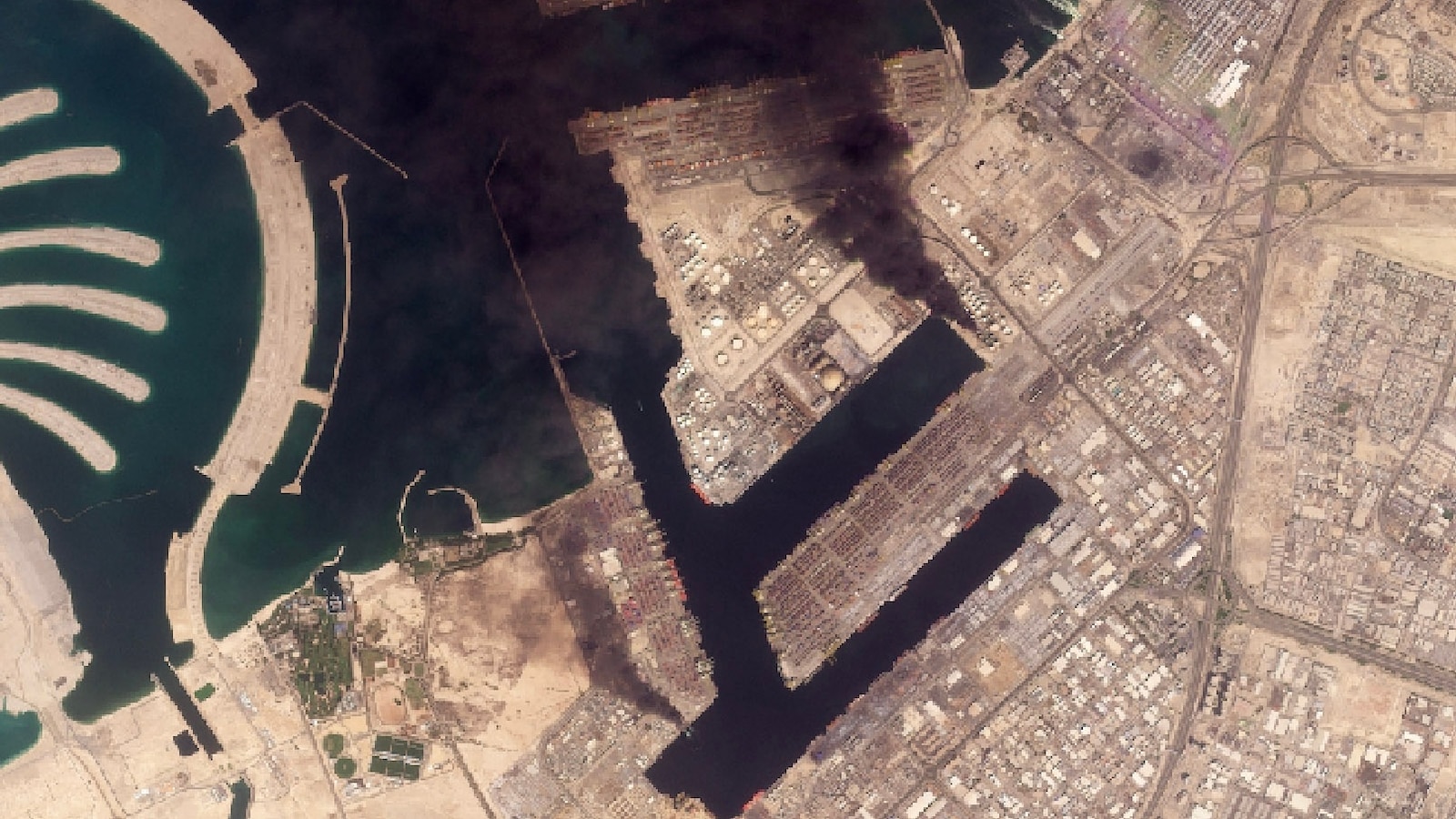
The United Arab Emirates experienced perhaps the most intense bombardment of any country in the region, facing what officials described as an overwhelming wave of aerial attacks. According to statements from the UAE’s Ministry of Defense, the country was targeted with an astonishing 165 ballistic missiles, two cruise missiles, and 541 drones during the initial phase of the conflict. While the ministry claimed that the majority of these weapons were successfully intercepted by the country’s air defense systems, some clearly got through, causing significant damage to civilian and commercial infrastructure. Satellite imagery captured fires burning at the strategically important Jebel Ali Port in Dubai, one of the largest and busiest container ports in the world. Any disruption to operations at this facility has immediate implications for global shipping and commerce, as it serves as a critical hub connecting trade routes between Asia, Europe, and Africa. Beyond the port, additional fires were documented in Sharjah, located north of Dubai, indicating that the attacks spread across multiple emirates. Dubai’s government media office confirmed that numerous drones had struck several hotels throughout the city, deliberately targeting the tourism and hospitality sector that forms a cornerstone of the emirate’s economy.
Saudi Arabia’s Critical Oil Infrastructure Under Fire
Saudi Arabia, the world’s largest oil exporter, saw its most vital energy infrastructure come under direct attack when Iranian drones targeted the Ras Tanura refinery on Monday. This massive facility is not only Saudi Arabia’s largest refinery but also ranks among the largest petroleum processing plants anywhere in the world, making it a target of enormous strategic significance. Satellite imagery from the commercial satellite company Vantor documented fires burning at the sprawling refinery complex following the drone strikes. The Saudi Defense Ministry issued a statement acknowledging the attack, claiming that two drones attempting to strike the facility were intercepted and destroyed before reaching their intended targets. However, the ministry explained that the explosion of these drones during the interception process caused shrapnel to rain down on nearby areas, including civilian facilities and populated neighborhoods. According to the Saudi account, it was this falling debris from the successful interception—rather than a direct drone impact—that sparked the fires visible in the satellite imagery. Regardless of the specific mechanism, the attack on Ras Tanura represents a direct threat to global energy supplies and demonstrates Iran’s willingness to target the economic lifelines of its regional rivals.
The Broader Implications and Humanitarian Concerns
This rapidly escalating conflict represents a dangerous new chapter in Middle Eastern tensions, with satellite imagery providing an unprecedented window into the scale of destruction unfolding across the region. The fact that ten different countries have experienced attacks highlights how a conflict involving Iran, the United States, and Israel can quickly engulf the entire Gulf region, affecting nations that may have preferred to remain neutral. The targeting of both military installations and civilian infrastructure—from naval bases to hotels, from military airfields to commercial ports—blurs the lines between military and civilian targets in ways that raise serious humanitarian concerns. The international community now faces urgent questions about how to prevent further escalation, protect civilian populations, and safeguard critical global infrastructure like shipping routes and energy facilities. The advanced satellite technology that has documented this destruction also serves as a reminder that modern conflicts unfold under unprecedented scrutiny, with commercial satellite operators able to provide near-real-time imagery that can verify claims, counter propaganda, and hold all parties accountable for their actions. As this conflict continues to develop, these eyes in the sky will remain crucial tools for understanding the true cost of war in the twenty-first century.