

Trump’s Cryptocurrency Venture and the Controversial Abu Dhabi Deal: What You Need to Know
The Bombshell Deal That’s Shaking Washington
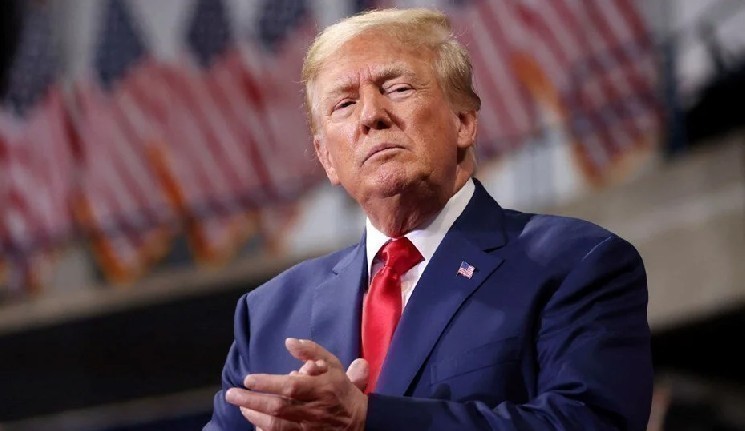
President Donald Trump’s foray into the cryptocurrency world has taken a dramatic turn with revelations about a massive financial deal involving his digital asset project, World Liberty Financial (WLFI). The controversy centers around an agreement reportedly struck between Trump’s family and Sheikh Tahnoon bin Zayed Al Nahyan, a powerful member of Abu Dhabi’s royal family who oversees approximately $1 trillion in assets. According to reports from the Wall Street Journal, this deal was finalized just four days before Trump’s inauguration, raising serious questions about potential conflicts of interest and the blurring lines between private business ventures and presidential responsibilities. The timing of this agreement, combined with its massive financial scope and the involvement of foreign royalty, has ignited a firestorm of debate in political circles and among ethics watchdogs who are scrutinizing whether proper protocols were followed.
The agreement itself is staggering in its scale and implications. Sheikh Tahnoon, acting through his investment vehicle Aryam Investment, allegedly acquired a substantial 49 percent ownership stake in World Liberty Financial for a total valuation of $500 million. What makes this particularly noteworthy is not just the enormous sum involved, but the structure of the deal and who negotiated it. According to sources, the discussions and final agreement were handled by Eric Trump, one of the president’s sons who has been actively involved in managing the family’s business interests. This arrangement appears to follow a pattern established during Trump’s previous administration, where his children took on prominent roles in managing the Trump Organization while their father served as president, though critics have consistently questioned whether such arrangements truly create the necessary separation between government duties and private profit.
Trump’s Defense and Family Business Operations
When confronted by reporters about the controversial deal, President Trump offered a response that many found insufficient given the magnitude of the transaction. “I don’t know about it. My sons and my family are handling it. I think they’re getting investment from different people,” Trump stated, effectively distancing himself from direct knowledge of the half-billion-dollar agreement. This explanation raises as many questions as it answers, particularly regarding how the sitting president could be unaware of such a significant business deal involving his family name and a foreign government official. The president’s claim of ignorance about the specifics of the World Liberty Financial deal fits a familiar pattern where Trump has consistently maintained that his business affairs are managed separately by his adult children, thereby avoiding direct conflicts of interest. However, critics argue that this arrangement is inherently problematic when the family business continues to operate under the Trump name and potentially benefits from his position as the most powerful person in the world.
The involvement of Trump’s sons in managing these cryptocurrency ventures while their father occupies the Oval Office presents a complex ethical landscape. Unlike traditional business holdings that might be placed in blind trusts during a presidency, the Trump family has chosen to maintain active involvement in their enterprises, with the children serving as both business operators and, at times, informal advisors on various matters. This approach has consistently drawn criticism from ethics experts who argue that foreign investors, governments, and business entities might seek to gain favor with the administration by investing in Trump family ventures. The World Liberty Financial deal exemplifies these concerns perfectly: a foreign government official, whose country regularly deals with the United States on matters of defense, trade, and regional security, has made an enormous investment in a business venture bearing the president’s name and enriching his family members.
Following the Money: Where the $500 Million Went
The financial details of the World Liberty Financial agreement reveal a complex web of payments that extend beyond just the Trump family. According to the Wall Street Journal’s investigation, the deal was structured with half of the $500 million total being paid upfront, amounting to an initial payment of $250 million. The distribution of these funds is particularly revealing and has become a focal point for those questioning the propriety of the arrangement. Of that initial $250 million payment, a substantial $187 million went directly to organizations and entities controlled by the Trump family. This represents nearly 75 percent of the upfront payment going straight into Trump-controlled coffers, a detail that underscores just how financially significant this deal is for the family’s wealth and business empire.
But the Trump family wasn’t the only beneficiary of this massive investment from Abu Dhabi. At least $31 million from the initial payment went to organizations linked to Steve Witkoff and his family. Witkoff’s involvement in this deal is particularly noteworthy because of his dual roles: he’s both a co-founder of the World Liberty Financial cryptocurrency project and, following Trump’s inauguration, he was appointed as the United States Special Envoy for the Middle East. This appointment creates yet another layer of potential conflict, as Witkoff now holds a senior diplomatic position focused on the very region from which his business venture received hundreds of millions of dollars in investment. The fact that someone who financially benefited from a deal with an Abu Dhabi royal is now responsible for shaping U.S. policy in the Middle East has raised red flags among government ethics specialists and members of Congress who are calling for greater transparency and accountability.
The Nvidia Chip Approval and Timing Questions
Perhaps the most troubling aspect of this entire affair, according to critics, is what happened after the World Liberty Financial deal was signed. Following the agreement with Sheikh Tahnoon’s investment company, the United States government approved the sale of hundreds of thousands of advanced Nvidia AI chips to the United Arab Emirates. These aren’t ordinary computer components—they’re cutting-edge artificial intelligence processors that represent some of the most sophisticated technology in the world, with applications ranging from advanced data processing to potential military and intelligence uses. The timing of this approval, coming on the heels of the massive investment in Trump’s family cryptocurrency venture, has raised inevitable questions about whether there was any connection between the private business deal and the government’s policy decision.
Making the situation even more complex is the fact that some of these advanced AI chips were designated for G42, an artificial intelligence company that operates under the leadership of none other than Sheikh Tahnoon himself—the same person whose investment vehicle just purchased half of World Liberty Financial. This creates what ethics experts describe as a circular relationship that’s ripe for conflicts of interest: a foreign official invests heavily in the president’s family business, and shortly thereafter, his country and his own company receive approval for access to restricted American technology. While there’s no direct evidence that the two matters were explicitly linked as a quid pro quo arrangement, the optics are undeniably problematic and have led to calls for investigation from multiple quarters. The approval of such sensitive technology transfers typically goes through rigorous national security reviews, and lawmakers are now questioning whether those processes were properly followed or potentially influenced by the business relationship.
Congressional Concerns and Calls for Accountability
The revelations about the World Liberty Financial deal have not gone unnoticed on Capitol Hill, where members of Congress from both parties have begun expressing serious concerns about the arrangement. Several lawmakers have publicly stated that the deal raises troubling questions about potential conflicts of interest, with some going so far as to use the word “corruption” in describing their concerns about the relationship between the Trump family’s financial gains and U.S. policy decisions affecting the UAE. These congressional critics are calling for investigations, greater transparency, and potentially new legislation to prevent such arrangements in the future. The concern transcends typical partisan divisions because it touches on fundamental questions about how American democracy should function: should the family members of a sitting president be able to accept hundreds of millions of dollars from foreign officials while that president makes decisions affecting those same foreign powers?
The bipartisan nature of at least some of these concerns reflects a broader anxiety about the precedent being set. If a president’s family can actively engage in massive business deals with foreign governments and their representatives while that president is in office, it creates a template for potential corruption that could be exploited by future administrations regardless of political party. Ethics watchdogs have pointed out that most democracies have strict rules preventing exactly these kinds of arrangements, precisely because they create insurmountable conflicts between the public interest and private gain. Some members of Congress are now calling for hearings to examine the full scope of the World Liberty Financial deal, the decision-making process behind the Nvidia chip approval, and whether any laws or regulations were violated. Others are pushing for new legislation that would create clearer boundaries around what family members of presidents can and cannot do in terms of foreign business dealings, recognizing that existing ethics rules may have loopholes that the current situation has exposed.
The Broader Implications for Cryptocurrency and Presidential Ethics
This controversy surrounding World Liberty Financial and the Abu Dhabi investment arrives at a critical moment for both cryptocurrency regulation and presidential ethics standards. The cryptocurrency industry has been pushing for greater legitimacy and mainstream acceptance, and having a president’s family directly involved in a major crypto project was initially seen by some in the industry as potentially beneficial. However, this latest scandal may actually set back those efforts by associating digital assets with potential corruption and conflicts of interest. When the president’s family is seen as possibly using the cryptocurrency space to enrich themselves through deals with foreign powers, it reinforces negative stereotypes about the industry being a haven for questionable activities rather than a legitimate financial innovation. Regulatory bodies may respond by implementing even stricter oversight, and public trust in cryptocurrency projects could be further eroded.
From a presidential ethics standpoint, the World Liberty Financial situation represents a test case for how America will handle conflicts of interest in an era where business, technology, and politics are increasingly intertwined. The traditional approaches to managing these conflicts—blind trusts, divestment, recusal from relevant decisions—appear inadequate when a president’s family chooses to remain actively involved in business ventures that intersect with matters of state. As this story continues to develop, it will likely shape debates about ethics reform, transparency requirements, and the boundaries between public service and private profit for years to come. Whatever one’s political perspective, the fundamental question remains: in a democracy, should those closest to ultimate power be able to profit from relationships with foreign governments, and if such arrangements are to be allowed, what safeguards must be in place to protect the public interest?