

A Teacher’s Brave Stand: Inside Russia’s War Propaganda Machine
The Impossible Choice Between Duty and Conscience
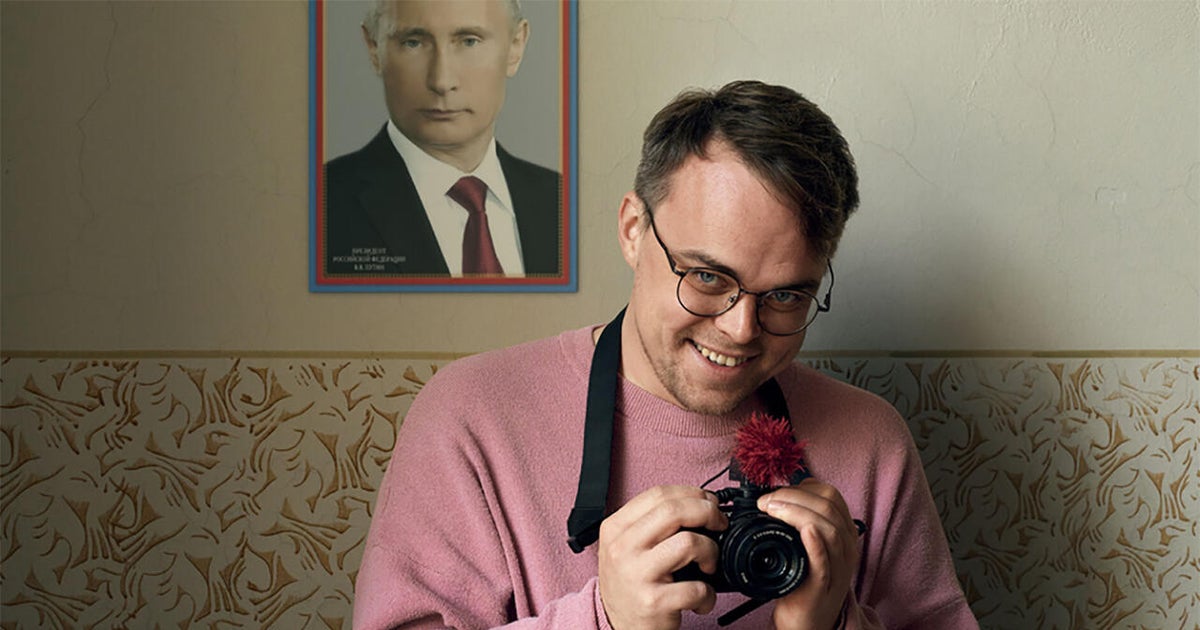
When Russia launched its invasion of Ukraine, the shockwaves rippled far beyond the battlefield. Inside schools across Russia, a different kind of warfare began—one targeting the minds of children. Pasha Talankin, a videographer at Karabash Elementary School, found himself at the center of this propaganda storm. Like educators throughout the country, his school received orders from the Kremlin to implement what the government euphemistically called a “patriotic curriculum.” Talankin’s job was straightforward on paper: document everything on camera to prove the school was following government directives. But for a man who loved his students and despised the war, this assignment created an unbearable moral conflict. He faced a choice that countless Russians have confronted since the invasion—remain silent and complicit, or take a stand that could cost him everything. What made Talankin’s situation particularly agonizing was his genuine affection for his work and the children he served, set against his growing revulsion at being forced to help spread lies. “I love my job, but I don’t want to be a pawn of the regime,” he would later explain, capturing the dilemma faced by ordinary Russians caught between personal integrity and state demands.
Recording History While Living a Lie
Rather than simply deleting footage or going through the motions, Talankin made a decision that transformed him from a school employee into a documentary witness of historical importance. He resolved to record everything—not just for the government officials who required proof of compliance, but for the world beyond Russia’s borders. He documented teachers forced to parrot state propaganda, referring to the brutal invasion as a “special operation” and claiming it was necessary for the “de-Nazification” of Ukraine. The moment that crystallized his determination came when he filmed a teacher telling students that Ukraine had embraced neo-Nazism and neo-fascism, and that Russia had no choice but to “liberate” it. As Talankin later reflected, “At that moment I understood that I had no moral right to delete this material, because it is part of the evidence of what’s happening in Russian schools today.” This footage would eventually become the foundation for “Mr. Nobody Against Putin,” an Oscar-nominated documentary that exposes the indoctrination of Russian schoolchildren. The film represents an extraordinary collaboration between Talankin and American co-director David Borenstein, who connected online and worked together despite the geographic and political barriers separating them.
A Dangerous Double Life
For two years, Talankin lived a precarious double life, walking what Borenstein aptly described as a tightrope. While Borenstein directed remotely from Europe, Talankin continued his dangerous work inside Russia, capturing footage that would enrage the authorities if discovered. The images he recorded paint a disturbing picture of militarization and propaganda seeping into every corner of school life. He filmed pro-war assemblies where children were fed nationalist rhetoric, documented visits from Putin’s notorious paramilitary Wagner Group who came to provide weapons training to students, and even captured the heartbreaking day when some of his own students received draft notices for the war in Ukraine. Each day brought new risks. The stakes couldn’t have been higher—had Russian authorities discovered what he was doing, Talankin faced the possibility of life imprisonment. Yet incredibly, he couldn’t help but engage in small acts of defiance that drew attention to himself, like the time he played “The Star-Spangled Banner” instead of the Russian national anthem over the school’s public address system. These gestures of rebellion, while satisfying his conscience, made his position even more dangerous. The constant fear of exposure haunted him, as he explained the terrifying unpredictability of Russian state security: “In Russia you never know. No one will call you; no one will knock on your door. They just watch, and then suddenly break the door down, throw you on the floor, and the floor is the last thing you see in your apartment. That’s it; you don’t exist anymore.”
Recognition and the Price of Truth
In the West, “Mr. Nobody Against Putin” has become a sensation and a powerful testament to individual courage under authoritarianism. The documentary’s journey to the Academy Awards represents a remarkable validation of Talankin’s brave gamble. Most recently, the film won Best Documentary at the BAFTAs, Britain’s equivalent of the Oscars, placing it among the year’s most celebrated films. The recognition reflects not just appreciation for compelling filmmaking, but acknowledgment of the extraordinary circumstances under which it was created. Meanwhile, back in Russia, the Kremlin has maintained an official stance of calculated indifference, claiming government officials have simply been too occupied to watch the film—a response that fools no one. But perhaps more meaningful than any award was the reaction of Talankin’s mother, a librarian who appears in the documentary. While they don’t discuss the film directly—understandable given the dangers that still exist for those left behind in Russia—she gave an interview to the New York Times expressing her pride in her son’s work. For a man who risked everything, knowing his mother understood and supported his actions must provide some comfort, even as it likely increases his worry for her safety.
Life in Exile and an Uncertain Future
Eventually, the risks became too great to sustain his double life. Talankin orchestrated an escape, booking what appeared to be a routine vacation to Turkey and then never returning to Russia. Now living in exile, he has become a vocal public critic of the Russian government—a position that comes with its own dangers, as the Kremlin has shown a willingness to pursue enemies far beyond its borders. When asked about his safety, Talankin offered a telling assessment: he feels “probably 80 percent safe.” That 20 percent uncertainty reflects the reality that critics of the Putin regime have been targeted in countries around the world, from poisonings in Britain to suspicious deaths in seemingly secure locations. But despite the personal risks and the pain of separation from his homeland, Talankin has no regrets about going public. His concerns now focus less on himself and more on the students he left behind—the children he cared for deeply and whose futures he fears have been poisoned by nationalist propaganda. It’s this concern for the next generation that drives his continued advocacy and his hope that the documentary will serve as both warning and evidence.
A Testament to Resistance and Moral Courage
“Mr. Nobody Against Putin” ultimately tells two interconnected stories. On its surface, it documents the systematic indoctrination of Russian schoolchildren—a chilling look at how authoritarian regimes work to shape young minds and secure their power for decades to come. As Talankin warns, “This is a very important document, because it shows what Russian society will be like in a few years. Putin may no longer exist, but society will be evil, because propaganda entered schools and was taught to children.” This observation carries weight far beyond Russia’s borders, serving as a cautionary tale about the long-term damage that propaganda inflicts on societies. But at a deeper level, the documentary is a profound meditation on individual resistance and moral courage. As Borenstein observes, “Everybody faces a moral choice wherever you are, and this is a story also about what you do when there is a government around you tearing down everything that you have built up.” Talankin’s journey from anonymous school videographer to Oscar-nominated documentarian and public dissident represents one answer to that universal question. His choice to resist, despite the enormous personal cost, transformed him from Mr. Nobody into somebody whose voice now resonates around the world—proof that even in the darkest circumstances, individual acts of courage can illuminate the truth and inspire others to take their own stands against injustice.