


Iran’s Defiant Stand: A Conversation with Foreign Minister Abbas Araghchi During Wartime
A Nation Under Fire Refuses to Negotiate
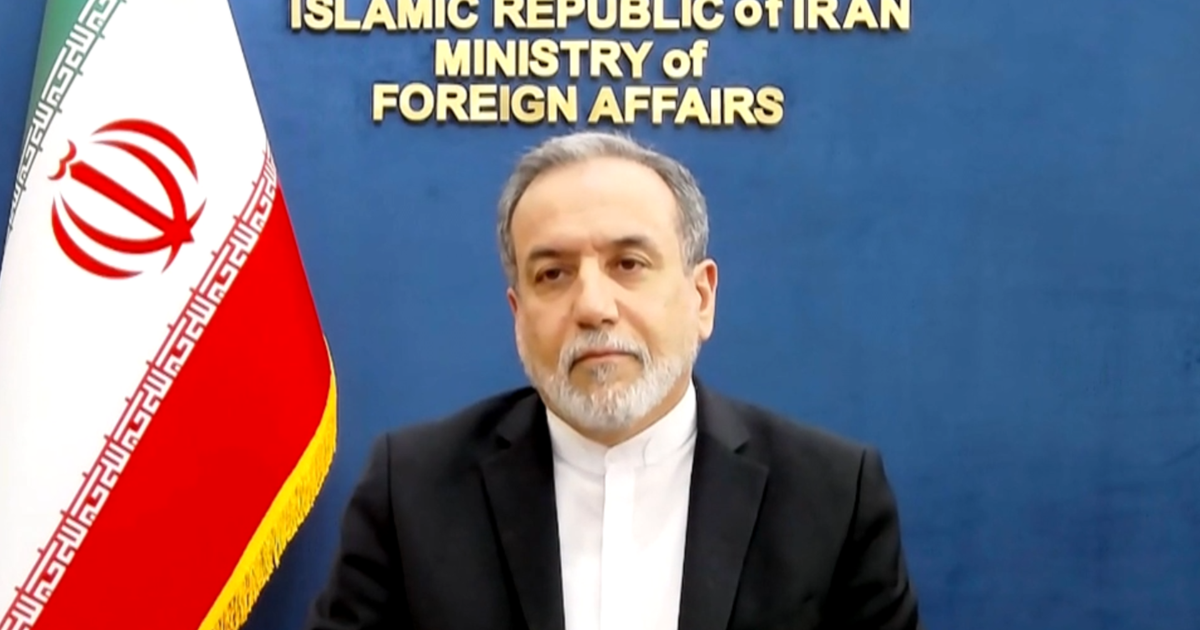
In a tense and revealing interview on “Face the Nation,” Iranian Foreign Minister Abbas Araghchi made clear that his country has no intention of seeking a ceasefire or negotiating with the United States, even as military conflict intensifies between the two nations. Speaking to host Margaret Brennan, Araghchi projected confidence and defiance, insisting that Iran remains “stable and strong enough” to continue defending itself indefinitely. His comments came in response to President Trump’s weekend statement that he wasn’t ready to make a deal with Iran because the terms weren’t favorable enough, with administration officials suggesting the conflict could continue for another three and a half weeks. Araghchi’s response was blunt: Iran never asked for a ceasefire and never even requested negotiations in the first place.
The Foreign Minister’s tone throughout the interview reflected deep frustration with American actions, characterizing the conflict as an “illegal war with no victory” and a “war of choice” initiated by President Trump. In particularly striking language, Araghchi referenced comments allegedly made by American officials, claiming that Trump had said military operations were happening because it was “fun” to sink ships and target various locations. He also cited the Secretary of War as saying there would be “no mercy,” which Araghchi called a war crime simply to utter. For Iran, this isn’t about survival of the government, as Brennan suggested, but rather about defending Iranian people from what they view as unprovoked aggression. The minister pointed to what he sees as a pattern of bad faith from American negotiators, noting that Iran was actually in talks with the United States when the decision to attack was made—for the second time. This history, he argued, provides no reason to believe that returning to negotiations would produce anything positive.
Regional Consequences and the Targeting Controversy
One of the most contentious parts of the conversation centered on Iran’s military response and its impact on neighboring countries throughout the Persian Gulf region. Brennan pressed Araghchi on a uncomfortable reality: Iran has been sending drones and missiles into countries that were, before the war, trading partners and nations with which Iran maintained relations. These countries—American allies in the Gulf—are now finding themselves in Iran’s crosshairs, raising questions about how diplomatic and economic relationships could possibly be restored once the conflict ends. The Foreign Minister’s answer revealed the difficult position Iran finds itself in: these neighboring countries have allowed American forces to use their territory to launch attacks against Iran, leaving Tehran with few options but to respond.
Araghchi was adamant that Iranian strikes are targeting only American military assets, installations, and bases—not civilian infrastructure. However, Brennan challenged this assertion, pointing out that Iranian drones have hit civilian areas, including plants, hotels, and other non-military targets. The Foreign Minister rejected this characterization, insisting that everything being targeted belongs to American forces. He provided specific examples to support Iran’s position: just the day before the interview, American forces had attacked Iranian islands using HIMARS artillery rockets, which are short-range weapons that required launching from UAE territory. A week earlier, three F-15 fighter jets were reportedly shot down by friendly fire in Kuwait, which Araghchi used to question what those jets were doing in Kuwait in the first place—clearly, he argued, they were using the territory of a neighboring, supposedly friendly country to attack Iran. From Tehran’s perspective, remaining silent in the face of such actions simply isn’t an option, regardless of the long-term diplomatic and economic consequences.
The Strait of Hormuz and Selective Passage
The conversation then turned to one of the world’s most critical chokepoints for international trade: the Strait of Hormuz. Araghchi confirmed that Iran has effectively closed this vital waterway to Israeli and American vessels, a move with potentially enormous implications for global energy markets and international commerce. However, in a revealing admission, he disclosed that Iran is open to negotiating safe passage for ships from other nations. When Brennan asked directly whether Iran was negotiating with France and Italy—as reported by the Financial Times—Araghchi declined to name specific countries but confirmed that “a number of countries” had approached Iran seeking guarantees of safe passage for their vessels.
The Foreign Minister explained that decisions about which ships can pass safely fall under the purview of Iran’s military leadership, which has already allowed vessels from certain countries to transit the strait under Iranian security protection. Importantly, Araghchi framed the situation not as Iran closing the strait, but rather as other nations choosing not to send their ships through due to insecurity created by American aggression. This distinction matters to Tehran’s narrative: they’re not the ones creating the problem, but rather managing the security situation created by U.S. military action. The fact that Iran is selectively allowing some nations’ vessels through while blocking others demonstrates a calculated approach—using control of this strategic waterway as both a defensive measure and a diplomatic tool, punishing adversaries while potentially maintaining or building relationships with countries that aren’t directly involved in the conflict.
The Nuclear Question: Material Under Rubble
Perhaps the most alarming portion of the interview dealt with Iran’s nuclear program and the current status of its enriched uranium stockpile. Brennan asked directly about the approximately 440 kilograms of nuclear material that Iran has declared (or more accurately, that has been verified by international inspectors). Araghchi’s answer was startling: the material is currently “under the rubbles” after Iranian nuclear facilities were attacked. He explained that while it would be possible to retrieve this enriched uranium, any such recovery would need to happen under the supervision of international inspectors. For now, however, Iran has no program or plan to recover the material from the destroyed facilities.
This revelation takes on additional significance given what Araghchi disclosed about negotiations that were happening just before U.S. strikes commenced. According to the Foreign Minister, he had personally offered President Trump’s negotiators—including the president’s son-in-law Jared Kushner and special envoy Steve Witkoff—a deal that would have addressed the 440 kilograms of uranium enriched to 60 percent purity. Iran had been willing to dilute or “down blend” this material to a lower enrichment level, which Araghchi characterized as “a big offer, a big concession” intended to prove that Iran has never wanted nuclear weapons and never will. This offer was reportedly part of a broader deal that was also presented to Vice President Vance through Omani intermediaries. When Brennan asked whether Iran would still be willing to give up this enriched uranium today, Araghchi’s answer was telling: there’s nothing on the table right now, and everything depends on the future. If Iran eventually decides to enter negotiations with the U.S. or other parties, they may decide what to offer, but for now, all bets are off. The destruction of the nuclear facilities and the burying of the enriched material—whether intentional or as a result of attacks—has effectively taken what might have been a major bargaining chip and placed it in limbo.
American Detainees and a Chilling Response
The interview also touched on the fate of Americans being held in Iranian custody, including at least four individuals known to be detained at Evin Prison. Among them are journalist Reza Valizadeh and Kamran Hekmati, a 61-year-old man. When Brennan asked about their status and whether they were safe, Araghchi’s response was brief and chilling: “Well, if the U.S. and Israel do not attack our prisons, I guess they are safe.” This answer, delivered matter-of-factly, served as both a statement about the detainees’ current condition and an implicit threat about what might happen if certain facilities become military targets. It’s a reminder that even amid the larger strategic questions about nuclear materials, regional security, and international shipping, there are individual human lives hanging in the balance—people who could easily become casualties or bargaining chips as the conflict evolves.
The Irony of Internet Access and Final Reflections
The interview concluded with a pointed exchange that highlighted the contradictions of the current situation. Brennan noted that while Araghchi was able to speak via Zoom with full internet access, the Iranian people themselves don’t have open access to the internet. She asked directly: Why does he have this privilege when ordinary Iranians don’t? The Foreign Minister’s response attempted to frame his access as a necessity: he is “the voice of Iranians” and must be able to defend their rights, which requires internet access to communicate with the international community. As for why ordinary Iranians are cut off, Araghchi cited security reasons, explaining that the country is under attack and must do everything possible to protect its people. He compared the situation to emergency measures any country might take during wartime.
This exchange encapsulates many of the tensions and contradictions evident throughout the interview. Here is a government official arguing that his country is defending its people and their rights, while simultaneously denying those same people access to information and communication with the outside world. He speaks of stability and strength while describing nuclear facilities in rubble and a nation under sustained military attack. He projects confidence about Iran’s ability to continue the fight indefinitely while also acknowledging that the conflict has forced extremely difficult choices—from allowing attacks to be launched from neighboring countries’ territory to effectively shutting down one of the world’s most important waterways. What comes through clearly is a government that feels it has been backed into a corner, that sees no good options in negotiation based on past experience, and that has decided its best course is to fight on while managing the diplomatic and economic fallout as best it can. Whether this strategy can succeed in the long term—and at what cost to the Iranian people, regional stability, and global security—remains an open and deeply troubling question.