



North Korea Conducts Missile Test as Tensions Rise with US and South Korea
A Show of Military Strength Amid Regional Tensions
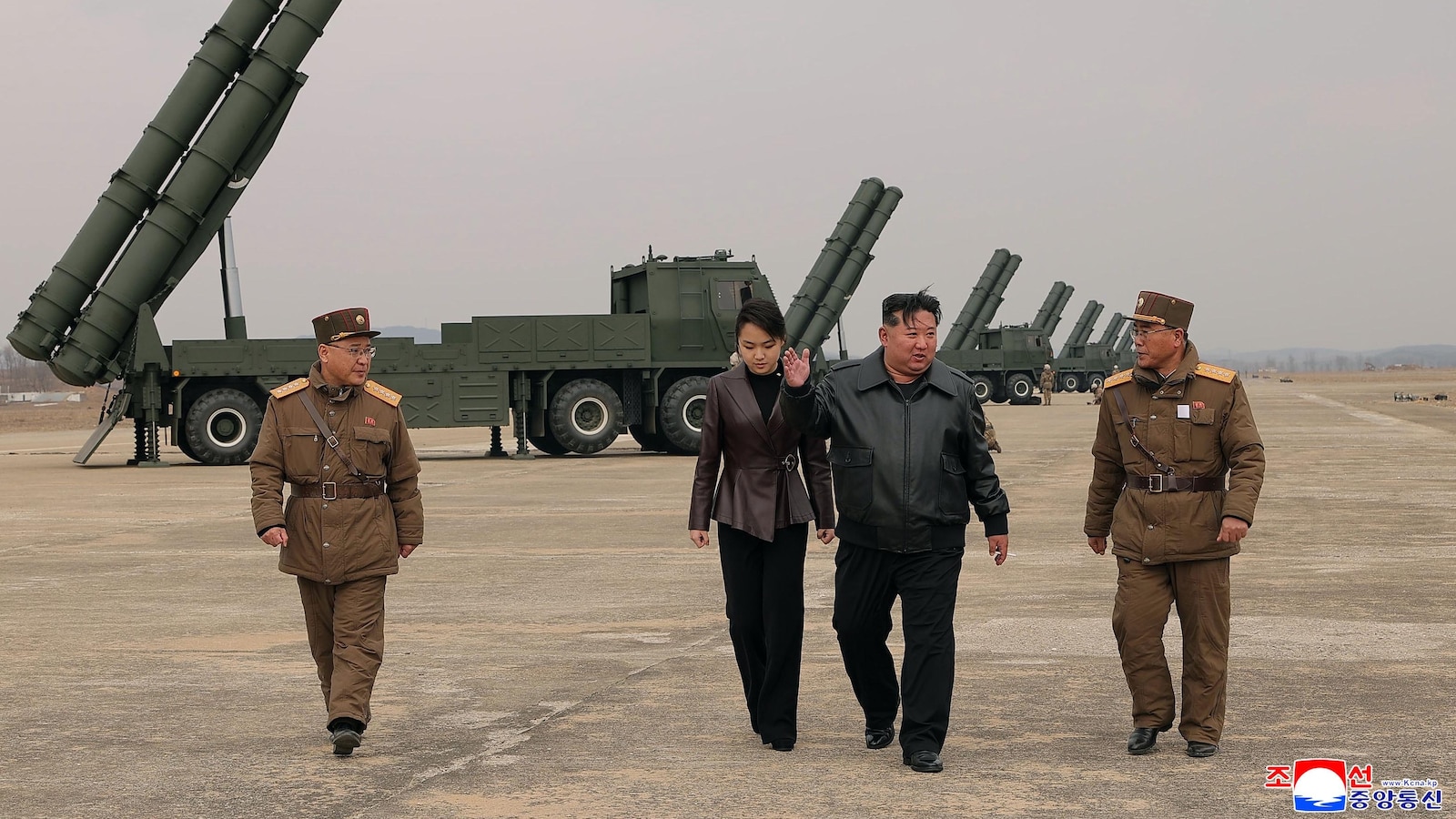
In a dramatic display of military capability, North Korean leader Kim Jong Un personally oversaw a significant weapons test over the weekend, signaling his country’s displeasure with ongoing joint military exercises between the United States and South Korea. The test, which took place on Saturday off North Korea’s eastern coastline, involved launching approximately ten ballistic missiles from the capital region into the sea. What made this demonstration particularly noteworthy was the presence of Kim’s teenage daughter by his side, continuing a pattern that has emerged over the past couple of years. According to North Korea’s state-run Korean Central News Agency, the exercise showcased twelve 600mm-caliber rocket launchers described as having “ultra-precision” capabilities. South Korea’s military quickly detected and reported the launches, with the country’s national security council promptly condemning the action as a clear provocation that violates international law, specifically the United Nations Security Council resolutions that explicitly prohibit North Korea from engaging in any ballistic missile activities.
Kim Jong Un’s Warning and Nuclear Implications
During the military demonstration, Kim Jong Un delivered strong statements emphasizing the destructive potential of these weapons systems, making thinly veiled references to both South Korea and American military forces stationed in the region. According to the state media reports, Kim declared that the drill would expose enemies within the striking range of 420 kilometers (approximately 260 miles) to considerable “uneasiness” and provide them with “a deep understanding of the destructive power of tactical nuclear weapons.” His message was unmistakable in its intent to intimidate. Kim went further, asserting that if these weapons were ever deployed in actual combat, any military infrastructure within their range would face certain destruction with no chance of survival. This rhetoric represents the kind of aggressive posturing that has become characteristic of North Korea’s approach to regional security matters, particularly when the country feels threatened by what it perceives as hostile actions by its neighbors and their allies. The explicit mention of tactical nuclear capabilities underscores North Korea’s continued advancement in developing weapons that could potentially carry nuclear warheads, a development that has long concerned the international community.
The Presence of Kim’s Daughter Raises Succession Questions
Photographs released by the Korean Central News Agency captured Kim Jong Un walking alongside his daughter near massive olive-green launch trucks, observing as weapons were fired from these imposing vehicles. The young girl, believed to be named Kim Ju Ae and approximately thirteen years old, has become an increasingly familiar figure at her father’s side during important military and state events. Since her first public appearance in late 2022, she has accompanied Kim to numerous high-profile occasions, including various missile tests and elaborate military parades that showcase North Korea’s armed forces. Her continued presence at these significant events has not gone unnoticed by international observers and analysts who study North Korean politics and leadership dynamics. Many experts now speculate that her regular appearances alongside her father at these crucial state functions may indicate that she is being carefully prepared and positioned as his potential successor. In the secretive and dynastic nature of North Korean leadership, where power has passed from grandfather to father to son, the public introduction of a potential next-generation leader is a matter of considerable significance, both for the country’s internal politics and for how the international community plans its long-term engagement strategies with the isolated nation.
The Technical Nature of North Korea’s Weapons Systems
Military analysts and weapons experts have noted that North Korea’s large-caliber rocket launchers represent a particularly concerning category of weaponry because they exist in a gray area between traditional artillery systems and modern ballistic missiles. These sophisticated weapons systems possess the capability to generate their own propulsion through thrust, and they incorporate guidance systems that allow for directed delivery to specific targets, making them far more dangerous and precise than conventional artillery. This technological advancement effectively blurs the traditional distinctions between different categories of military hardware, making it more difficult to classify and regulate these weapons under existing international frameworks. North Korean officials have publicly stated that certain variants of these rocket launch systems have been designed with the capability to deliver nuclear warheads, a claim that significantly elevates the threat level they pose to regional security. The 600mm-caliber systems demonstrated in this latest test represent some of the largest and most powerful in North Korea’s arsenal, capable of delivering substantial destructive payloads across distances that would encompass major population centers and military installations in South Korea, as well as American military bases in the region.
The Context of US-South Korean Military Exercises
The timing of North Korea’s missile test is far from coincidental, as it comes directly in response to the Freedom Shield military exercise currently being conducted jointly by American and South Korean forces. This annual springtime training operation, which runs through March 19, is primarily a computer-simulated command post exercise designed to enhance the coordination and readiness of allied forces in the region. While the United States and South Korea consistently characterize these exercises as defensive in nature and necessary for maintaining military preparedness, North Korea invariably interprets them through a different lens entirely. The North Korean government routinely describes these joint training operations as “invasion rehearsals” and views them as provocative acts that threaten the country’s security and sovereignty. This fundamental disagreement over the nature and purpose of these military exercises has become a recurring pattern in regional relations, creating a predictable cycle of action and reaction. Whenever the United States and South Korea conduct their scheduled military drills, North Korea typically responds with its own weapons tests and inflammatory rhetoric, using the exercises as justification for advancing its own military programs and demonstrating its capabilities to both domestic and international audiences.
Regional Security Implications and International Response
The latest missile launches underscore the continuing challenge that North Korea poses to regional stability and international security frameworks. South Korea’s quick condemnation of the test, referencing violations of UN Security Council resolutions, reflects the serious view that the international community takes of North Korea’s ongoing weapons development programs. These UN resolutions, which have been in place for years, specifically ban North Korea from conducting ballistic missile activities of any kind, imposing these restrictions in an attempt to curb the country’s nuclear and missile ambitions. However, North Korea has consistently defied these international prohibitions, viewing them as infringements on its sovereignty and its right to self-defense. The cycle of provocation and response that characterizes the current situation shows no signs of breaking, with each side firmly committed to its own interpretation of regional security requirements. For the United States and South Korea, maintaining military readiness through joint exercises is viewed as essential for deterring aggression and defending against potential threats. For North Korea, developing increasingly sophisticated weapons systems and demonstrating them publicly serves both as a deterrent against what it perceives as hostile intentions and as a tool for maintaining the regime’s legitimacy with its domestic audience. As tensions continue to simmer in this volatile region, the international community faces the ongoing challenge of finding diplomatic solutions that might reduce the risk of miscalculation or escalation while addressing the legitimate security concerns of all parties involved.