


The Legacy of Jürgen Habermas: A Philosophical Giant Who Shaped Modern Thought
A Life Dedicated to Understanding Human Communication and Society
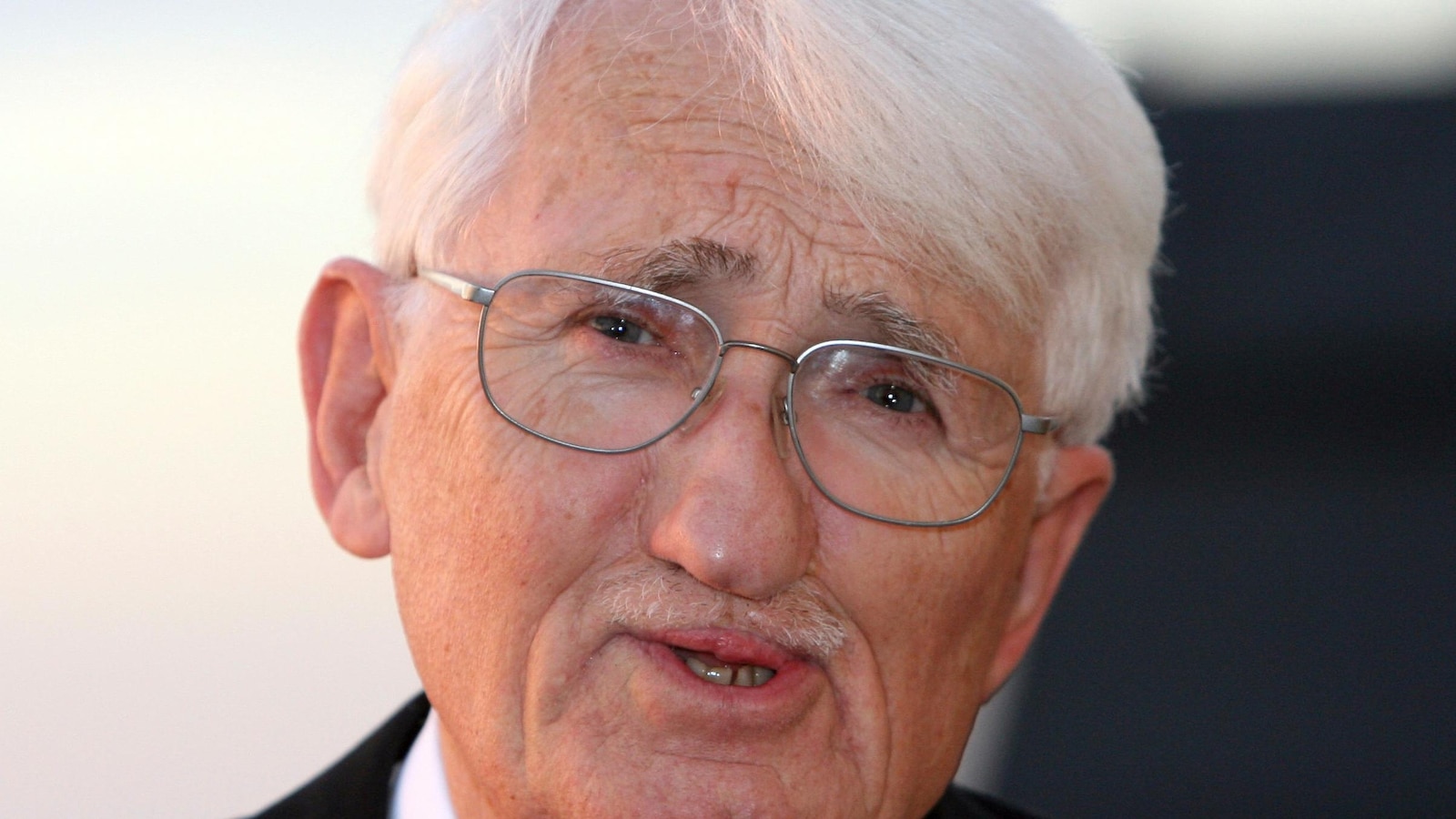
The world has lost one of its most profound intellectual voices with the passing of Jürgen Habermas, the German philosopher whose groundbreaking work fundamentally changed how we understand communication, rationality, and human society. At age 96, Habermas died peacefully on Saturday in Starnberg, a town near Munich, as confirmed by his longtime publisher, Suhrkamp. For more than seven decades, this remarkable thinker dedicated himself to exploring the intricate ways humans interact, communicate, and build societies together. His influence extended far beyond the walls of academia, touching political discourse, social movements, and public debate across Germany and the entire world. Habermas wasn’t content to simply theorize about society from an ivory tower—he actively engaged with the political and social issues of his time, lending his considerable intellect to discussions about democracy, European unity, Nazi historical responsibility, and the nature of modern political life. His magnum opus, the two-volume “Theory of Communicative Action,” stands as one of the twentieth century’s most important philosophical works, offering a comprehensive framework for understanding how people reach mutual understanding through language and rational discussion.
Forged in the Shadow of Nazi Germany
To truly understand Habermas and his lifelong intellectual mission, we must begin with his formative years in Nazi Germany. Born on June 18, 1929, in Düsseldorf, Habermas grew up in the nearby town of Gummersbach, where his father served as head of the local chamber of commerce. Like virtually all German boys of his generation, he was enrolled in the Deutsches Jungvolk—the Hitler Youth division for younger children—at the tender age of ten. But it was the experience of being fifteen years old when Nazi Germany collapsed in 1945 that would prove absolutely pivotal to his intellectual development. The young Habermas witnessed firsthand what he later described as the dawn of a completely new era, a moment when the curtain was suddenly pulled back to reveal the horrifying truth of what the Nazi regime had done. “You saw suddenly that it was a politically criminal system in which you had lived,” he recalled years later. This shocking realization—that he and his family had been living under and participating in a fundamentally evil political system—became the foundation for his entire philosophical project. Without this experience of coming to terms with Nazi crimes, Habermas openly acknowledged, he would never have found his path into philosophy and social theory. This historical reckoning wasn’t merely personal for Habermas; it became a moral and intellectual imperative that would shape his thinking about democratic legitimacy, the role of public discourse in society, and the dangers of political manipulation throughout his entire career.
A Personal Struggle That Illuminated Universal Truths
Habermas’s philosophical insights into language and communication weren’t purely abstract—they were deeply informed by his own childhood experiences with a physical disability. He was born with a cleft palate, a condition that required multiple surgical operations throughout his childhood and significantly affected his ability to speak clearly. This personal challenge gave him a unique perspective on the power and importance of language that many philosophers might never have developed. Struggling to make himself understood as a child, Habermas came to experience what he later described as the fundamental importance of spoken language as “a layer of commonality without which we as individuals cannot exist.” This wasn’t just philosophical theorizing—it was lived experience. The difficulty of oral communication also led him to appreciate what he called “the superiority of the written word,” noting that “the written form conceals the flaws of the oral.” This personal understanding of how communication can both connect and isolate people became central to his later work on communicative action and rational discourse. His philosophy would ultimately argue that genuine understanding between people requires open, honest communication free from domination and manipulation—a vision perhaps all the more powerful because he understood from personal experience how difficult and precious clear communication truly is. Habermas is survived by his two children, Tilmann and Judith; his wife, Ute Habermas-Wesselhoeft, passed away last year, and his daughter Rebekka died in 2023.
Wrestling with Germany’s Student Movement and Progressive Change
Habermas’s relationship with political movements and social change was never simplistic or purely ideological, as demonstrated by his complex engagement with the left-wing student protests that swept through Germany and much of the Western world in the late 1960s. While he sympathized with many of the students’ concerns about authoritarianism, the Vietnam War, and Germany’s incomplete reckoning with its Nazi past, he also maintained a critical distance from the movement’s more extreme elements. In a moment that would become somewhat infamous, Habermas warned against what he termed “left-wing fascism” in response to a particularly incendiary speech by a student leader. He would later acknowledge that this particular phrase was “slightly out of place,” but the incident revealed his consistent commitment to reasoned dialogue over revolutionary rhetoric. Yet Habermas was generous enough to recognize the movement’s lasting positive impact, later crediting it with driving a “fundamental liberalization” of German society that helped the nation break free from the conservative, authoritarian attitudes that had lingered after the war. This nuanced position—supporting progressive change while warning against extremism and the abandonment of rational discourse—was characteristic of Habermas throughout his life. He believed deeply in the possibility of social progress, but insisted it must come through democratic deliberation and communicative reason rather than through force or manipulation.
Defending Historical Truth in the Historians’ Dispute
Perhaps no episode better illustrates Habermas’s role as Germany’s public intellectual conscience than his prominent participation in the so-called Historians’ Dispute of the 1980s. This controversy erupted when Berlin historian Ernst Nolte and several other conservative historians began arguing for what they called a “new perspective” on Nazi Germany and German national identity. Their approach involved comparing Hitler’s atrocities to crimes committed by other governments, particularly the millions who died under Stalin’s regime in the Soviet Union. While superficially this might have seemed like legitimate historical comparison, Habermas and other critics recognized a dangerous agenda beneath the surface: these conservative historians were attempting to relativize Nazi crimes, to make them seem less uniquely horrific by placing them in a context of twentieth-century political violence more generally. For Habermas, who had built his entire intellectual career on the foundation of honestly confronting Germany’s Nazi past, this revisionism was intolerable. He argued forcefully that these comparisons were designed to lessen the magnitude of Nazi crimes and to allow Germans to develop a more “comfortable” national identity no longer burdened by special historical guilt. The dispute became a defining moment in German intellectual life, with Habermas emerging as the leading voice insisting that Germany’s democratic future depended on unflinchingly acknowledging its criminal past rather than minimizing it through false equivalencies.
Political Vision and the European Project
Throughout his later years, Habermas remained actively engaged with contemporary German and European politics, never hesitating to offer sharp criticism when he felt leaders were falling short. He supported the rise of center-left Chancellor Gerhard Schröder in 1998, hoping for a more progressive political direction for Germany. However, he became increasingly critical of Schröder’s conservative successor, Angela Merkel, whom he characterized as having a “technocratic” approach that lacked genuine political vision. In 2016, he memorably complained about “the foam blanket of Merkel’s policy of sending people to sleep,” suggesting that her pragmatic, non-ideological style was paralyzing public political discourse rather than energizing it. But Habermas’s most passionate political concern in his final decades was the future of European integration. He repeatedly criticized what he saw as the “limited interest” shown by German politicians, business leaders, and media in “shaping a politically effective Europe.” For Habermas, the European project represented the best hope for creating a transnational space of democratic deliberation and rational political discourse—the very ideals that had animated his entire philosophical career. He found a rare source of optimism when Emmanuel Macron was elected President of France in 2017, praising the young leader’s vision for European reform and noting that “the way he speaks about Europe makes a difference.” Even in his nineties, Habermas remained committed to the belief that guided his entire life’s work: that through honest communication, rational discourse, and democratic engagement, human beings can build better, more just societies together. His passing marks the end of an era, but his ideas about communication, democracy, and human understanding will continue shaping intellectual and political life for generations to come.