


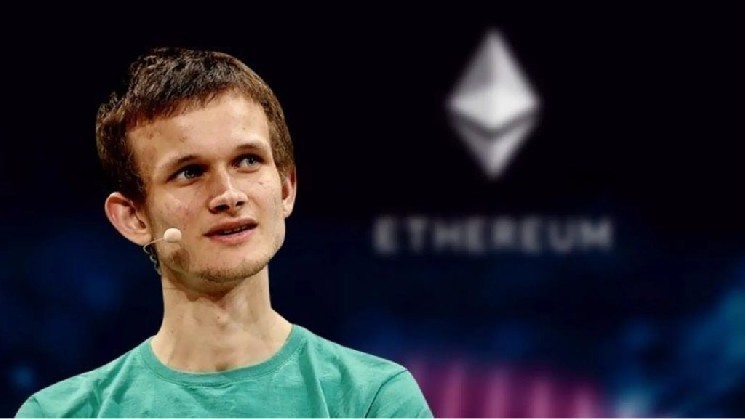

Ethereum’s Layer 2 Networks Face Identity Crisis as Vitalik Buterin Calls for Reinvention
The Challenge That Shook the Crypto Community
In a series of statements that sent ripples through the cryptocurrency world, Ethereum’s visionary founder Vitalik Buterin issued a direct challenge to the major Layer 2 networks built atop his blockchain. His message was clear and provocative: the original purpose that justified these networks’ existence is becoming obsolete, and they need to fundamentally rethink what they’re doing. What started as a straightforward observation quickly evolved into a fascinating debate about the future direction of Ethereum’s ecosystem, with leaders from some of the biggest projects in crypto stepping forward to defend their visions. This wasn’t just technical nitpicking—it was a conversation about the very soul and purpose of blockchain scaling solutions in an evolving landscape.
Buterin’s comments weren’t meant to dismiss or devalue the work these Layer 2 solutions have accomplished. Rather, he was pushing them toward a moment of introspection and evolution. The Ethereum founder pointed out something that many in the community had been quietly observing: the landscape has changed dramatically since these projects first launched. When networks like Optimism, Arbitrum, and Base first emerged, they positioned themselves primarily as scaling solutions—ways to make Ethereum faster and cheaper by processing transactions off the main chain. That was their raison d’être, their fundamental justification for existing. But according to Buterin, that narrative no longer holds water in today’s reality, and clinging to it could leave these networks without a clear identity or purpose.
The Core of Buterin’s Argument
At the heart of Buterin’s critique lies a simple but powerful observation: Ethereum itself is getting better at handling transactions. The main Ethereum network, often called Layer 1 or L1, has been steadily increasing its own transaction capacity through various upgrades and optimizations. This creates an uncomfortable reality for Layer 2 networks that built their entire value proposition around being “cheaper and faster than Ethereum.” If Ethereum keeps improving its own performance, what happens to networks whose only selling point is doing what Ethereum does, just more efficiently? It’s like building a business around being a faster alternative to something that’s rapidly becoming fast enough on its own.
Beyond this existential challenge, Buterin raised specific technical concerns that added urgency to his call for reinvention. He pointed out that many Layer 2 implementations currently rely on multi-signature bridges—technological constructs that, while functional, come with notable security vulnerabilities. These bridges are the connective tissue between Layer 1 and Layer 2, and if they’re compromised, users’ funds and data could be at risk. This creates a paradox: networks marketed as secure scaling solutions are potentially introducing new security risks through their very architecture. Buterin’s implication was clear—if you’re going to introduce new risks while Ethereum itself scales, you’d better be offering something genuinely unique and valuable to justify that tradeoff.
What Buterin was really calling for wasn’t abandonment of the Layer 2 concept, but rather an evolution beyond the simple scaling narrative. He challenged these networks to articulate and deliver unique value propositions that go beyond just being “Ethereum, but cheaper and faster.” This is about differentiation and innovation—about finding reasons to exist that will remain compelling even as the underlying Ethereum network continues to improve. It’s a challenge that forces these projects to look inward and ask difficult questions about their long-term vision and sustainability.
How the Layer 2 Leaders Responded
The response from the Layer 2 community was swift and revealed both defensiveness and confidence. These weren’t newcomers being scolded by an elder statesman; these were established projects with significant user bases, billions in locked value, and their own strong convictions about their missions. Karl Floersch, one of the founders behind Optimism, accepted Buterin’s challenge but was quick to frame the conversation appropriately. He emphasized that this wasn’t a hostile debate with outside critics who fundamentally oppose Layer 2 solutions or Ethereum itself. Instead, this was a family discussion—a constructive dialogue among people who share the same ultimate goals but might disagree on the best path forward. His response suggested that Optimism sees value in the conversation and isn’t dismissing Buterin’s concerns out of hand.
Steven Goldfeder, representing Arbitrum through his role as co-founder of Offchain Labs, took a slightly different approach. His response revealed an important philosophical distinction that often gets lost in technical discussions. Goldfeder stated plainly that Arbitrum is not Ethereum—it’s an ally, but it’s its own entity with its own identity. This framing is significant because it pushes back against the notion that Arbitrum exists merely to serve Ethereum’s scaling needs. Instead, Goldfeder positioned Arbitrum as a project with independent value and purpose. According to his explanation, Arbitrum wasn’t developed as a “service for Ethereum” in the subordinate sense that phrase might imply. Rather, it was built because the team saw a need for a highly secure, low-cost payment layer that could enable large-scale rollup transactions—functionality that happens to benefit Ethereum but exists on its own merits.
Perhaps the most interesting response came from Jesse Pollak, a core developer at Base, the Layer 2 network developed by cryptocurrency exchange Coinbase. Pollak’s approach was essentially to agree with Buterin while asserting that Base had already been moving in the direction Buterin was calling for. This “we’re already doing that” response is common in tech debates, but Pollak backed it up with specifics. He acknowledged explicitly that Ethereum’s own scaling improvements benefit the entire ecosystem—a refreshingly non-zero-sum perspective. More importantly, he agreed with the core of Buterin’s argument: that Layer 2 solutions cannot simply be “cheaper versions of Ethereum” if they want to remain relevant and valuable over the long term.
Base’s Vision for Differentiation
Pollak elaborated on what differentiation actually means in practice for Base. He pointed to features like computational abstraction—technical capabilities that go beyond simple transaction processing to enable new types of applications and user experiences. This is the kind of unique value Buterin was calling for: functionality that doesn’t just replicate Ethereum more efficiently, but actually enables things that wouldn’t be practical or possible on the main chain. Pollak’s statement revealed a comprehensive vision: “L2s cannot and should not be just a cheaper version of Ethereum. That’s why, since Base’s inception, we’ve been working every day to bring in new users, developers, and applications, to push the technology forward, and to do all of this in a symbiotic way that will drive the ecosystem’s growth.”
This response is significant because it reframes the relationship between Layer 1 and Layer 2 from competitive to symbiotic. Rather than viewing Ethereum’s improvements as a threat to Base’s existence, Pollak presents them as beneficial to everyone. The implication is that Base’s value doesn’t come from Ethereum being slow or expensive, but from offering different capabilities, user experiences, and use cases. This is a mature perspective that suggests these networks are thinking beyond simple technical metrics toward broader questions of ecosystem health and sustainable differentiation.
What This Debate Means for the Future
This exchange between Buterin and the Layer 2 leaders represents more than just a technical disagreement—it’s a glimpse into how the Ethereum ecosystem is maturing and evolving. The conversation reflects a healthy tension between innovation and coherence, between independence and alignment, between competition and collaboration. These are the kinds of debates that happen in any thriving ecosystem as it moves beyond its initial growth phase and starts grappling with questions of long-term sustainability and purpose. The fact that these conversations are happening publicly, with major figures willing to challenge each other respectfully, speaks well of the ecosystem’s intellectual honesty.
For users, investors, and developers watching this debate, the key takeaway isn’t that Layer 2 solutions are in trouble or becoming obsolete. Rather, it’s that these networks are being pushed—both by external voices like Buterin and by their own internal logic—toward more sophisticated and differentiated value propositions. This is ultimately positive because it drives innovation beyond simple performance metrics. The next generation of Layer 2 networks will likely compete not just on transaction speed and cost, but on unique features, specialized use cases, superior user experiences, and novel capabilities that the base Ethereum layer doesn’t provide. Some might focus on privacy, others on specific application domains like gaming or social media, and still others on radical new approaches to account management or cross-chain interoperability.
The debate also highlights an important principle in blockchain development: technology alone isn’t enough. Having the fastest or cheapest network matters little if you can’t articulate why it should exist, who it serves, and what unique problems it solves. Buterin’s challenge is forcing these projects to sharpen their narratives and deepen their technical differentiation simultaneously. The projects that will thrive in the coming years won’t be those that simply execute the Layer 2 concept most efficiently, but those that evolve beyond that initial concept entirely—those that become platforms with their own identities, communities, and irreplaceable roles in the broader blockchain ecosystem. As this conversation continues to unfold, it will shape not just these specific projects but the entire philosophy of how we think about blockchain scaling and ecosystem development.