




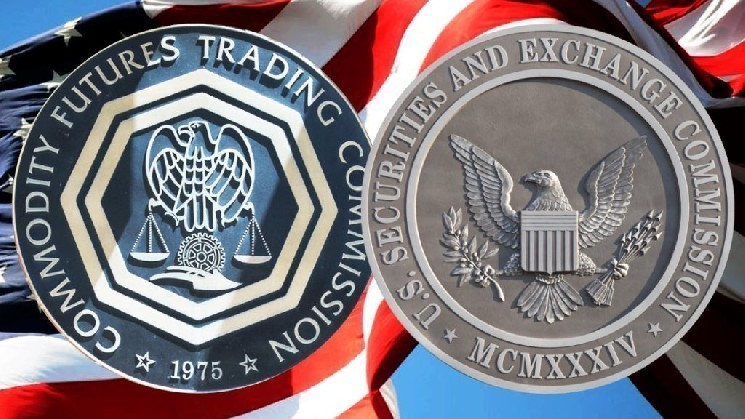

Wall Street Watchdogs Tighten Their Grip on Crypto and Prediction Markets
Understanding the Regulatory Shake-Up
The landscape of cryptocurrency and prediction markets in the United States is about to undergo significant changes as the nation’s premier financial regulators step up their oversight efforts. In a coordinated move that signals a new era of accountability for the digital asset space, both the Securities and Exchange Commission (SEC) and the Commodity Futures Trading Commission (CFTC) have submitted comprehensive regulatory frameworks to the White House for review. This development comes at a critical juncture when the cryptocurrency industry has expanded beyond anyone’s initial expectations, and prediction markets have experienced explosive growth that has caught the attention of both investors and regulators alike. The timing of these submissions isn’t coincidental – it reflects a growing recognition among policymakers that the current regulatory framework, designed for traditional financial markets, may not adequately address the unique challenges and risks presented by these innovative but volatile sectors. For everyday investors, institutional traders, and the blockchain companies themselves, these proposed regulations could fundamentally reshape how digital assets are bought, sold, and traded in America.
Breaking Down the SEC’s Approach to Cryptocurrency
The Securities and Exchange Commission, long recognized as the primary watchdog for investor protection in traditional securities markets, has taken a particularly active role in determining how existing federal securities laws should apply to the burgeoning world of cryptocurrencies. According to information reported by Bloomberg, the SEC has submitted commission-level guidance to the White House that specifically addresses how various crypto assets should be treated under current securities regulations. This guidance represents years of internal deliberation, enforcement actions, and public commentary from SEC officials who have struggled to fit square pegs into round holes – applying decades-old securities laws to technologies that didn’t exist when those laws were written. The SEC’s primary concern has always centered around investor protection, ensuring that people who put their money into crypto assets have access to the same disclosures, safeguards, and legal recourse as those investing in traditional stocks and bonds. What makes this guidance particularly significant is that it comes at a commission level, meaning it represents the collective thinking of the SEC’s leadership rather than just individual commissioners or staff members. This unified approach suggests a more coherent and potentially more enforceable regulatory strategy moving forward, one that could finally provide the clarity that both supporters and skeptics of cryptocurrency have been demanding.
The CFTC’s Focus on Prediction Markets
While the SEC has concentrated its efforts on cryptocurrencies as potential securities, the Commodity Futures Trading Commission has turned its attention to the rapidly expanding world of prediction markets, where participants essentially bet on the outcomes of future events ranging from elections to economic indicators. The CFTC, which traditionally oversees derivatives trading including futures and options contracts, has submitted its own set of regulatory measures to the White House specifically targeting these prediction markets. These platforms have grown exponentially in recent years, attracting not just casual participants but also serious traders who view them as legitimate tools for hedging risk or gaining insights into future probabilities. However, the explosive growth of prediction markets has raised concerns about potential manipulation, the ethical implications of betting on certain types of events, and whether adequate consumer protections exist for participants who may not fully understand the risks involved. The CFTC’s proposed regulations likely aim to establish clear guardrails around how these markets operate, who can participate, what types of events can be the subject of prediction contracts, and what disclosures platforms must provide to users. By addressing prediction markets now, before they become even more embedded in mainstream financial culture, regulators hope to prevent the kind of problems that emerged in the cryptocurrency space, where the lack of clear rules led to years of confusion, fraud, and investor losses.
The Token Classification System: A Potential Game-Changer
Perhaps the most significant element reported in the Bloomberg coverage is the potential inclusion of a token classification system within the proposed regulatory guidance. For years, one of the most contentious issues in cryptocurrency regulation has been the question of jurisdiction – specifically, which tokens fall under the SEC’s authority as securities and which should be regulated by the CFTC as commodities. This ambiguity has created enormous uncertainty for blockchain projects, investors, and exchanges, with some tokens being treated as securities in certain contexts while being traded as commodities in others. A comprehensive token classification system could finally resolve this regulatory gray area by establishing clear criteria for determining whether a particular crypto asset should be treated as a security, a commodity, or perhaps something else entirely. Such a system might consider factors like how the token was initially distributed, whether buyers have a reasonable expectation of profit based on the efforts of others, what utility the token provides within its native ecosystem, and how decentralized the project’s governance actually is. If implemented effectively, this classification framework could provide the regulatory clarity that has been desperately needed, potentially unleashing a wave of institutional investment from organizations that have remained on the sidelines due to regulatory uncertainty. However, the devil will be in the details – a poorly designed classification system could stifle innovation, favor certain types of projects over others, or simply create new categories of confusion to replace the old ones.
What This Means for the Industry and Investors
The submission of these regulatory frameworks to the White House represents a watershed moment for the cryptocurrency and prediction market industries in the United States. For blockchain companies and cryptocurrency projects, these new guidelines could mean the difference between operating in legal clarity or continuing to navigate an uncertain regulatory minefield. Some projects may find themselves needing to register with the SEC, comply with securities laws, and provide the kind of detailed disclosures typically associated with traditional companies issuing stock. Others may discover they fall under CFTC jurisdiction, subjecting them to different but equally rigorous oversight. For cryptocurrency exchanges, these regulations could necessitate significant operational changes, potentially requiring them to register as securities exchanges, implement more robust customer protection measures, or even delist certain tokens that don’t meet regulatory requirements. On the investor side, these developments could actually be positive in the long run, despite potentially reducing some of the Wild West freedom that characterized crypto’s early years. Clear regulations typically attract institutional investors who have stayed away from crypto precisely because of regulatory uncertainty, and this influx of institutional capital could stabilize markets and reduce the extreme volatility that has made cryptocurrencies such risky investments. At the same time, increased oversight should help protect everyday investors from fraudulent projects, misleading marketing, and the kind of scams that have plagued the industry and given it a sometimes unsavory reputation.
Looking Ahead: The Implementation Challenge
While the submission of these regulatory frameworks to the White House marks an important step forward, the journey from proposed guidance to implemented policy is typically long and complex. The White House review process itself may result in modifications, pushback, or requests for additional consideration of certain elements. Once any guidance is finalized and published, there will likely be a public comment period during which industry participants, consumer advocates, legal experts, and other stakeholders can weigh in on the proposed rules. This feedback could lead to further revisions before final implementation. Additionally, the cryptocurrency and prediction market industries are global in nature, and U.S. regulations don’t exist in a vacuum – regulators will need to consider how their approach aligns or conflicts with regulatory frameworks being developed in Europe, Asia, and other major markets. The practical challenges of implementation will also be substantial, as both the SEC and CFTC will need adequate resources, technical expertise, and enforcement capabilities to actually oversee these complex and rapidly evolving markets. There’s also the question of how existing cryptocurrency holders and market participants will be treated – will there be grandfather provisions for tokens launched before the new rules, or will everyone need to come into compliance regardless of when they entered the market? Despite these uncertainties, the fact that comprehensive regulatory guidance is being developed represents progress toward a more mature and sustainable future for digital assets in the United States, even if the transition period proves challenging for some market participants.
Disclaimer: This article is for informational purposes only and does not constitute investment advice. Cryptocurrency and prediction market investments carry significant risks, and readers should conduct their own research and consult with qualified financial advisors before making any investment decisions.









