
Escalating Tensions: The U.S.-Israeli Conflict with Iran Reaches a Critical Point
Drone Threats Target British Military Base in Cyprus
The British sovereign military base at Akrotiri in Cyprus found itself at the center of another security scare on Thursday, marking yet another tense moment in the rapidly escalating conflict between Iran and the U.S.-Israeli coalition. Residents of the British enclave were ordered to shelter in place as authorities detected what they believed to be an ongoing security threat. The alert instructed people to stay away from windows and take cover behind or underneath sturdy furniture—the kind of precautions that have become all too familiar in conflict zones. While the Cypriot government later announced that no actual threat materialized, the incident underscores the heightened state of alert across the region. This wasn’t the first time Akrotiri has been in the crosshairs; the base, which the U.K. has granted the U.S. permission to use for “defensive purposes,” has already been targeted at least twice by missiles or drones since this conflict began. Just days earlier, on Monday, a runway at the base sustained damage from what appeared to be an Iranian drone strike, though unconfirmed reports suggested it might have been launched from Lebanon by the Iranian-backed militant group Hezbollah. The repeated targeting of this strategic location has prompted a European response, with Italy, Spain, France, and the Netherlands preparing to deploy naval assets to Cyprus to bolster defenses following these attacks.
Civilian Casualties Mount Across the Persian Gulf
The human cost of this escalating conflict became painfully clear on Thursday when six people were injured in Abu Dhabi, capital of the United Arab Emirates, as debris from intercepted drones fell to the ground. The victims—Pakistani and Nepali nationals working in the UAE—sustained minor to moderate injuries when fragments from drones that had been successfully shot down by air defense systems crashed in two locations. According to the Abu Dhabi Media Office, authorities responded quickly to the incident, but it highlighted a grim reality: even when defense systems work as intended, the sheer volume of incoming threats creates danger for civilians below. The scale of Iran’s aerial assault on the UAE has been staggering. Data compiled by Israel’s Institute for National Security Studies reveals that since the war began on Saturday, Iran has launched an astonishing 941 drones, 189 ballistic missiles, and 8 cruise missiles at the UAE alone. While the vast majority have been intercepted—a testament to the effectiveness of modern air defense systems—the constant barrage has paralyzed normal life. Meanwhile, in Azerbaijan, the conflict reached new territory when Iranian drones struck an airport terminal and a school building, injuring two civilians. Azerbaijan’s foreign ministry issued a strongly worded condemnation and summoned Iran’s top diplomat, warning that it “reserves the right to take appropriate retaliatory measures” against its southern neighbor. This marked the first direct impact reported by Azerbaijan since the conflict began, potentially opening a dangerous new front in an already complex regional war.
Travel Chaos as Gulf Aviation Hubs Struggle to Reopen
The conflict has created a humanitarian crisis of a different sort for thousands of travelers stranded across the Persian Gulf as major aviation hubs have been forced to shut down for safety reasons. In a positive development, Abu Dhabi announced on Thursday that limited flights had resumed from Zayed International Airport, offering the first glimmer of hope for those caught in the travel nightmare. The statement from Abu Dhabi authorities praised what they called “a significant display of resilience” and detailed the massive coordination effort required to care for stranded passengers. Over the past few days, authorities had provided more than 4,300 complimentary hotel rooms across 74 hotels for approximately 7,000 passengers, ensuring that those affected by the disruption were accommodated in relative comfort. However, officials cautioned that passengers should only travel to the airport after receiving specific guidance from their airlines about departure times. Similarly, Israel announced a phased reopening of its airspace for limited incoming flights after being closed since the war began. Under the initial plan, only one passenger flight per hour would be allowed in the first 24 hours, bringing in about 5,000 people total, with the possibility of expanding operations depending on security conditions. Notably, outgoing commercial flights from Israel remained prohibited, reflecting ongoing security concerns about the safety of aircraft departing from Israeli territory.
Iran Intensifies Rhetoric and Attacks
As the conflict enters its sixth day, Iran shows no signs of backing down. A commander from Iran’s Revolutionary Guard Corps was quoted by the state news agency Fars as warning that the coming days would bring “more intense and widespread” attacks by the Islamic Republic. This threat was accompanied by inflammatory rhetoric from Iranian religious leaders, with state television airing a message from Ayatollah Abdollah Javadi Amoli—one of Iran’s powerful Islamic clerics—calling for “the shedding of Zionist blood, the shedding of Trump’s blood.” Such statements from high-ranking religious authorities represent a significant escalation in the war of words and suggest that Iran’s leadership remains committed to prolonged confrontation. Iran’s paramilitary Revolutionary Guard also claimed responsibility for attacking what it said was an American oil tanker in the northern Persian Gulf on Thursday. However, maritime security agencies identified the actual target as the Bahamas-flagged Sonangol Namibe, which was tracked off the coast of Kuwait when it reported a possible sea-drone strike. The company operating the vessel confirmed that it was “approached by an unknown small vessel” early Thursday while anchored near Khor Al Zubair, Iraq, and that “a short time later a loud bang was heard.” Fortunately, all 23 crew members were safe, and while the ship suffered a hull breach to a port ballast tank, it remained stable and afloat with no cargo aboard and no pollution reported.
Controversy Over Strike on Iranian School
Perhaps the most contentious aspect of this conflict has been the reported strike on a school in Minab, southern Iran, where Iranian officials claim a U.S. or Israeli attack killed as many as 175 people over the weekend, many of them schoolgirls. CBS News obtained satellite imagery from Planet Labs showing the site, and analysis revealed that the school wasn’t the only building damaged in the strike. Images captured four days after the purported February 28 attack show another collapsed building more clearly within the compound of an IRGC (Islamic Revolutionary Guard Corps) site, along with a hole in the roof of another building and rubble scattered throughout the area. CBS News had previously confirmed that the school building was located in close proximity to two sites controlled by Iran’s Revolutionary Guard, including the IRGC’s Seyyed Al-Shohada Barracks. Neither the United States nor Israel has acknowledged responsibility for the strike. An Israel Defense Forces spokesman told CBS News earlier in the week that the IDF had not “found any connection to our operations,” while U.S. Defense Secretary Pete Hegseth and Secretary of State Marco Rubio said the Pentagon was investigating. Ali Larijani, Secretary of Iran’s Supreme National Security Council, condemned what he called “the mass martyrdom of innocent girls in Minab at a school by Israeli–American criminals” in a social media post, directly addressing President Trump: “Mr. Trump! Was this the hymn you composed for freedom in Iran?!” The incident has become a focal point of Iran’s propaganda efforts, though questions remain about the full circumstances of the strike and whether the school was deliberately targeted or suffered collateral damage from an attack on adjacent military facilities.
Political Fallout and Uncertain Future
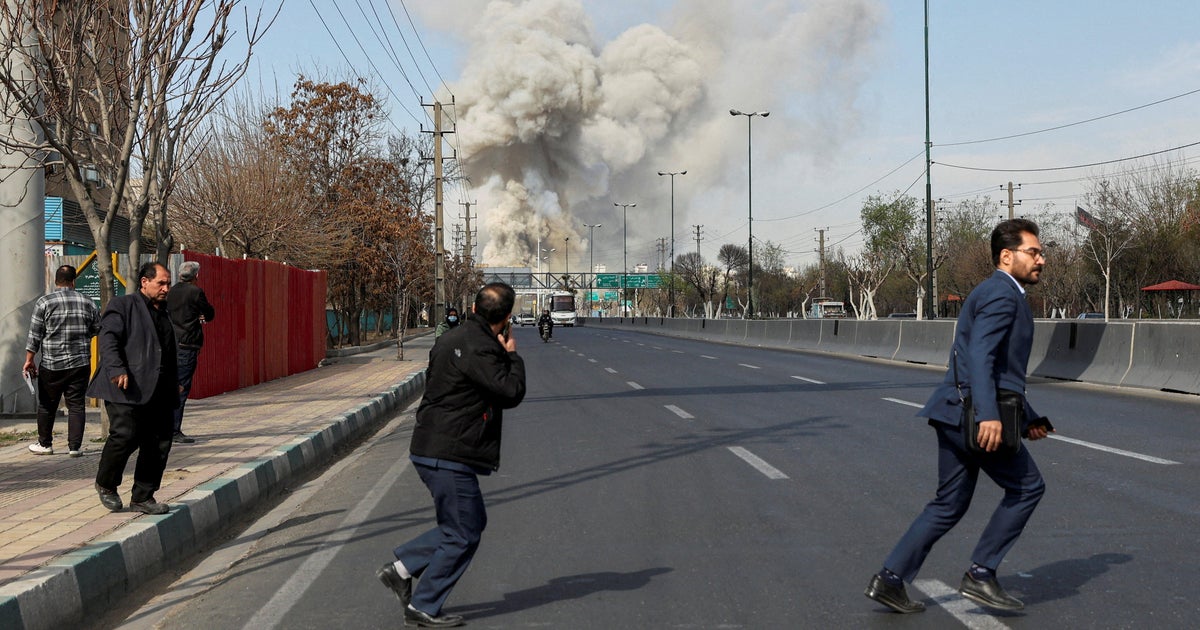
Back in Washington, the political battle over President Trump’s authority to wage war against Iran continues. The Senate rejected a war powers resolution that would have blocked Trump from using further military force against Iran without congressional approval, voting it down 47-53. The measure represented a Democratic attempt to rebuke the president amid what critics describe as the administration’s shifting justifications for the war and warnings about potential American casualties to come. Meanwhile, Israeli President Isaac Herzog defended the decision to strike Iran in an interview with CBS Evening News anchor Tony Dokoupil, saying Israel and the U.S. didn’t have “much of a choice” but to “take action.” Herzog claimed there were concerns that Iran was preparing to expand its weapons arsenal and that intelligence suggested Iran had “another new secret plan to rush” to develop a nuclear weapon. However, the U.S. intelligence community assessed last year that Iran was not actively building a nuclear weapon, and neither the U.S. nor Israel has provided public evidence of a new nuclear weapons program. Herzog was careful to clarify that Israel is not calling for a ground invasion: “Let me be clear, I’m not calling on any boots on the ground. I’m not asking any American or anyone else.” As the conflict continues, Israel announced new strikes targeting the Iranian-backed Hezbollah militant group in Lebanon, along with what it described as “a large-scale wave of strikes against infrastructure” in Tehran. Explosions were heard in multiple locations across the Iranian capital shortly after the announcement, suggesting that despite international concern and mounting casualties, both sides remain committed to military escalation rather than diplomatic resolution.