


Federal Regulator Takes Stand on Prediction Markets Amid State Challenges
CFTC Chairman Draws Battle Lines Over Jurisdiction
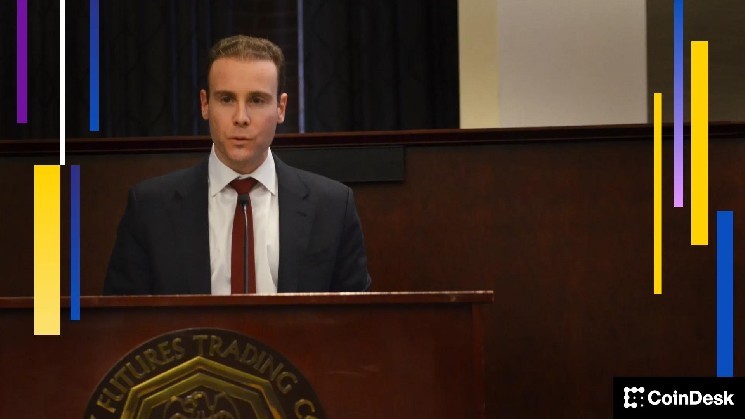
The debate over who gets to regulate prediction markets like Polymarket and Kalshi has reached a boiling point, with the head of the U.S. Commodity Futures Trading Commission firing a warning shot at state governments trying to assert their authority. CFTC Chairman Mike Selig didn’t mince words in a video statement he posted on social media, essentially telling states to back off and let his agency do its job. “To those who seek to challenge our authority in this space, let me be clear, we will see you in court,” Selig declared, making it abundantly clear that he believes the federal government, not individual states, should be calling the shots when it comes to these platforms. To back up his tough talk, Selig revealed that his agency had already filed legal paperwork asserting the CFTC’s role as the primary regulator of this growing corner of the financial markets. It’s a bold stance that sets up what could be a lengthy legal battle between federal and state authorities over an industry that’s rapidly expanding and attracting both mainstream attention and serious money.
The Case for Federal Oversight: Two Decades of Experience
Selig’s argument for federal jurisdiction isn’t just about turf protection—he’s making the case that the CFTC has both the experience and the track record to handle these markets responsibly. According to the chairman, his agency has been regulating these types of markets for more than twenty years, giving it a deep understanding of how they work and what risks they pose. But beyond just experience, Selig argues that prediction markets actually serve important purposes for everyday Americans, not just speculators and gamblers. He pointed to practical uses like allowing people to hedge against commercial risks such as temperature increases that might affect their businesses or energy price spikes that could wreak havoc on household budgets. Perhaps most interestingly, Selig also suggested that these markets serve as an important reality check on news media and information streams—essentially arguing that when people put their money where their mouth is, you get a more honest assessment of what’s likely to happen than you might get from pundits and talking heads. It’s an argument that frames prediction markets as useful tools for society rather than simply entertainment or gambling platforms.
Where the Real Fight Is: Sports Betting and State Laws
Despite Selig’s broader arguments about the social utility of prediction markets, the actual legal battles are playing out on more specific terrain—namely, sports betting. It’s telling that Selig didn’t include sports bets in his list of examples of useful market functions, because that’s precisely where states have been most aggressive in challenging these platforms. State authorities in Nevada, Massachusetts, and New York have gone after event-contract platforms, arguing that they’re essentially operating illegal sports betting operations that violate state gaming laws. These aren’t just regulatory warnings or slaps on the wrist—they’re serious legal challenges that have already scored some victories. A federal judge in Nevada sided with state authorities last November, ruling that the contracts being offered weren’t actually the CFTC’s business to regulate. That ruling is currently being appealed, but it represents a significant blow to the argument that federal jurisdiction is clear-cut and unquestionable. The fact that a federal judge could look at the same legal framework and come to the opposite conclusion shows just how unsettled this area of law really is.
Big Players Enter the Arena: Coinbase and the Trump Connection
The prediction markets space is attracting some heavy hitters who are willing to fight for their piece of the action. Coinbase, which is already the dominant cryptocurrency exchange in the United States, has decided it wants into the prediction markets game and isn’t backing down from state challenges. The company is currently suing Connecticut, Illinois, and Michigan over those states’ attempts to regulate sports betting as gaming, essentially arguing that what they’re offering is something fundamentally different from what you’d find at a casino or traditional sportsbook. But perhaps even more interesting—and politically significant—is the involvement of the Trump family in this industry. Donald Trump Jr., the president’s son, joined Kalshi as a strategic adviser in early 2025, and then expanded his involvement by joining Polymarket’s advisory board in August. And it doesn’t stop there: Trump Media & Technology Group, which owns the president’s Truth Social platform, announced in October that it was getting into the prediction markets business itself. This web of connections raises obvious questions about whether the CFTC’s suddenly more favorable stance toward these platforms has anything to do with the political connections of the companies involved.
A Dramatic Shift in Regulatory Approach
The change in the CFTC’s position on prediction markets represents a complete about-face from where the agency stood just a short time ago. Before President Trump returned to Washington and overhauled the agency’s leadership, the CFTC was actually fighting against these companies, particularly over their political betting markets. The agency had argued that political bets were unlawful and “contrary to the public interest”—a position that seems almost quaint given where things stand now. But the CFTC’s legal battles weren’t going well even before the political winds shifted. Courts had ruled against the agency in its fight with Kalshi, suggesting that the CFTC’s arguments weren’t as strong as regulators had hoped. When Trump’s team took over the agency, the whole approach was abandoned. Within weeks of being confirmed by the Senate, Selig was already talking about “resetting” the agency’s approach to prediction markets and pursuing new policies that would be more favorable to these platforms. He committed to advancing new rules based on what he called “a rational and coherent interpretation” of the Commodity Exchange Act that would promote “responsible innovation” in the derivatives markets. It’s the kind of language that signals a regulator who sees his job as enabling an industry to grow, not restraining it.
What’s Really at Stake: Power, Money, and the Future of Prediction Markets
At the heart of this fight is a fundamental question about how America regulates industries that don’t fit neatly into existing categories. Are prediction markets more like financial derivatives that help people manage risk, or are they more like gambling operations that states have traditionally regulated to protect consumers and prevent social harm? The answer to that question determines not just which level of government gets to write the rules, but what those rules will look like. States tend to regulate gambling strictly, with significant restrictions on who can operate, where they can operate, and what they can offer. Federal regulation of derivatives markets, by contrast, has historically been more permissive, focused on ensuring market integrity and preventing fraud rather than limiting access. For the companies involved—and for investors betting on this space becoming the next big thing—the difference between state and federal regulation could be the difference between explosive growth and being regulated out of existence in many markets. The involvement of politically connected figures and companies adds another layer of complexity, raising questions about whether policy is being driven by what’s best for consumers and markets, or by what’s best for well-connected insiders. As Selig promised court battles loom ahead, the resolution of these fights will shape not just the prediction markets industry, but potentially how regulators handle the next wave of financial innovation that doesn’t fit neatly into existing boxes. For now, both sides are digging in, and the only certainty is that lawyers will be busy for quite some time.