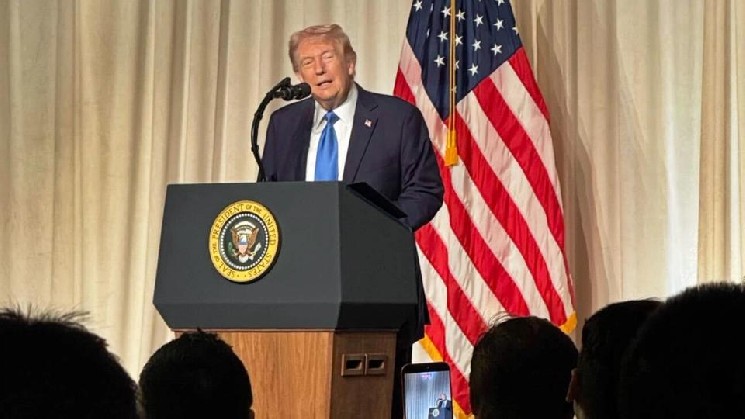

Trump’s Mar-a-Lago Crypto Summit: A Controversial Gathering of Digital Asset Elite
An Exclusive Event for Top Memecoin Holders
Over the weekend, several hundred of the wealthiest holders of the $TRUMP memecoin received an extraordinary privilege: intimate access to President Donald Trump at his luxurious Mar-a-Lago resort in Palm Beach, Florida. This wasn’t just another political fundraiser or routine meet-and-greet; it was billed as “the most exclusive conference in the world,” where cryptocurrency enthusiasts, industry titans, and high-profile personalities mingled with the sitting president of the United States. The attendee list read like a who’s who of the digital asset world, featuring prominent figures such as Paolo Ardoino, the CEO of Tether (one of the world’s largest stablecoin companies), Cathie Wood of Ark Invest (known for her bullish stance on disruptive technologies), and Nathan McCauley, who leads Anchorage Digital. Adding an unexpected touch of celebrity glamour to the finance-heavy gathering was boxing legend Mike Tyson, whose presence underscored the mainstream cultural appeal that cryptocurrency has achieved in recent years.
The event represented more than just an opportunity for wealthy crypto investors to rub elbows with political power; it symbolized the increasingly blurred lines between Trump’s political agenda, his personal business ventures, and the broader cryptocurrency industry. For those who had invested heavily in the Trump-branded memecoin, this exclusive access was both a reward for their financial commitment and a demonstration of how digital assets have created new pathways to political influence and proximity to power. The gathering highlighted a new reality in American politics where cryptocurrency wealth can translate directly into face time with the nation’s highest office.
Trump’s Strong Warning to Banking Lobbyists
The centerpiece of Trump’s appearance at the Mar-a-Lago crypto summit was his forceful message regarding pending cryptocurrency legislation, specifically the Digital Asset Market Clarity Act. Taking a firm stance aligned with his White House crypto advisers, Trump delivered a clear warning to traditional banking institutions and their lobbyists: stay out of the way of crypto legislation. His message was unambiguous—the White House would not allow banks to derail efforts to establish a comprehensive regulatory framework for the digital asset industry. This declaration represented a significant presidential intervention in an ongoing legislative battle that has profound implications for the future of both traditional finance and emerging cryptocurrency markets.
Trump’s comments directly addressed recent obstacles that have stalled the Clarity Act, which represents the crypto industry’s primary policy objective. Over recent months, powerful banking groups have successfully lobbied certain senators, raising concerns about how proposed regulations might enable stablecoin rewards programs. These traditional financial institutions have argued that such programs could pose a serious threat to their conventional deposit accounts, potentially drawing customers away from banks and toward cryptocurrency alternatives. This banking sector pushback has effectively derailed Senate progress on legislation that would create a new U.S. regulatory regime for digital assets—a framework that the crypto industry views as essential for legitimizing and expanding their operations within clear legal boundaries.
Despite these setbacks, recent discussions suggest the bill may still have a viable path forward, even with a tightening legislative calendar as the year progresses. Trump’s public commitment to prioritizing this legislation sends a powerful signal to both supporters and opponents that the White House intends to use its influence to push the measure through Congress. By taking such a public stance at this exclusive crypto gathering, Trump was essentially putting traditional banking interests on notice that they would face presidential opposition if they continued to obstruct cryptocurrency legislation.
Broader Policy Discussions and Trump’s Trademark Rhetoric
While cryptocurrency dominated the agenda, Trump’s remarks at the Mar-a-Lago conference ranged beyond digital assets to touch on various foreign policy matters. He discussed international relations involving Iran and Venezuela, and offered particularly sharp criticism of NATO, dismissing the transatlantic alliance as a “paper tiger” that is “never there for us.” This characterization reflects Trump’s long-standing skepticism toward multilateral defense organizations and his belief that America’s allies fail to adequately support U.S. interests—a theme that has been consistent throughout his political career.
When returning to the subject of digital assets, Trump maintained his characteristic promotional tone and confident assertions about America’s position in the global crypto landscape. “We are the leader in crypto. It’s become mainstream,” he declared to his audience of investors and industry executives. This statement reflects Trump’s broader narrative that under his leadership, the United States is asserting dominance in cutting-edge financial technologies. His enthusiastic embrace of cryptocurrency represents a marked departure from the more cautious approach taken by previous administrations and many international governments, which have viewed digital assets with suspicion due to concerns about financial stability, consumer protection, and potential use in illicit activities.
Trump’s willingness to champion cryptocurrency so publicly and forcefully has made him a hero to many in the digital asset community, who see him as the first truly pro-crypto president. However, this enthusiastic embrace comes with complications, particularly given his personal financial ties to crypto ventures bearing his name.
Conflicts of Interest and Democratic Concerns
The Trump administration’s aggressive push for crypto-friendly legislation has become increasingly controversial due to the president’s personal business interests in digital assets. Trump has backed numerous cryptocurrency ventures that carry his brand name, creating a situation where his policy positions directly benefit his own financial bottom line. This intersection of personal profit and public policy has drawn sharp criticism from Democrats and government ethics watchdogs, who see it as a textbook example of conflicts of interest that undermine democratic governance.
These concerns have become one of the significant sticking points in negotiations over the Digital Asset Market Clarity Act. Democratic lawmakers involved in crafting the legislation have insisted on provisions that would ban senior government officials—including and especially the president—from profiting off the cryptocurrency industry while simultaneously shaping its regulatory environment. This demand reflects broader worries about government corruption and the need for clear boundaries between policymaking and personal enrichment. The Democrats’ position is straightforward: if the president is going to champion legislation that benefits an industry, he shouldn’t be making money from that same industry.
This isn’t the first time Trump’s crypto-related events have sparked controversy and criticism. A previous gathering he hosted for investors in his memecoin triggered protests and sharp Democratic condemnation. Critics argued that his policy agenda was transparently designed to benefit his own business interests, representing exactly the kind of self-dealing and corruption that erodes public trust in government institutions. Additionally, Trump faced criticism for that earlier event because he met privately with unnamed foreign business figures who had essentially purchased their access through their investments—raising concerns about foreign influence and the commodification of presidential access.
The Broader Implications for Crypto Regulation
The Mar-a-Lago summit and Trump’s strong statements about cryptocurrency legislation highlight the complex and evolving relationship between government, traditional finance, and emerging digital asset technologies. The banking industry’s resistance to crypto-friendly legislation reflects genuine concerns about how these new financial instruments might disrupt long-established business models. Traditional banks have built their empires on deposit accounts, lending relationships, and the trust that comes from regulatory oversight and government backing. Stablecoins and other cryptocurrency products threaten to offer alternatives that could gradually erode banks’ customer base and reduce their centrality in the financial system.
From the crypto industry’s perspective, however, clear regulatory frameworks are essential for legitimacy and growth. Without defined rules, digital asset companies operate in legal ambiguity, facing the constant possibility of regulatory crackdowns or legal challenges that could destroy their businesses overnight. The Digital Asset Market Clarity Act represents an attempt to provide that certainty—to establish clear guidelines about what is and isn’t permissible, how companies should register and report their activities, and how consumers can be protected without stifling innovation.
Trump’s intervention in this debate adds significant weight to the pro-crypto side of the argument. Presidential support for legislation can dramatically increase its chances of passage, particularly when that president is willing to publicly challenge powerful interest groups like banking lobbyists. However, the complications arising from Trump’s personal financial interests in cryptocurrency may ultimately prove to be the legislation’s biggest obstacle. If Democrats refuse to support a bill unless it includes conflict-of-interest provisions that Trump finds unacceptable, the resulting standoff could doom the very legislation the crypto industry desperately wants. The irony would be striking: the president who promised to lead America to crypto dominance might actually prevent the regulatory clarity the industry needs because he’s unwilling to separate his policy positions from his personal profits. As the legislative calendar grows tighter and the debates more heated, how this tension resolves will likely determine not just the fate of the Clarity Act, but the broader trajectory of cryptocurrency regulation in America.