

Dragonfly Capital Defies Crypto Winter with Massive $650 Million Fund Raise
Betting Big During the Downturn
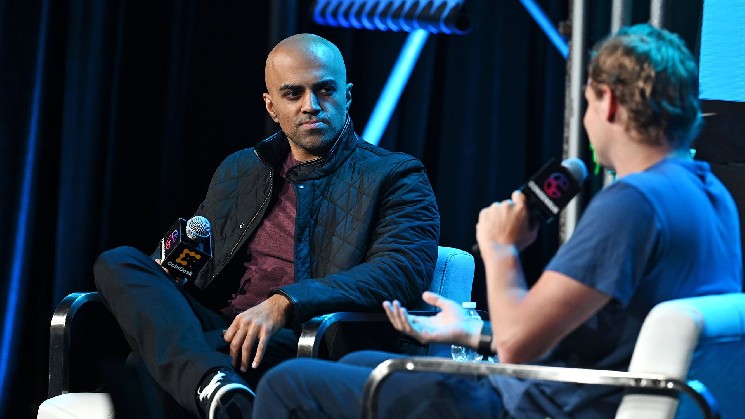
In a move that stands out starkly against the current gloomy backdrop of the cryptocurrency market, Dragonfly Capital has successfully closed its fourth fund at $650 million, establishing itself as one of the few venture firms bucking the trend in an industry that’s currently on its knees. Managing Partner Haseeb Qureshi announced this significant milestone while acknowledging the elephant in the room – that celebrating such an achievement feels somewhat uncomfortable when the entire crypto ecosystem is suffering through what many are calling a brutal bear market. Yet there’s method to what might seem like madness. Dragonfly has built its reputation and track record on a contrarian strategy: raising capital when everyone else is running for the exits. They did it during the infamous 2018 ICO crash, when thousands of blockchain projects evaporated overnight, and they did it again just before the spectacular Terra/Luna collapse in 2022 that wiped out billions in investor wealth. Remarkably, those funds raised during previous moments of maximum pessimism turned out to be the firm’s best-performing investments, validating their approach of investing when there’s blood in the streets. This latest raise originally targeted $500 million when first announced in September for early-stage project investments, but they’ve exceeded that goal by $150 million, demonstrating that despite widespread skepticism, sophisticated investors still see tremendous opportunity in blockchain technology’s future.
The Current State of Crypto: A Market in Distress
To understand just how bold Dragonfly’s move is, you need to grasp the severity of the current market conditions. The cryptocurrency sector is experiencing what can only be described as a financial reckoning. Bitcoin, the bellwether of the entire industry, has plummeted roughly 46% from its dizzying all-time high of over $126,000 reached in October of last year. That’s not just a correction – it’s a devastating collapse that has erased more than $1.4 trillion in total market capitalization across the crypto ecosystem. To put that number in perspective, that’s more than the entire GDP of countries like Australia or Spain simply evaporated into thin air. This downturn has had a cascading effect throughout the venture capital landscape, with fundraising for crypto-focused VC firms slowing to a trickle. Where money once flowed freely into blockchain startups and protocols during the 2021 boom years, investors have now adopted a dramatically more cautious stance, burned by spectacular failures and regulatory uncertainties. Many venture firms that raised large funds during the bull market are now sitting on underwater portfolios, struggling to deploy capital in an environment where valuations have crashed and promising projects have failed to deliver on their ambitious promises. Against this backdrop, Dragonfly’s ability to raise $650 million isn’t just impressive – it’s extraordinary, signaling that their limited partners maintain confidence in both the firm’s strategy and the sector’s long-term potential despite short-term pain.
Following the Money: The Shift to Real Financial Use Cases
What’s driving Dragonfly’s confidence when so many others are retreating? According to Qureshi, it comes down to a fundamental realignment happening within the crypto industry itself. While the overall market sentiment remains decidedly bearish and many blockchain applications have failed to gain meaningful traction, there’s one area where crypto is genuinely thriving: financial services. Qureshi makes a clear distinction between crypto’s financial applications, which he says are “exploding,” and non-financial use cases like NFT art projects, blockchain gaming, and various Web3 experiments, many of which have failed to find sustainable product-market fit. This observation reflects a broader maturation of the industry, where speculative hype is giving way to practical, value-creating applications. Dragonfly has strategically repositioned its investment thesis to lean heavily into crypto-financial infrastructure, focusing on areas like stablecoins (cryptocurrencies pegged to traditional currencies), tokenization of real-world assets, and on-chain payment systems. These aren’t the flashy, headline-grabbing crypto projects that dominated conversation during the bull market; instead, they’re the fundamental building blocks of a parallel financial system that’s actually being used by real people and institutions to solve real problems. This represents a significant philosophical shift across the industry – moving away from speculative Web3 applications that promised to decentralize everything from social media to file storage, and toward blockchain-based financial services that offer tangible improvements over traditional systems in terms of speed, cost, accessibility, and transparency.
Where the Smart Money Is Going
Qureshi’s bullish stance on crypto’s financial future isn’t just theoretical positioning – it’s backed by specific market observations and Dragonfly’s own portfolio performance. He points to several compelling trends that demonstrate crypto’s financial applications are having a genuine moment. “Stablecoins are eating the world,” he wrote, referencing the explosive growth of dollar-pegged cryptocurrencies that are now processing hundreds of billions in transactions and providing crucial financial infrastructure in emerging markets where traditional banking is unreliable or inaccessible. Decentralized Finance (DeFi) – the ecosystem of blockchain-based financial protocols offering lending, borrowing, and trading without traditional intermediaries – has grown so substantially that it’s beginning to rival centralized finance (CeFi) in certain metrics, despite the sector being less than six years old. Perhaps most tellingly, traditional financial institutions around the world, from major banks to asset managers, are actively developing their own crypto strategies rather than dismissing the technology as they did in earlier years. Even prediction markets, which allow people to bet on future events, are gaining credibility as reliable information sources, with platforms like Polymarket sometimes providing more accurate forecasts than traditional polling. Qureshi specifically highlighted Dragonfly’s recent investments as validation of this thesis, naming companies like Polymarket (prediction markets), Ethena (a synthetic dollar protocol), Rain (financial infrastructure), and Mesh (crypto connectivity) as examples of the types of financially-focused projects that are actually working and growing despite the broader market downturn.
A Cautiously Optimistic Consensus from the Venture Community
Dragonfly’s perspective isn’t entirely isolated within the venture capital community, though the overall mood remains decidedly cautious. At the recent Consensus Hong Kong 2026 conference, a gathering of some of the industry’s most prominent investors, a nuanced picture emerged of how sophisticated crypto VCs are thinking about the current market environment. Qureshi was joined by other notable investors including Mo Shaikh from Maximum Frequency Ventures and Paul Veradittakit from Pantera Capital, and despite their different firms and strategies, they all converged on remarkably similar conclusions. The consensus view can be summed up as: focus capital on what’s demonstrably working – primarily stablecoins and tokenization projects that have proven product-market fit and genuine usage – while making selective, careful bets on emerging sectors like artificial intelligence integration with blockchain and prediction markets. This represents a dramatic shift from the “spray and pray” investment approach that characterized the 2021 bull market, when venture firms were writing checks to virtually any project with a whitepaper and a charismatic founder. Now, due diligence has intensified, expectations for traction have increased, and there’s much greater emphasis on sustainable business models rather than token price appreciation. The mood at such conferences has transformed from the euphoric optimism of previous years to a more sober, professional assessment of which specific blockchain applications create real value. Yet beneath the caution, there remains a core belief among these investors that blockchain technology will fundamentally reshape financial infrastructure over the coming decades.
The Long-Term Vision: Still Early in the Revolution
Despite acknowledging the undeniable gloom pervading the current market, Qureshi is making a bold statement with this fund raise: the crypto revolution is far from over; in fact, it’s “still early in its exponential” growth curve. This new $650 million vehicle represents what he calls Dragonfly’s “biggest bet yet” on this thesis – that we’re not witnessing the death of crypto but rather a painful but necessary realignment toward sustainable, valuable applications. This perspective requires looking beyond quarterly token price movements and focusing instead on the fundamental infrastructure being built. While speculative retail investors have largely fled the market and many projects from the previous bull cycle have failed, serious builders continue developing technology that could reshape how money moves around the world, how assets are owned and transferred, and how financial services are accessed and delivered. The crypto industry has repeatedly demonstrated a pattern of boom-bust cycles, with each subsequent cycle building on a more solid foundation than the last. The infrastructure created during bear markets – when only the most committed builders remain – often becomes the backbone of the next bull cycle. Dragonfly’s contrarian approach of raising and deploying capital during downturns positions them to fund the projects that will define the next phase of blockchain adoption. Whether their optimism proves prescient or misplaced won’t be clear for years, but their track record of successful investments during previous downturns suggests they’ve identified something that many others are missing. For now, in an industry characterized by volatility and uncertainty, Dragonfly Capital is making a massive bet that crypto’s most important chapters are still to be written.