


Senator Warren Challenges SEC Chair Over Crypto Enforcement and Alleged Political Favoritism
A Heated Exchange on Capitol Hill
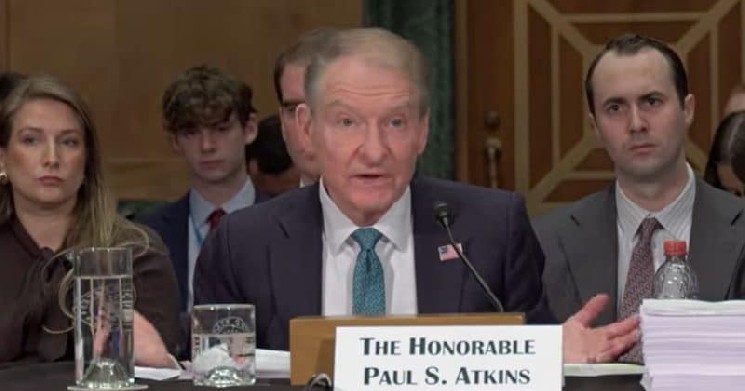
In a tense confrontation that underscored the growing political divide over cryptocurrency regulation, Senator Elizabeth Warren directly challenged Securities and Exchange Commission Chair Paul Atkins during his appearance before the Senate Banking, Housing, and Urban Affairs Committee this week. The Massachusetts Democrat pulled no punches as she questioned whether the nation’s top financial watchdog has essentially abandoned its duty to protect everyday investors in favor of powerful cryptocurrency firms with connections to former President Donald Trump. The hearing, which took place on Thursday, revealed deep concerns about the direction of crypto enforcement under the current SEC leadership and raised troubling questions about whether political donations and presidential connections have influenced the agency’s enforcement priorities. Warren’s pointed questioning reflected broader anxieties among Democrats and consumer advocates that the regulatory guardrails designed to protect American investors from fraud and manipulation in the volatile cryptocurrency markets are being systematically dismantled.
Sharp Decline in Enforcement Actions Raises Red Flags
At the heart of Senator Warren’s criticism was a striking pattern revealed in public data: the SEC has dramatically scaled back its enforcement activities across the board, particularly when it comes to cryptocurrency-related cases. According to the statistics Warren cited, the agency is pursuing fewer enforcement actions than at any point in the past decade, representing what she characterized as a historic retreat from the SEC’s core mission. This isn’t just about raw numbers—it’s about what those numbers represent for ordinary Americans who invest their hard-earned money in financial markets. The cryptocurrency sector, which has been plagued by scams, frauds, and spectacular collapses that have wiped out billions in investor wealth, appears to be receiving particularly lenient treatment under Atkins’ watch. Warren’s accusation that “the SEC no longer actively pursues any cases against firms with known Trump ties” struck at the possibility that enforcement decisions are being made based on political considerations rather than the merits of potential violations. For an agency that’s supposed to serve as an impartial referee ensuring fair and honest markets, such allegations represent a fundamental challenge to its credibility and mission.
The Million-Dollar Donation Question
Senator Warren didn’t just speak in generalities—she came armed with specific examples that painted a troubling picture of potential quid pro quo arrangements. She pointed to three major cryptocurrency exchanges—Kraken, Coinbase, and Gemini—each of which had been facing SEC enforcement actions for alleged violations of securities laws. What these three companies had in common, beyond their business model, was that each donated exactly $1 million to Donald Trump’s presidential inauguration fund. And what happened after those generous contributions? The SEC dropped its cases against all three firms. While correlation doesn’t always equal causation, the timing certainly raised eyebrows. Warren also highlighted the case of Binance, the world’s largest cryptocurrency exchange, which had faced serious regulatory scrutiny. That case was dismissed following a complex $2 billion deal involving the USD1 stablecoin, a digital currency with ties to the Trump family’s business interests. The pattern Warren outlined suggested a disturbing possibility: that major crypto firms could effectively buy their way out of regulatory enforcement through political donations and business deals with the right people. If true, such a system would fundamentally undermine the principle that the law applies equally to everyone, regardless of wealth or political connections.
Presidential Pardons and Released Fraudsters
Beyond the dropped corporate cases, Warren drew attention to another troubling pattern involving individual fraudsters who had been convicted of serious financial crimes. The senator noted that the SEC had released three convicted fraudsters—Devon Archer, Carlos Watson, and Trevor Milton—from ongoing enforcement matters after each received clemency from President Trump. The case of Trevor Milton proved particularly illuminating. Milton, the founder of electric truck company Nikola, had been convicted of fraud for making false statements to investors. Before receiving his presidential pardon, Milton donated a staggering $1.8 million to a Trump campaign fund. The implication was clear: if you have deep pockets and the willingness to financially support Trump’s political endeavors, you might just be able to escape the consequences of defrauding American investors. These weren’t minor figures caught up in technical violations—these were individuals who had been found guilty of deliberately misleading investors, the very kind of bad actors that the SEC exists to prosecute and deter. The fact that presidential pardons could intersect with SEC enforcement decisions in such a pattern raised fundamental questions about the independence of financial regulation from political interference.
Atkins Defends His Record and Pushes Back
SEC Chair Paul Atkins didn’t simply accept Warren’s accusations without pushback. He mounted a defense of his agency’s approach, arguing that the senator’s characterization misrepresented both the timeline and the reasoning behind recent enforcement decisions. According to Atkins, seven of the nine cryptocurrency litigation dismissals that Warren cited were related to registration issues—essentially legal and procedural matters rather than decisions to let bad actors off the hook. He also pointed out that several of these cases had been dropped before he even assumed leadership of the SEC, suggesting that blaming him personally for a broader shift in enforcement policy was unfair. Furthermore, Atkins insisted that the SEC under his leadership remains actively engaged in pursuing misconduct in the cryptocurrency sector, noting that the commission has opened approximately five new crypto-related cases since the current administration took office. His defense essentially boiled down to arguing that the SEC is being more strategic and legally sound in its approach rather than simply going soft on crypto. However, his response did little to address the specific pattern Warren identified regarding Trump-connected firms and donors, and the optics remained problematic even if innocent explanations existed for individual cases.
Broader Congressional Concerns and What Comes Next
The Senate hearing wasn’t an isolated incident but part of a broader pattern of congressional scrutiny of the SEC’s evolving approach to cryptocurrency regulation. Just one day earlier, during a House Financial Services Committee hearing on Wednesday, Atkins had faced similar criticism from Democratic lawmakers who accused the agency of turning a blind eye to crypto scams with Trump connections and thereby undermining public trust in the digital asset sector as a whole. Representative Maxine Waters, a prominent voice on financial regulation, specifically pressed Atkins about the SEC’s decision to indefinitely pause its lawsuit against Justin Sun, the controversial founder of the Tron blockchain platform. Sun has faced allegations of market manipulation and offering unregistered securities, making the pause in enforcement action particularly noteworthy. Atkins declined to comment on the Sun case or other specific ongoing matters, citing the standard practice of not discussing active investigations. As the crypto industry continues to grow and evolve, with millions of Americans now holding digital assets in their portfolios, the question of how vigorously the SEC enforces existing securities laws takes on enormous importance. The concerns raised by Warren and her colleagues suggest that congressional Democrats will continue to scrutinize the agency’s enforcement priorities, potentially setting up future confrontations over funding, legislative mandates, or even leadership changes. For ordinary investors trying to navigate the complex and often treacherous world of cryptocurrency, the outcome of this political battle could determine whether they have a regulatory watchdog truly looking out for their interests or whether the most powerful players in the crypto industry have effectively captured the agency meant to regulate them.