
Giant Octopuses: The Forgotten Ocean Predators of the Dinosaur Era
Ancient Krakens Ruled Prehistoric Seas
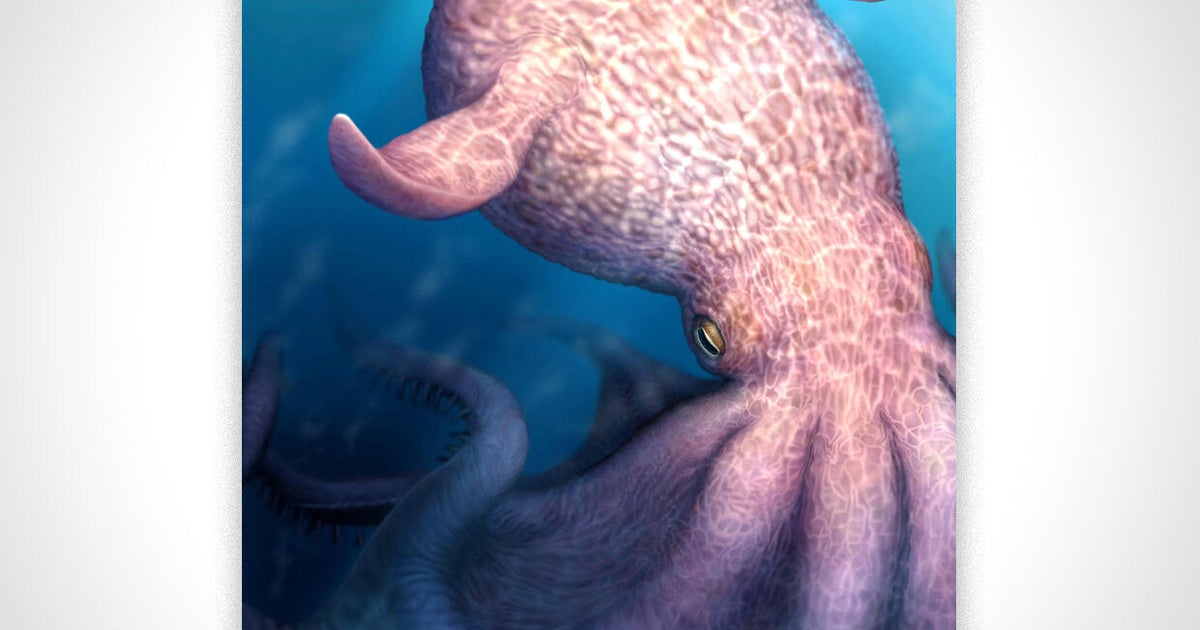
When we think about the terrifying predators that dominated Earth’s oceans during the age of dinosaurs, our minds typically conjure images of massive sharks with razor-sharp teeth or enormous marine reptiles like mosasaurs and plesiosaurs cutting through ancient waters. However, groundbreaking new research is revealing that we’ve been overlooking a formidable hunter that prowled the seas 100 million years ago: colossal octopuses that stretched more than 60 feet in length. These kraken-like creatures weren’t just swimming alongside the well-known predators of the late Cretaceous period—they were actively competing with them for dominance of the ocean food chain. “These krakens must have been a fearsome sight to behold,” remarked University of Alabama paleontologist Adiel Klompmaker, who wasn’t involved in the research but understands the significance of these findings. The discovery challenges our conventional understanding of prehistoric marine ecosystems and forces us to reconsider which creatures truly sat at the top of the ancient ocean’s hierarchy.
Why Have These Giant Octopuses Been Missing from History?
The question naturally arises: if these massive octopuses were such important predators, why are we only learning about them now? The answer lies in the fundamental nature of octopus biology and the inherent biases in paleontology. Scientists have long known that giant relatives of modern octopuses existed during the dinosaur era, and they’ve studied smaller ancient octopuses that drilled into clam shells for food. However, the soft-bodied nature of octopuses creates a significant challenge for fossil preservation. Unlike creatures with hard skeletons or shells, octopuses rarely leave behind complete fossilized remains that clearly indicate their true size and importance in ancient ecosystems. Additionally, there’s been a persistent assumption in scientific circles that invertebrates—animals without backbones—simply weren’t powerful or fearsome enough to compete with the vertebrate predators that captured public imagination. This perception has long relegated soft-bodied creatures to supporting roles in reconstructions of prehistoric life, despite evidence suggesting they may have been far more significant than previously thought.
The Secret Weapon: Powerful Beaks That Could Crush Anything
What made these ancient octopuses such effective predators wasn’t muscle or teeth, but rather a sophisticated hunting tool that modern octopuses still possess: incredibly powerful beaks made of chitin, a naturally occurring polymer that can be hardened to remarkable strength. These beaks, despite being part of an otherwise soft-bodied animal, were tough enough to crush through the protective shells of mollusks and even the bones of fish and other marine creatures. This biological innovation allowed octopuses to exploit food sources that many other predators couldn’t access as efficiently. The presence of these durable beaks is also what makes studying ancient octopuses possible at all, since these structures can fossilize even when the rest of the animal’s body deteriorates completely. In the new study, researchers examined the fossilized jaws of 15 ancient octopuses previously discovered in Japan and on Canada’s Vancouver Island. They didn’t stop there—the team developed an innovative technique called “digital fossil mining,” which involves scanning rocks in detailed cross-sections to reveal fossils hidden inside that would otherwise go unnoticed. Using this method, they identified 12 additional octopus jaws from Japanese rock formations, significantly expanding the dataset available for analysis.
Measuring Monsters: How Big Were These Ancient Krakens?
By carefully comparing the fossilized jaws to those of modern octopuses, the research team was able to estimate the overall body size of these ancient creatures with reasonable accuracy. The results were stunning: these prehistoric octopuses ranged from approximately 23 feet to an absolutely massive 62 feet in length. To put that in perspective, the largest specimens would have been longer than a bowling lane and could have looked a full-grown killer whale in the eye. Co-author Yasuhiro Iba, a paleontologist at Hokkaido University, emphasized that the largest jaw they studied was substantially bigger than anything found in any living octopus species today. In fact, these creatures represent some of the largest invertebrates ever recorded in Earth’s history. “Until now, the largest-known invertebrate has been the modern giant squid, which can reach about 12 meters (39 feet) in total length,” Iba explained to Reuters. The ancient octopuses exceeded even these impressive modern giants by more than 20 feet in some cases, making them truly extraordinary examples of invertebrate evolution and adaptation to the role of apex predator.
Evidence of a Crushing Lifestyle
The researchers didn’t just measure the fossilized jaws—they examined them closely for clues about how these animals lived and what they ate. What they found told a compelling story of powerful predators that regularly tackled hard-shelled and bony prey. The largest specimens’ jaws showed significant wear and tear, including scratches, chips, and rounded edges that could only result from repeated crushing of extremely hard materials. According to Iba, this damage pattern suggests “the animals repeatedly crushed hard prey such as shells and bones” throughout their lives. Without access to fossilized stomach contents, scientists can’t definitively state exactly what these octopuses were eating or whether they directly competed with sharks and marine reptiles for the same food sources. However, the evidence strongly suggests they were feeding on a variety of creatures including fish and shelled animals like snails and other mollusks. Their hunting strategy likely involved using their eight flexible arms to capture prey and bring it to their powerful beaks, which would then break apart even the most well-protected victims. This combination of flexibility, intelligence, and crushing power would have made them extraordinarily effective hunters in the complex marine ecosystems of the Cretaceous period.
Rewriting the Story of Ocean Predators
The findings, published in the journal Science, represent more than just the discovery of large ancient animals—they fundamentally challenge our understanding of how predator evolution worked in marine environments. As the researchers noted in their paper, “Our findings show that powerful jaws, and the loss of superficial skeletons, convergently transformed cephalopods and marine vertebrates into huge, intelligent predators.” This means that both octopuses and their vertebrate competitors independently evolved similar solutions to the challenge of becoming top predators: developing powerful jaw structures capable of processing a wide variety of prey. The fact that soft-bodied invertebrates could successfully compete in the same ecological niches as heavily armored reptiles and cartilaginous sharks speaks to the remarkable adaptability of cephalopod intelligence and body design. Neil Landman, a paleontologist at the American Museum of Natural History who wasn’t involved in the research, emphasized that finding octopus fossils in additional locations around the world could help scientists develop a clearer picture of how these creatures fit into ancient food webs. “It’s a big old planet,” Landman observed, “So we have lots to look at to piece together the marine ecosystem through time.” Interestingly, this research comes shortly after another octopus-related correction in the paleontological record: a prehistoric fossil previously recognized by Guinness World Records as the world’s oldest octopus was recently reclassified as belonging instead to a relative of the nautilus, a different type of cephalopod that has both tentacles and a protective shell. These ongoing refinements in our understanding demonstrate that the story of ancient ocean life is still being written, with new chapters added as technology and techniques improve our ability to read the fossil record.