

European Union Takes Stand Against West Bank Violence with New Sanctions
Breaking the Deadlock: A Historic Decision
After months of internal disagreement and political gridlock, European Union foreign ministers reached a significant agreement on Monday to impose sanctions targeting both violent Israeli settlers operating in the occupied West Bank and senior Hamas figures. This decision represents a meaningful shift in the EU’s approach to the escalating violence in the Palestinian territories and marks the end of a prolonged stalemate that had prevented the bloc from taking concrete action. The sanctions package, while limited in scope, demonstrates the EU’s growing concern over the deteriorating security situation and human rights conditions in the West Bank. The breakthrough became possible following recent political changes in Hungary, whose previous government had consistently blocked such measures for months. EU foreign policy chief Kaja Kallas emphasized that this decision signals the bloc’s commitment to moving beyond political paralysis toward concrete action, stating clearly that extremism and violence, regardless of their source, must have consequences.
The Details Behind the Sanctions Package
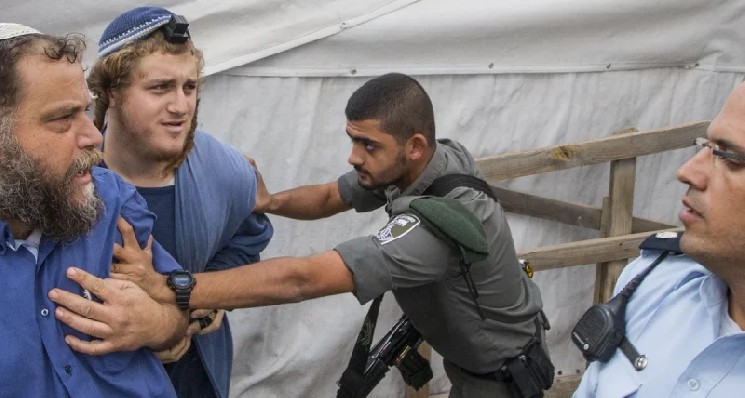
The newly approved sanctions specifically target three individual Israeli settlers and four settler organizations involved in violent activities against Palestinian communities in the West Bank. However, European officials have not yet publicly revealed the names of those individuals or organizations, though this information is expected to be disclosed in the coming days as the measures are formally implemented. These targeted sanctions typically include asset freezes and travel bans, designed to hold accountable those directly responsible for violence and human rights violations. Simultaneously, the package includes measures against leading Hamas figures, though their identities have also not been publicly announced. The decision to sanction both sides reflects the EU’s attempt to maintain a balanced approach to the conflict, though this symmetry has drawn criticism from various quarters. The sanctions were developed following extensive documentation and reports of increasing settler violence against Palestinian civilians, including attacks on homes, agricultural land, and infrastructure, which have displaced numerous Palestinian families and communities throughout the occupied territories.
The Political Journey: From Obstruction to Agreement
The path to this agreement was fraught with political obstacles, primarily centered on Hungary’s opposition under its previous government. For months, Budapest effectively wielded its veto power within the EU’s consensus-based foreign policy framework, preventing the bloc from taking action despite mounting evidence of settler violence and growing pressure from human rights organizations and several EU member states. The political landscape shifted dramatically following Hungary’s recent election, which brought a change in government and, consequently, a change in position on this contentious issue. This breakthrough highlights both the challenges and the possibilities within the EU’s decision-making process, where all member states must agree on foreign policy measures. Several European governments, particularly those in Western and Northern Europe, had been increasingly vocal about the need for the EU to respond more forcefully to reports of systematic violence against Palestinians in the West Bank. These countries argued that the EU’s credibility as a defender of human rights and international law was at stake if it remained silent in the face of well-documented abuses. The resolution of this deadlock represents not just a policy decision but also a statement about European values and the bloc’s willingness to act on them.
Mixed Reactions and International Criticism
The sanctions announcement triggered swift and sharp reactions from both Israeli officials and Hamas representatives, with both sides criticizing the EU’s decision, albeit for different reasons. Israeli Foreign Minister Gideon Saar issued a strongly worded statement condemning what he characterized as arbitrary and politically motivated sanctions against Israeli citizens and organizations. He particularly objected to what he viewed as the EU creating a false moral equivalence between Israeli citizens and Hamas, a designated terrorist organization by both the EU and the United States. The Israeli Prime Minister’s office echoed this criticism, arguing that the EU had drawn an inappropriate symmetry between legitimate Israeli citizens and a terrorist group responsible for attacks against Israeli civilians. From the other side, Hamas official Basem Naim also criticized the decision, though from a different perspective, accusing the European Union of political hypocrisy in its approach to the conflict. These reactions underscore the deep complexity of the Israeli-Palestinian conflict and the difficulty international actors face when attempting to address violence and human rights concerns in a manner that both sides consider fair and legitimate. The criticism from both parties, paradoxically, may suggest that the EU has attempted to strike a middle ground, though whether this approach will prove effective remains to be seen.
What the Sanctions Don’t Include: The Limits of EU Action
While the sanctions represent a step forward in EU policy, they fall considerably short of the broader measures that some European officials, advocacy groups, and human rights organizations have been pushing for in recent years. The package does not include trade restrictions on goods produced in Israeli settlements, a measure that has been debated within European circles for years but has faced significant political opposition. Similarly, the sanctions do not trigger a wider review of EU-Israel relations or affect the various cooperation agreements between the European Union and Israel, which cover everything from trade to scientific research and security cooperation. These limitations reflect the diverse opinions within the EU membership, where some countries maintain close security and economic ties with Israel and are reluctant to support measures that might fundamentally alter those relationships. Some European advocacy groups and Palestinian solidarity organizations have expressed disappointment that the sanctions don’t go further, arguing that limited measures against a handful of individuals and organizations will do little to change the situation on the ground or to deter future violence. They contend that more comprehensive action, including economic pressure and diplomatic consequences, would be necessary to meaningfully address the root causes of the conflict and the systematic nature of settlement expansion and associated violence in the occupied territories.
Looking Ahead: Implications and Future Challenges
This decision by EU foreign ministers raises important questions about the future direction of European policy toward the Israeli-Palestinian conflict and the occupied territories. While the sanctions represent a break from previous inaction, their practical impact remains uncertain, particularly given their limited scope and the strong opposition from Israeli authorities. The effectiveness of such measures typically depends not only on their direct consequences but also on their symbolic weight and their potential to influence broader international opinion and policy. The European Union’s action could potentially encourage other international actors to take similar steps, creating a cumulative effect that increases pressure on all parties to the conflict to reduce violence and respect international law. However, the sanctions could also deepen tensions between the EU and Israel, potentially complicating diplomatic efforts and reducing European influence in the region. For Palestinian communities in the West Bank who continue to face violence and displacement, the question remains whether these measures will translate into any meaningful improvement in their daily security and living conditions. The coming months will be crucial in determining whether this represents the beginning of a more assertive European approach to the conflict or remains an isolated action unlikely to significantly alter the dynamics on the ground. The EU will likely face continued pressure from various stakeholders to either expand these sanctions or to demonstrate their concrete impact in reducing violence and protecting civilian populations in the occupied territories.