


The Real Roadblock to Bitcoin’s Bull Run: Insights from Crypto Veterans
Understanding the Current Market Stalemate
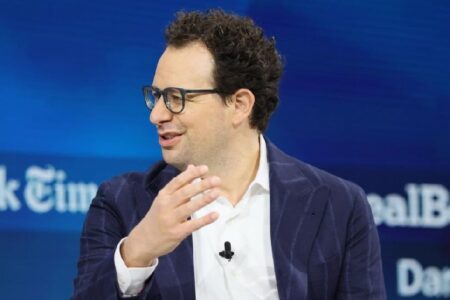
The cryptocurrency community is buzzing with anticipation as Bitcoin hovers near potential all-time highs, yet something seems to be holding back the explosive bull run that many have been predicting. In a recent broadcast that caught the attention of crypto enthusiasts worldwide, two respected voices in the industry—Andrew Parish and Tillman Holloway—offered their perspective on what’s really preventing the market from taking off. Their analysis challenges the conventional wisdom that many investors have been relying on, suggesting that the obstacles to a full-blown bull market are more nuanced than the typical economic indicators we’ve all been watching. Rather than pointing fingers at the usual suspects like inflation rates or Federal Reserve policy decisions, these veterans argue that the real issues lie deeper within the market’s structure and the psychology of its participants. Their conversation reveals a complex picture of institutional caution, regulatory fog, and retail hesitation that’s creating a unique moment in cryptocurrency history—one that could be setting the stage for something significant once these barriers finally break down.
Beyond the Headlines: It’s Not Just About Economics
Most cryptocurrency investors have become accustomed to checking inflation reports, employment data, and Federal Reserve announcements as if they were checking the weather before planning their trades. However, Parish and Holloway suggest that this focus might be missing the forest for the trees. While macroeconomic factors certainly play a role in market sentiment, they argue that two other forces are exerting far greater influence on Bitcoin’s current trajectory: corporate liquidity conditions and the murky waters of regulatory uncertainty. The liquidity situation is particularly interesting because it operates somewhat invisibly to the average investor. Companies and institutions aren’t just making decisions based on whether Bitcoin is a good investment—they’re also considering their overall cash positions, their operational needs, and their ability to deploy capital in what remains a somewhat unconventional asset class. Meanwhile, the regulatory landscape continues to shift beneath everyone’s feet, with different jurisdictions taking wildly different approaches to cryptocurrency oversight. This uncertainty makes even the most crypto-friendly institutions hesitant to commit massive amounts of capital, as the rules of the game could change dramatically with a single regulatory announcement or court decision. Together, these factors create a kind of invisible ceiling that’s preventing the market from reaching its full potential, even as the fundamentals for Bitcoin adoption continue to strengthen.
The Wait-and-See Approach of Big Money
Andrew Parish’s observation about capital flows not reaching desired levels points to a crucial reality in today’s crypto market: the big players are sitting on their hands. These large investors—think family offices, hedge funds, and corporate treasuries—have the firepower to move markets significantly, but they’re currently in what Parish describes as a “wait-and-see” mode. This cautious stance isn’t necessarily because they’ve lost faith in cryptocurrency as an asset class; rather, it reflects a calculated decision to let certain uncertainties resolve before committing substantial resources. The patience of institutional investors stands in stark contrast to the “when moon?” mentality that often characterizes retail crypto enthusiasm. These sophisticated players have learned from previous market cycles that timing matters, and they’re comfortable waiting for clearer signals before making their moves. This institutional hesitation creates a peculiar dynamic where the market has strong fundamental support but lacks the aggressive buying pressure needed to push prices dramatically higher. It’s like having a rocket fully fueled and ready for launch but waiting for ideal weather conditions—everything is technically prepared, but the actual liftoff remains in the future. For individual investors trying to time the market, this institutional patience can be both frustrating and instructive, offering a reminder that the biggest winners in financial markets are often those who can afford to wait for the right moment.
The OTC Market: Bitcoin’s Silent Accumulation Phase
One of the most fascinating insights from the Parish-Holloway discussion involves the over-the-counter (OTC) markets, where large blocks of Bitcoin change hands away from public exchanges. While data shows that Bitcoin supply on exchanges is decreasing—typically a bullish signal suggesting that people are moving coins into long-term storage—the analysts note that significant institutional purchases are happening in OTC markets without creating the dramatic price movements that many expected. This phenomenon is worth understanding because it reveals how sophisticated buyers operate differently from retail traders. When a large institution wants to acquire a substantial Bitcoin position, broadcasting those intentions on public exchanges would drive prices up against them, making each successive purchase more expensive. Instead, they turn to OTC desks that can source large quantities of Bitcoin without moving the public market. This creates a scenario where significant accumulation is happening beneath the surface, building a foundation for future price appreciation without immediately triggering it. It’s similar to a large buyer quietly acquiring shares in a company without sending the stock price soaring—the accumulation phase happens silently, but it sets the stage for what comes next. For the average crypto investor, this means that exchange data only tells part of the story, and the real preparation for a bull run might be happening in channels that aren’t immediately visible to most market participants.
Political Uncertainty and the Coming Spring Effect
Tillman Holloway’s comments about political factors add another layer to understanding the current market dynamics. The mention of upcoming elections and global political instability as suppressants on investor appetite acknowledges a reality that pure technical analysts sometimes overlook: markets don’t operate in a vacuum, and political events can dramatically affect risk appetite across all asset classes. Elections bring policy uncertainty, and when combined with ongoing geopolitical tensions in various parts of the world, they create an environment where even risk-tolerant investors might pause before making aggressive bets on volatile assets like cryptocurrency. However, Holloway’s really intriguing point is about the “spring effect” that this suppression might create. In physics, a compressed spring stores potential energy that’s released explosively when the pressure is removed. Applied to markets, this metaphor suggests that the longer investors remain on the sidelines despite positive fundamentals, the more dramatic the eventual release might be when the uncertainties finally clear. This isn’t just optimistic speculation—it’s based on historical market behavior where extended periods of consolidation and uncertainty often precede the most dramatic bull runs. The pent-up demand, the capital sitting in cash or cash equivalents waiting for deployment, and the fear of missing out on the next major move all combine to create conditions for rapid price appreciation once the psychological and practical barriers finally fall. For investors, understanding this potential spring effect means recognizing that quiet periods in markets aren’t necessarily dead periods—they might be compression phases before significant expansion.
The Missing Ingredient: Retail FOMO and What It Means
Perhaps the most telling observation from Parish and Holloway concerns what’s currently absent from the market: widespread retail participation driven by FOMO, or fear of missing out. Anyone who experienced the 2017 or 2021 cryptocurrency bull runs will remember the unique energy that retail investors bring to the market. When your relatives start asking about how to buy Bitcoin at family gatherings, when social media is flooded with cryptocurrency success stories, and when new exchanges can’t process account applications fast enough—that’s when you know retail FOMO has arrived. That phenomenon is notably absent from the current market environment, and the analysts suggest that this absence means the true bull run hasn’t actually started yet. This observation is simultaneously sobering and exciting. It’s sobering because it suggests that despite positive price action and growing institutional adoption, we haven’t yet seen the phase of the market cycle that historically produces the most dramatic gains. It’s exciting for the same reason—if the current market conditions represent merely the setup phase rather than the climax, then there’s potentially significant upside remaining. The return of retail investors with FOMO mentality would bring not just capital but also the kind of momentum and viral growth that can push cryptocurrency prices to levels that seem unreasonable by traditional valuation methods. Understanding where we are in this cycle—apparently in an accumulation and preparation phase rather than a euphoric blow-off top—can help investors calibrate their expectations and strategies accordingly. The key takeaway is that while patience is required, the conditions are potentially being set for the kind of market movement that attracts mainstream attention and participation once again.