


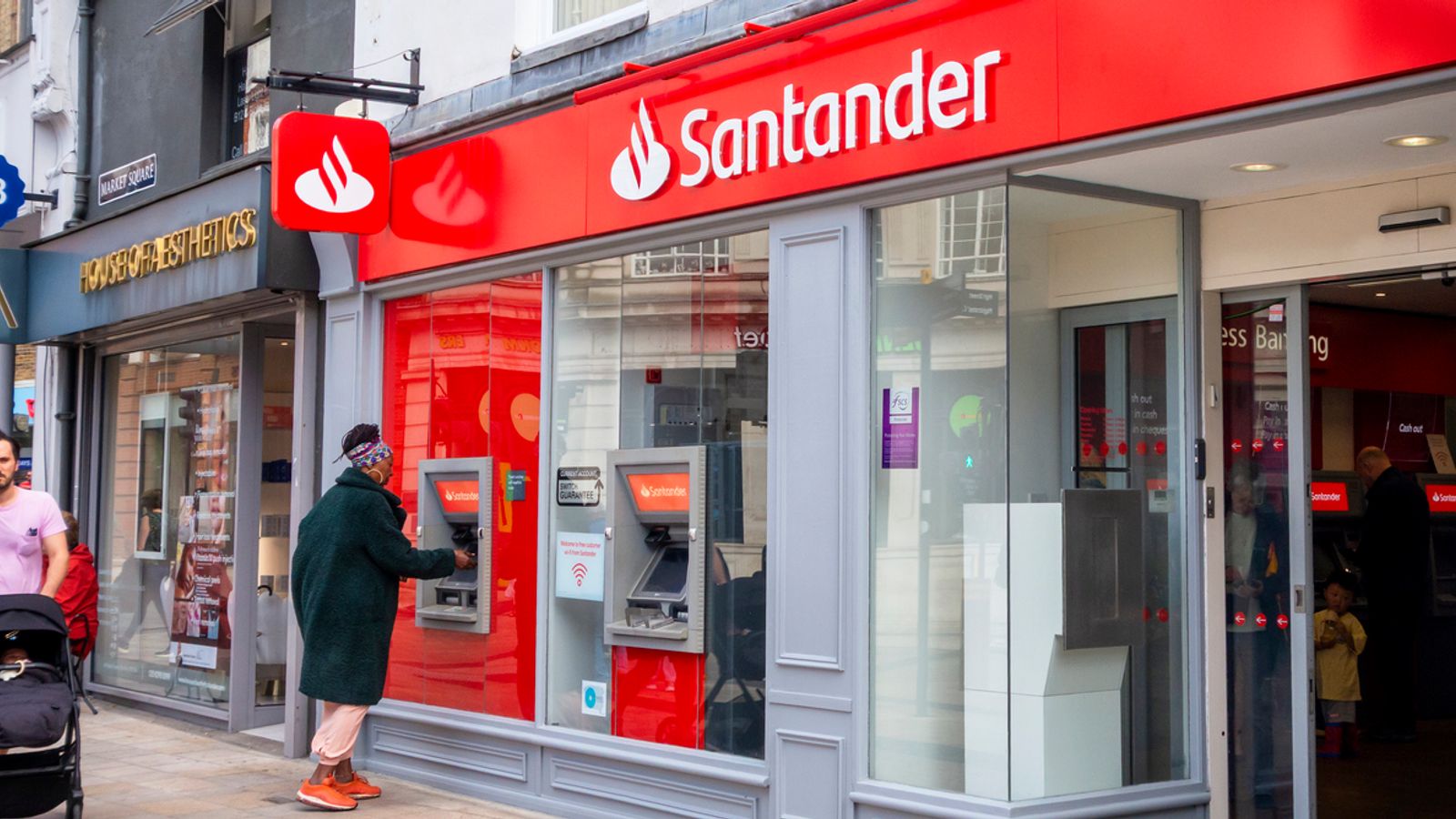

Santander Bank Announces Widespread Branch Closures Across the UK
Nearly 300 Jobs on the Line as Digital Banking Takes Priority
In a move that reflects the dramatic shift in how people manage their money, Santander has revealed plans to shut down 44 more bank branches across the United Kingdom, putting approximately 300 employees at risk of losing their jobs. The Spain-based banking giant has justified this decision by pointing to the evolving preferences of its customers, with an overwhelming majority now choosing to handle their banking needs through digital platforms rather than visiting physical locations. This announcement comes as particularly unwelcome news for employees and communities affected, especially considering that less than a year ago, the bank had already declared its intention to close 95 branches. The latest round of closures will leave Santander UK operating just 244 full-service branches, representing a dramatic reduction in the bank’s physical presence throughout the country and marking a significant transformation in how the institution serves its customers.
The Complete List of Affected Communities and Closure Timeline
The impact of Santander’s decision will be felt across dozens of communities throughout England, Scotland, Wales, and Northern Ireland, with closures scheduled to begin as early as late April and continue through January 2027. Towns and cities facing branch closures include Andover in Hampshire, Banbridge and Bangor in County Down, Berwick Upon Tweed in Northumberland, and Bishop Auckland in County Durham. Major market towns such as Boston in Lincolnshire, Bridgend in Mid Glamorgan, and Bridgwater in Somerset are also on the list, along with Cwmbran in Gwent and Enniskillen in County Fermanagh. The closures extend to communities like Evesham, Glengormley, Golders Green in London, Gosport, Haverfordwest, Heswall, and Huntingdon. Additional locations losing their branches include Kirkintilloch, Leighton Buzzard, Leyland, Liskeard, Macclesfield, Mansfield, Melton Mowbray, Merthyr Tydfil, Mold, Newbury, Newton Abbot, Northallerton, Ormskirk, Pontefract, Ramsgate, Redditch, Ringwood, Scunthorpe, Shirley, Stafford, Stranraer, Stratford Upon Avon, Tonbridge, Welwyn Garden City, Whitehaven, Wilmslow, and Woking. Most closures are scheduled for completion between late April and mid-May, though some locations including Leighton Buzzard, Ormskirk, Whitehaven, and Wilmslow won’t close their doors until the end of January 2027, giving those communities a bit more time to adjust to the changes.
The Digital Revolution Driving Branch Closures
The driving force behind Santander’s decision to drastically reduce its physical footprint lies in the numbers: an astounding 96% of all customer transactions are now being completed through digital channels. This represents a fundamental transformation in consumer behavior that has accelerated dramatically over recent years, particularly following the COVID-19 pandemic, which forced many people to become comfortable with online and mobile banking out of necessity. The bank argues that these closures are simply a pragmatic response to how customers actually want to interact with their financial institution. With the vast majority of people now checking balances, transferring money, paying bills, and even applying for loans and mortgages through smartphone apps and websites, the traditional model of maintaining expensive high-street branches with full-time staff and significant overhead costs has become increasingly difficult to justify from a business perspective. For Santander, this shift represents both a challenge and an opportunity—while it means disappointing news for employees and some customers who prefer face-to-face service, it also allows the bank to redirect resources toward improving digital services and potentially offering more competitive rates by reducing operational costs.
Alternative Banking Services and Community Support Initiatives
In response to inevitable criticism about reducing access to in-person banking services, Santander has emphasized its commitment to maintaining a presence in affected communities through alternative means. The bank has highlighted its community bankers programme as a key initiative designed to provide support in areas where full-service branches are closing, though critics question whether this can truly replace the accessibility and personal service that physical branches provide. Beyond its 244 remaining full-service branches, Santander’s UK network will consist of a diverse range of alternative banking locations designed to meet different customer needs. This includes 19 counter-free branches where customers can use digital services with assistance available if needed, 36 reduced-hour branches that maintain a physical presence but with limited opening times, six work cafes that combine banking services with comfortable spaces where customers can work or meet, and 111 Santander Locals—smaller-scale operations that provide essential banking services without the full infrastructure of traditional branches. The bank insists it will continue investing in both its physical network, however reconfigured, and its digital banking platforms to ensure customers can access services in whatever way works best for them. However, consumer advocates and age-related charities have consistently raised concerns that the rapid disappearance of traditional branches disproportionately affects elderly customers, those with disabilities, people in rural areas with poor internet connectivity, and individuals who lack the digital literacy or access to technology needed to bank online.
The Broader Context of Britain’s Disappearing Bank Branches
Santander’s announcement is merely the latest chapter in a long-running story of dramatic change across the entire British banking industry. Over the past decade, an alarming two-thirds of the UK’s bank branch network has disappeared, fundamentally altering the landscape of high streets throughout the country and changing the relationship between financial institutions and the communities they serve. This transformation actually began gathering pace following the 2008-2009 financial crisis, when banks came under intense pressure to reduce costs and improve profitability after requiring government bailouts and facing heightened regulatory scrutiny. The shift has accelerated in recent years as technological advancement has made digital banking more sophisticated and user-friendly, while changing consumer habits—particularly among younger generations who have grown up with smartphones—have reduced demand for traditional branch services. For many town centers, particularly in smaller communities and rural areas, the closure of bank branches represents more than just a business decision—it symbolizes a broader decline in local services and community infrastructure. Banks have long served as anchor tenants on high streets, and their departure often contributes to a sense of decline that can affect other businesses and community morale. Moreover, the closure of branches raises serious questions about financial inclusion and whether society is moving too quickly toward a digital-only future that leaves some people behind.
Looking Ahead: The Future of Banking in Britain
As Santander implements these latest closures and continues adapting its business model to reflect digital-first consumer behavior, the future of banking in Britain appears increasingly uncertain for those who value or depend on in-person services. The bank’s commitment to maintaining investment in both digital services and its reconfigured physical network suggests an acknowledgment that not all customers can or want to bank exclusively online, but the steady reduction in full-service branches indicates where the industry’s priorities truly lie. For the nearly 300 Santander employees whose jobs are at risk, the announcement represents personal uncertainty and the anxiety of potential unemployment, though the bank will likely offer some staff opportunities to relocate or transition to other roles within the organization. For customers in the 44 affected communities, particularly those who are elderly, disabled, or simply prefer face-to-face interaction for complex financial matters, the closures mean adapting to new ways of accessing banking services or potentially traveling greater distances to reach the nearest branch. The banking industry as a whole faces the challenge of balancing efficiency and profitability with social responsibility and ensuring that the move toward digital services doesn’t create a two-tier system that excludes vulnerable populations. As this story continues to develop and the closure dates approach, affected communities, employees, and customers will be watching closely to see whether Santander’s promises of continued support through alternative services prove adequate, or whether these closures represent another step toward a future where personal banking relationships become a thing of the past, replaced entirely by apps, algorithms, and automated systems.