

London Police Chief Demands Full Epstein Files in Investigation of Former Royal and British Officials
Unprecedented Investigation into British Elite
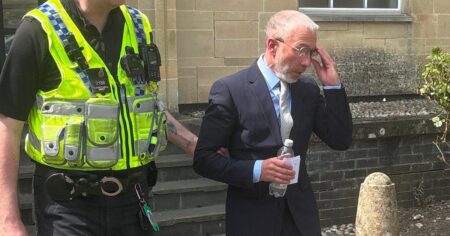
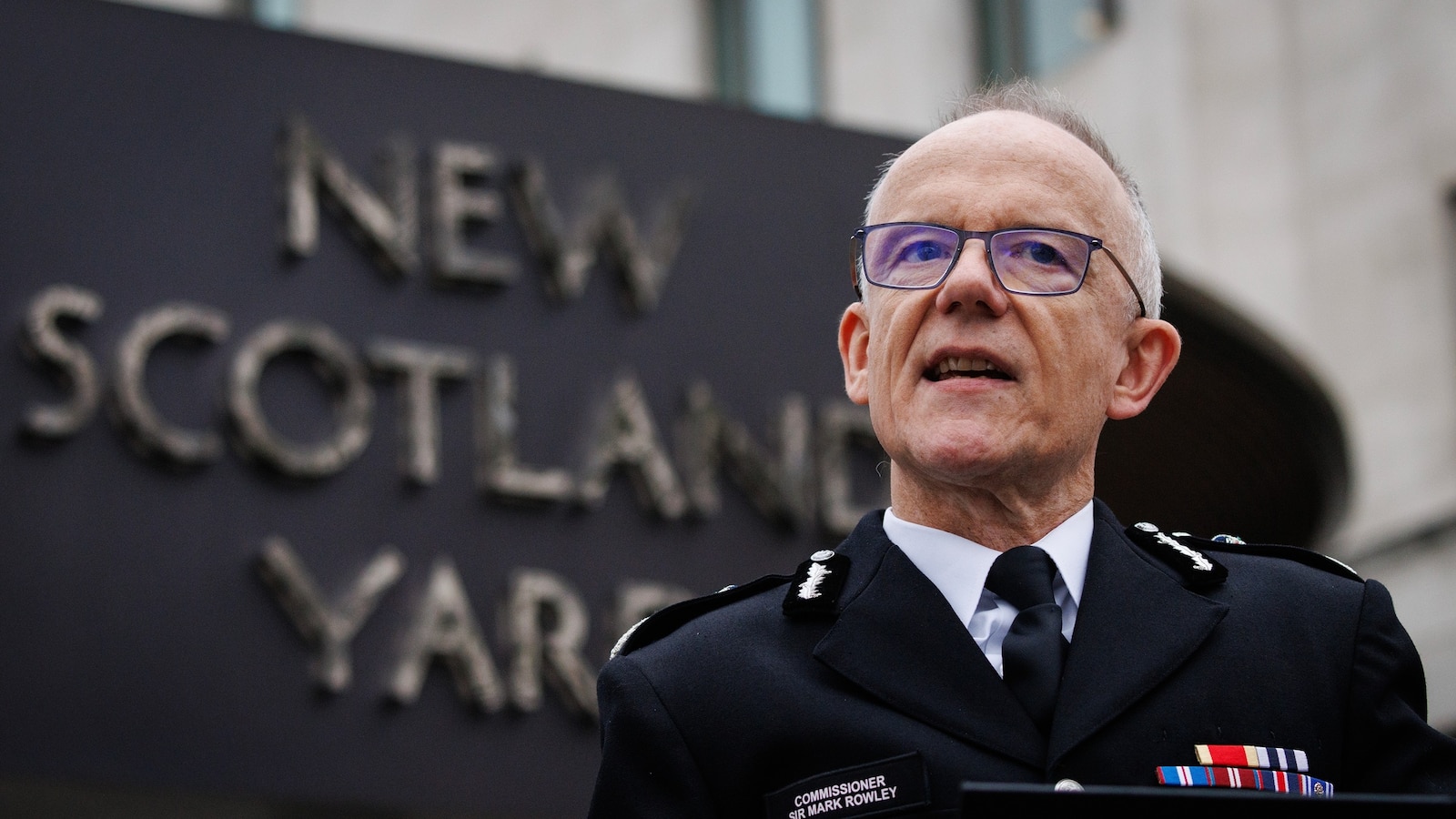
In a significant development that has sent shockwaves through British society, London’s Metropolitan Police Commissioner Sir Mark Rowley is aggressively pursuing access to complete, unredacted documents from the Epstein files held by United States authorities. Speaking with ABC News just one month after the dramatic arrest of Andrew Mountbatten-Windsor, the man formerly known as Prince Andrew, Commissioner Rowley made it clear that British law enforcement is committed to conducting thorough investigations regardless of the status or prominence of those involved. The investigation marks an unprecedented moment in British history, as authorities examine potential criminal conduct by individuals who once occupied some of the highest positions in the nation’s government and royal family. This pursuit of justice represents a fundamental shift in how British law enforcement approaches allegations against the powerful and privileged.
The Metropolitan Police chief’s determination to obtain original documentation from American authorities underscores the seriousness with which British investigators are treating these cases. Commissioner Rowley emphasized that while summaries and redacted versions of documents might suffice for preliminary inquiries, actual court proceedings will require access to complete, original materials. “We need the original copy and where did it come from and that’s going to be necessary if we get to the stage of court cases,” Rowley explained during his interview. The investigation focuses on two prominent British figures: Andrew Mountbatten-Windsor and Peter Mandelson, a former British ambassador to the United States and business secretary. Both men are being investigated on suspicion of misconduct in public office, with emails released earlier this year by the Department of Justice suggesting they may have shared sensitive governmental information with convicted sex offender Jeffrey Epstein during their official capacities.
The Evidence Trail and Information Sharing Allegations
The allegations against these high-profile British figures stem from a substantial body of evidence currently held within the United States justice system, accumulated during investigations into Jeffrey Epstein and his associate Ghislaine Maxwell. While American Department of Justice officials have maintained that they have exhausted investigative avenues regarding Epstein’s crimes on U.S. soil, their British counterparts see the matter quite differently. The emails and documents that have emerged paint a troubling picture of potentially inappropriate relationships between Epstein and individuals holding sensitive government positions. In one particularly concerning email referenced by Commissioner Rowley, Peter Mandelson appeared to share information about the timing of an impending financial bailout with Epstein during the European Union’s sovereign debt crisis—information that would have been highly confidential and potentially valuable for financial speculation.
The investigation into Andrew Mountbatten-Windsor involves examination of whether he too shared classified or sensitive information from his position as the United Kingdom’s trade envoy. “It looks like it was shared with Epstein so we’re looking at that as to whether that’s a criminal offense and then colleagues in Thames Valley are looking at other documents that Andrew Mountbatten-Windsor potentially shared,” Commissioner Rowley stated. This aspect of the investigation represents a serious breach of public trust if proven, as individuals in such positions are entrusted with information that could affect national security, international relations, and economic stability. The fact that such information may have been casually shared with a known associate of Epstein raises profound questions about judgment, security protocols, and the informal networks through which power and privilege operate in elite circles.
Sexual Misconduct Allegations and Historical Context
Beyond the misconduct in public office charges, Commissioner Rowley confirmed that Metropolitan Police are also assessing “a whole range of suggested sexual allegations” to determine whether any merit criminal investigation. The shadow of sexual misconduct allegations has hung over Andrew Mountbatten-Windsor for years, dating back to the publication of a now-infamous photograph showing him with his arm around the waist of Virginia Giuffre, who stated she was seventeen years old at the time. Before her tragic death by suicide last year, Giuffre had alleged that Epstein trafficked her in 2001 to have sexual relations with the former prince—allegations that Mountbatten-Windsor has consistently and emphatically denied, telling the BBC in 2019 that such claims were simply not credible and providing what many considered a bizarre alibi involving a Pizza Express restaurant in Woking.
However, Commissioner Rowley’s comments about the Giuffre interviews revealed a complex situation regarding that particular line of investigation. According to the police chief, Metropolitan Police conducted four recorded interviews with Giuffre, but these sessions did not yield evidence or allegations of sexual offending or trafficking that could be investigated within UK jurisdiction. “Those interviews didn’t give us any evidence or any allegations of sexual offending or trafficking that we could investigate in the UK,” Rowley explained. “That’s why that investigation didn’t go forward.” This statement has raised questions among observers about whether the issue was a lack of evidence, jurisdictional complications, or whether the alleged incidents occurred in locations outside British legal authority. Nevertheless, Rowley emphasized that authorities are taking a fresh look at all available information and remain open to pursuing any credible allegations that emerge, signaling that the door has not been permanently closed on examining Mountbatten-Windsor’s conduct.
Policing Without Fear or Favor
Commissioner Rowley repeatedly emphasized throughout his interview a principle he considers foundational to legitimate law enforcement: the concept of operating “without fear or favor.” This doctrine, central to British policing philosophy, holds that the law applies equally to everyone regardless of their wealth, status, title, or connections. “Those investigations all go wherever the evidence takes them—quite comfortable with investigating sort of famous or powerful people,” Rowley stated with notable confidence. “I think it’s really important for policing to do that, that sense of operating without fear or favor. The law applies equally to everyone, and those cases will go, say, wherever the evidence leads us to.” This commitment represents a significant cultural statement in a country where deference to authority and nobility has deep historical roots, and where past investigations into powerful individuals have sometimes been criticized as insufficiently aggressive or prematurely concluded.
The Commissioner’s willingness to publicly discuss ongoing investigations into such prominent figures reflects a broader shift in British society’s expectations of accountability. The investigation of Andrew Mountbatten-Windsor is particularly symbolically powerful, as it involves someone who, until recently, held the title of Prince and was a working member of the Royal Family. His arrest and the ongoing investigation send an unmistakable message that privilege does not place anyone above scrutiny or beyond the reach of criminal justice. Rowley expressed his belief that demonstrating this commitment to equal application of the law, particularly in high-profile cases, is essential for rebuilding and maintaining public trust in law enforcement institutions. “I think if you don’t have that, you’re never going to have the trust and confidence of the public in policing, so that’s really important to me,” he explained, acknowledging that police legitimacy in a democratic society depends fundamentally on the perception that justice is administered fairly and impartially.
Broader Context: Metropolitan Police Reform and Public Trust
The investigations into Mountbatten-Windsor and Mandelson occur against a backdrop of broader efforts by Commissioner Rowley to reform the Metropolitan Police and restore public confidence in the institution. The Met, as it’s commonly known, has faced significant criticism in recent years over its handling of various cases, concerns about institutional culture, and questions about its responsiveness to victims. Rowley emphasized that his department has developed new approaches to combating sexual and domestic violence, treating dangerous offenders with the same proactive targeting strategies previously reserved for terrorists and organized crime figures. “We’ve developed tactics to be much more proactive and targeting the most dangerous men who pose a threat to women and children just like we do terrorists and organized crime,” he explained, noting that these approaches have contributed to steadily declining crime rates.
The Commissioner also discussed the Metropolitan Police’s use of technology, including facial recognition systems that he argues allow officers to identify violent offenders while minimizing intrusion into the lives of law-abiding citizens. While acknowledging that such technologies raise legitimate privacy concerns among civil liberties advocates, Rowley contended that focused use targeting serious offenders can actually enhance public trust when deployed transparently and with proper oversight. He framed these efforts within the Metropolitan Police’s 200-year history, grounding modern policing practices in foundational principles established in the early 19th century: operating with the consent of the public in a democratic society, using minimum necessary force, and focusing on crime prevention. “Those ideas still guide us today,” Rowley affirmed, suggesting that the investigation of powerful individuals, the adoption of new technologies, and the focus on protecting vulnerable populations all flow from these enduring principles. By being transparent with the public about the full range of Metropolitan Police work—from addressing street-level crime to investigating allegations against society’s most prominent figures—Commissioner Rowley hopes to demonstrate that British law enforcement is worthy of renewed public trust and confidence in an era when such trust cannot be taken for granted.