


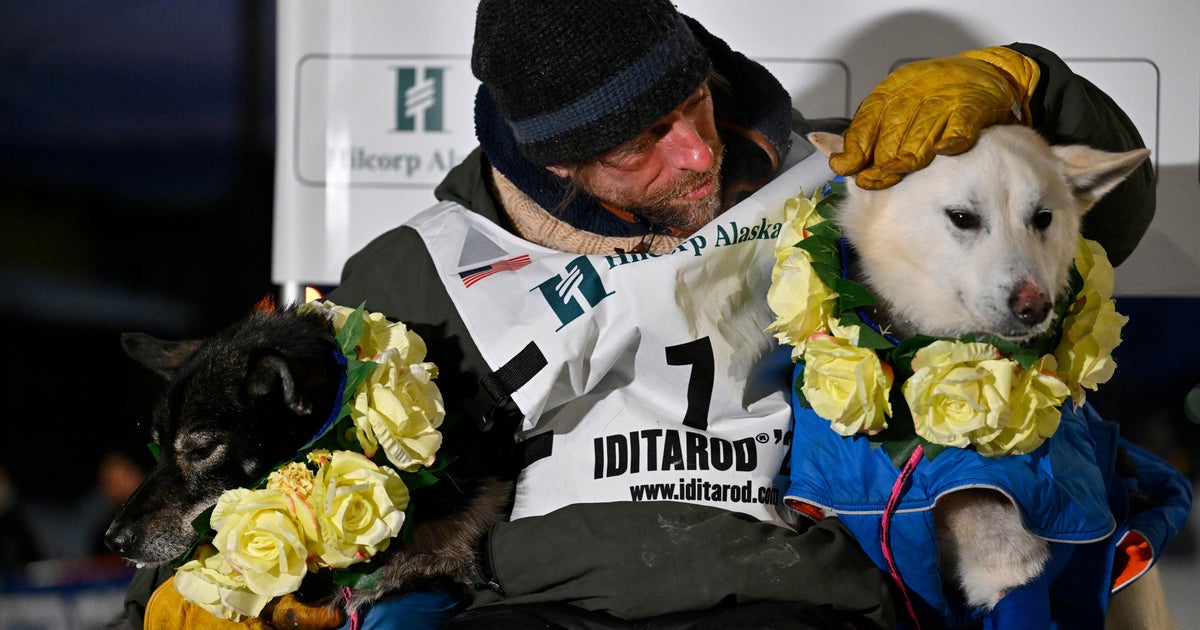

Jessie Holmes Claims Back-to-Back Iditarod Victory in Alaska’s Legendary Sled Dog Race
A Hard-Won Triumph Across Alaska’s Frozen Wilderness
Jessie Holmes, a former reality television personality turned elite musher, has cemented his place in Iditarod history by securing his second consecutive victory in one of the world’s most grueling endurance races. Guiding his team of dedicated sled dogs across approximately 1,000 miles of Alaska’s most unforgiving terrain, Holmes reached the finish line in Nome, the historic Bering Sea coastal town that once thrived during the Gold Rush era. The journey, which began on March 8 in Willow following a ceremonial start in Anchorage the day before, tested both human and canine athletes as they traversed two imposing mountain ranges, followed the frozen expanse of the Yukon River, and navigated the treacherous and ever-changing ice of the Bering Sea. Upon completing this remarkable feat Tuesday night, Holmes celebrated with his four-legged companions in a touching display of gratitude, distributing large ribeye steaks to each of his hardworking dogs—a well-deserved reward for their extraordinary effort and unwavering loyalty throughout the arduous race.
Entering the Record Books with Elite Company
With this consecutive victory, Holmes has joined an exclusive club in the 54-year history of the Iditarod Trail Sled Dog Race. He becomes only the third musher to achieve back-to-back championships immediately after winning their first title—a remarkable accomplishment that places him alongside legendary figures Susan Butcher, who won consecutive races in 1986-1987, and Lance Mackey, who claimed back-to-back victories in 2007-2008. Both Butcher and Mackey eventually went on to secure four Iditarod championships each, setting a precedent that Holmes now has the opportunity to pursue in future races. The significance of this achievement wasn’t lost on Holmes himself, who acknowledged before the race that this year’s Iditarod represented the most important challenge of his career. Speaking candidly about the immense pressure he felt, Holmes admitted, “That’s hard to put that on yourself because you got to live with that pressure every day. And if I do not make it, it is going to absolutely crush me.” His heartfelt words after crossing the finish line reflected both relief and profound appreciation: “It’s a blessing to be out here. I was just so full of gratitude and gratefulness being welcomed into all these communities, and being out in all this beautiful country with the most amazing dog team I’ve ever seen.”
From Reality TV to Racing Royalty
Holmes’ journey to Iditarod champion represents a fascinating American story of reinvention and dedication. Born and raised in Alabama, he left his home state at age 18 and spent three years working as a carpenter in Montana before arriving in Alaska in 2004. His introduction to the world of dog sledding came unexpectedly when he met a neighbor involved in the sport while living on a remote location along the Yukon River. As Holmes recalled in a 2024 interview, “I just fell in love with the lifestyle. I fell in love with the dogs out in the wilderness.” This passion would eventually lead him to become a cast member on the National Geographic reality series “Life Below Zero,” where he spent eight years sharing his experiences living in rural Alaska with television audiences. The show chronicled the daily challenges and hardships faced by people choosing to live in some of Alaska’s most isolated regions. Importantly, Holmes used the income from his television work strategically, investing in superior dogs and equipment while also purchasing raw land near Denali National Park and Preserve. Drawing on his carpentry skills, he carved out a homestead in the wilderness, where his closest neighbor lives approximately 30 miles away—a testament to his commitment to the remote lifestyle that initially captured his imagination.
Building a Championship Legacy
Holmes’ Iditarod career demonstrates remarkable consistency and steady improvement. His first participation in 2018 resulted in an impressive seventh-place finish that earned him rookie of the year honors—an auspicious beginning that hinted at future success. Over nine Iditarod races, he has secured seven top-ten finishes, with his last five races all placing him in the top five positions. This progression reflects not only his growing expertise as a musher but also his dedication to developing and training an exceptional team of sled dogs. His lead dogs Zeus and Polar have become partners in his championship runs, and Holmes’ obvious affection and respect for his entire team underscores the critical relationship between musher and dogs that determines success in this demanding sport. For this year’s victory, Holmes will take home approximately $80,000, a significant increase from the $57,000-plus he earned for his first championship. The enhanced purse was made possible through the financial support of Norwegian billionaire Kjell Rokke, who participated in a newly created noncompetitive amateur category that allowed for outside support, flexible rest periods, and the ability to swap out dogs—provisions that helped boost the race’s overall prize pool.
Challenges Facing the Iditarod’s Future
Despite Holmes’ individual triumph, the Iditarod faces ongoing challenges that cast shadows over the historic race. This year’s field of 34 competitive mushers matched the inaugural 1973 race for the second-smallest field in the event’s history. The declining participation reflects multiple factors, including the retirement of many longtime mushers and the increasingly prohibitive costs of supplies, particularly dog food, which have kept fields small throughout the current decade. Additionally, the race continues to face criticism from animal welfare organizations, most prominently People for the Ethical Treatment of Animals (PETA), which claims that more than 150 dogs have died throughout the race’s history. PETA specifically urged billionaire sponsor Rokke to redirect his financial support toward helping dogs rather than subjecting them to what the organization characterizes as “hazards and misery.” The Iditarod organization has never released its own official count of dog deaths over the years, though it does report incidents during each race. This year, one dog—a 4-year-old female named Charly on musher Mille Porsild’s team—died during the race, with a necropsy scheduled to determine the cause. These controversies highlight the tension between preserving a cultural tradition deeply rooted in Alaska’s history and addressing legitimate concerns about animal welfare in competitive sports.
A Bright Spot for Alaska’s Heritage Sport
Despite the challenges, Jessie Holmes’ repeat victory represents a bright moment for the Iditarod and demonstrates the enduring appeal of this quintessentially Alaskan tradition. The additional financial contributions from international participants like Rokke, who provided $100,000 in extra prize money and $170,000 to Alaska Native villages serving as checkpoints, and Canadian entrepreneur Steve Curtis, who pledged $50,000 for youth sports programs in these communities (though he didn’t finish the race), show that the event continues to attract global interest and support. Holmes’ personal story—from Alabama carpenter to Alaska homesteader to back-to-back Iditarod champion—embodies the frontier spirit that draws people to Alaska and to this remarkable test of endurance, skill, and the profound bond between humans and their dogs. As Holmes settles into his remote homestead with his championship team, he has established himself not just as a current champion but as a potential dynasty in the making, with the possibility of following in the footsteps of Butcher and Mackey by pursuing additional titles in future years. His journey reminds us that with dedication, respect for the land and animals, and unwavering determination, extraordinary achievements remain possible even in our modern age.