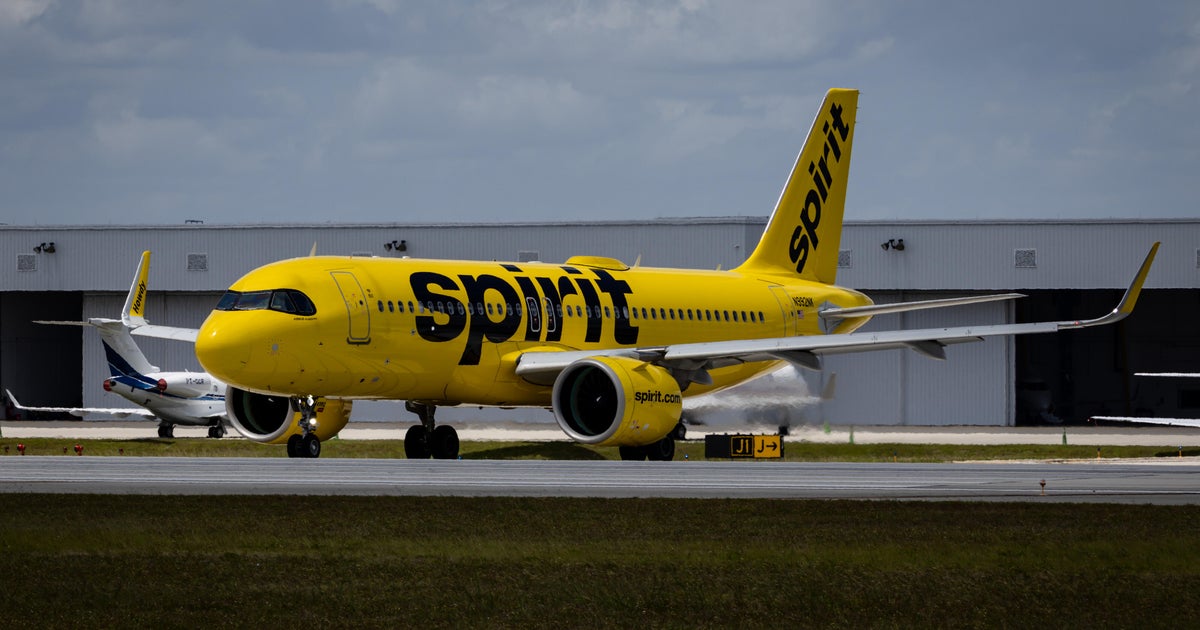

Spirit Airlines on the Brink: What Travelers Need to Know About the Potential Shutdown
Emergency Negotiations and Imminent Closure
Spirit Airlines, one of America’s largest budget carriers, is facing what could be its final days of operation, with sources indicating the airline may cease flying as soon as this Saturday without emergency intervention. According to information obtained by CBS News, the ultra-low-cost carrier has been scrambling to secure a critical $500 million government aid package that would keep its planes in the air and its workforce employed. Unfortunately for the millions of Americans who rely on Spirit’s affordable fares, negotiations have hit a wall after bondholders rejected the proposed terms of the bailout. The situation has become so dire that Trump administration officials have been briefed that Spirit will likely shut down operations within the next 24 hours, with insiders suggesting there will be no eleventh-hour rescue effort from the federal government.
The financial crisis at Spirit represents more than just another corporate bankruptcy—it’s a potential disruption to the travel plans of countless Americans and a significant blow to the budget airline sector that has made air travel accessible to millions who might otherwise be priced out of flying. With the airline’s available cash reserves reportedly sufficient to last only a matter of days, Spirit has been operating on borrowed time, hoping for a breakthrough that would allow it to restructure its debt and continue serving the traveling public. Despite the grim outlook, the airline has emphasized that it continues to operate normally on Friday, with sources stressing that Spirit’s primary focus remains on safely completing all scheduled flights and maintaining service for passengers who have already booked travel.
Presidential Response and Political Considerations
When President Trump was asked about the possibility of a federal bailout for Spirit Airlines on Friday, his response reflected the administration’s cautious approach to corporate rescue packages. “Well, I guess we’re looking at it. If we can do it, we’ll do it but only if it’s a good deal,” the president told reporters as he departed the White House for Florida. His comments suggested that while the administration recognizes the potential impact of Spirit’s collapse on American workers and travelers, any government assistance would need to meet strict criteria that protect taxpayer interests. The president went on to express concern for the jobs at stake, saying, “I’d like to save the jobs, but we’ll have an announcement some time today. We gave them a final proposal.”
This statement indicates that the ball is now firmly in Spirit’s court, with the administration having presented what appears to be a take-it-or-leave-it offer. The political calculus surrounding such bailouts is always complicated, particularly for an administration that has emphasized fiscal responsibility and market-driven solutions to business challenges. On one hand, allowing a major airline to fail could disrupt travel for millions and cost thousands of jobs; on the other hand, using taxpayer money to rescue a company that was already in bankruptcy proceedings could set an unwelcome precedent and prove politically unpopular. The fact that the president mentioned he would make an announcement later that day suggests the administration was preparing for multiple scenarios, including the possibility that Spirit would reject the government’s final offer and proceed with shutting down operations.
Understanding Spirit’s Business Model and Market Impact
Spirit Airlines has carved out a unique niche in the American aviation market by pioneering the ultra-low-cost carrier model that strips away traditional airline amenities to offer rock-bottom base fares. The airline serves more than 40 cities across the United States, along with numerous international destinations throughout Central and South America, operating its main hub from Fort Lauderdale-Hollywood International Airport in Florida. This business model has made Spirit both popular with budget-conscious travelers and controversial for its approach to customer service, which charges separately for everything from carry-on bags to seat selections to beverages on board. While Spirit has faced criticism and even mockery for its bare-bones approach, there’s no denying that the airline has filled an important role in the market by making air travel affordable for people who might not otherwise be able to fly.
The potential collapse of Spirit would remove significant capacity from the budget airline sector at a time when many Americans are still struggling with the high cost of living and looking for affordable travel options. Spirit’s exit from the market could lead to higher prices across the board as remaining carriers face less competition, particularly on routes where Spirit was one of only a few operators. Beyond the immediate impact on ticket prices, Spirit’s shutdown would also represent a significant loss of jobs, including pilots, flight attendants, ground crew, maintenance workers, and administrative staff. The airline’s bankruptcy proceedings were supposed to provide breathing room to restructure and emerge as a more sustainable business, but the inability to secure additional financing has accelerated what could be an abrupt end to operations rather than an orderly restructuring.
What This Means for Passengers and Travelers
For travelers who have already booked flights on Spirit Airlines, the potential shutdown creates immediate uncertainty and concern. While the airline’s spokesperson has stated that “Spirit is operating as usual” and sources have emphasized that the carrier remains focused on safely completing all scheduled flights, passengers are understandably worried about whether their upcoming trips will proceed as planned. In bankruptcy situations, airlines typically continue operating during restructuring, but a complete shutdown would be a different scenario entirely. Travelers with Spirit bookings should monitor their email and the airline’s website closely for updates, and those with upcoming travel plans may want to consider contingency options, including booking refundable tickets on other carriers as backup.
If Spirit does cease operations, passengers will likely face challenges getting refunds for tickets purchased on credit cards, as those refunds would need to be processed through the bankruptcy proceedings, which could take months or even years. Travel insurance that includes coverage for airline bankruptcy might provide some protection, though many standard policies exclude this scenario. Other airlines may offer rescue fares to stranded Spirit passengers, as has happened in previous airline shutdowns, though these aren’t guaranteed and may not match the low prices Spirit passengers originally paid. The ripple effects of a Spirit shutdown would extend beyond just Spirit customers—airports that rely heavily on Spirit service could see reduced passenger traffic, and other budget carriers might face overcrowding as displaced Spirit customers seek alternatives.
The Broader Context of Airline Industry Struggles
Spirit’s potential collapse doesn’t exist in a vacuum but reflects broader challenges facing the airline industry in the post-pandemic era. While air travel demand has largely recovered to pre-COVID levels, airlines have struggled with rising costs for fuel, labor, and equipment, while also dealing with supply chain disruptions that have made it difficult to expand capacity or replace aging aircraft. Budget carriers like Spirit operate on razor-thin profit margins even in the best of times, making them particularly vulnerable when economic headwinds blow. The airline had already filed for bankruptcy protection in an attempt to restructure its debt burden, but the combination of operational challenges, competitive pressures, and its existing financial obligations proved too much to overcome without significant additional investment.
The bondholders’ rejection of the proposed government aid terms highlights the complex financial interests at play in corporate bankruptcies. These investors, who loaned money to Spirit in the past, have their own financial interests to protect and may believe they would recover more of their investment in a liquidation scenario than in a government-backed restructuring that might dilute their claims. This tension between keeping a business operating and protecting the interests of various financial stakeholders is a common feature of bankruptcy proceedings, but when the business in question is an airline serving millions of passengers, the stakes extend far beyond the boardroom and the courtroom. The airline industry has seen numerous bankruptcies and consolidations over the past two decades, with carriers like Eastern Airlines, TWA, and most recently, several regional carriers ceasing operations entirely.
Looking Ahead: Uncertainty and Outcomes
As Friday unfolds, all eyes are on Spirit Airlines, the Trump administration, and the company’s creditors to see whether a last-minute deal can be reached to keep the airline flying. The president’s comment that an announcement would come “some time today” suggests that decisions are being made rapidly, though it remains unclear whether Spirit will accept the government’s final proposal or whether bondholders might reconsider their position. For the thousands of Spirit employees reporting to work, the uncertainty must be agonizing—not knowing whether they’ll still have jobs by the weekend. For the traveling public, particularly those with upcoming Spirit bookings, the anxiety is equally real as they wait to learn whether their travel plans will proceed as scheduled or whether they’ll be scrambling to find alternative arrangements.
If Spirit does shut down operations, it will mark a significant moment in American aviation history and likely trigger discussions about the viability of the ultra-low-cost carrier model in the U.S. market. It may also raise questions about whether the airline industry requires structural changes to prevent similar collapses in the future, or whether periodic failures are simply part of the natural business cycle in a competitive industry. Whatever happens in the next 24 to 48 hours, the Spirit situation serves as a reminder of how quickly circumstances can change in the airline business and how the financial struggles of a single company can affect millions of travelers. As we await the final outcome, one thing is certain: the American airline landscape may look significantly different by next week, and budget travelers may find their options considerably more limited in the months and years to come.