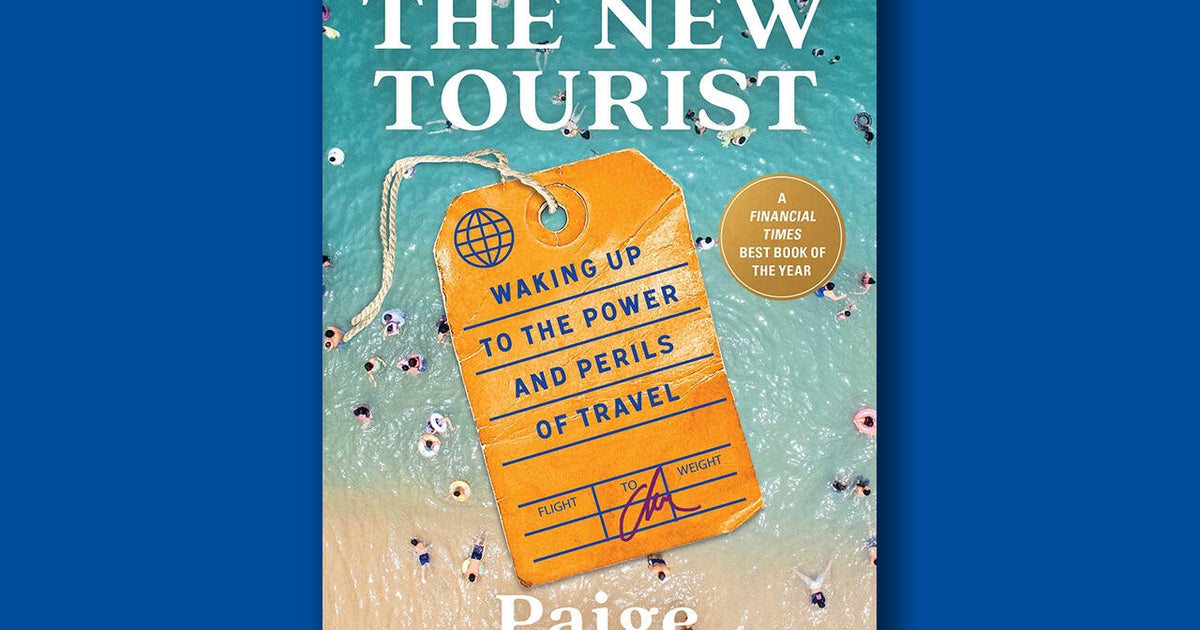

Rethinking Tourism: A Journey from Consumer to Conscious Traveler
From Abbey to Ski Resort: A Personal Awakening
Paige McClanahan’s “The New Tourist” begins with a powerful historical anchor—a 900-year-old stone abbey in the Alps that has transformed from religious sanctuary to iron mining headquarters to hotel, and now stands as a symbol of how tourism reshapes communities. McClanahan’s personal journey mirrors this transformation. She first visited the valley as a weekend tourist from Geneva in 2007, falling in love with its pristine rivers and dramatic peaks. Eleven years later, she returned with her husband and two children, no longer as visitors but as residents seeking driver’s licenses and school enrollment for their kids. This shift in perspective—from outsider enjoying a weekend escape to local resident navigating daily life alongside seasonal waves of tourists—became her awakening moment. She discovered firsthand the complex dance between gratitude and frustration that defines life in tourist-dependent communities, from appreciating the restaurants that tourism sustains to sitting in unexpected traffic jams on rural roads, or finding the school parking lot overflowing at 8 a.m. on a weekday.
The Massive Scale of Tourism’s Global Impact
The numbers McClanahan presents are staggering and demand our attention. In 2019, before the pandemic disrupted global travel patterns, tourism generated more than 10 percent of the world’s economic output—more than double the entire global agriculture industry. It accounted for one in ten jobs worldwide and one in five newly created positions. International visitors spent $1.9 trillion that year, exceeding double the U.S. federal defense budget. These aren’t just abstract statistics; they represent real livelihoods in communities around the world. But McClanahan pushes beyond the economic metrics to reveal tourism’s deeper fingerprints on our world. Tourism generates approximately 8 percent of global greenhouse gas emissions, yet simultaneously funds significant wildlife conservation efforts. It serves as humanity’s most important vehicle for cross-cultural conversation, with roughly a billion international tourist arrivals annually. Tourism even shapes how we perceive distant places without visiting them—think of hula dancers and Hawaii, flamenco and Spain, or our ability to name Iceland’s capital. It creates national symbols, frames cultural narratives, and intensifies both the commodification and preservation of traditions.
Redefining What It Means to Be a Tourist
McClanahan tackles head-on the uncomfortable relationship many of us have with the word “tourist.” She observes how people create artificial distinctions between “travelers” (supposedly sophisticated seekers of authentic experiences) and “tourists” (supposedly shallow consumers of clichéd attractions), noting that we typically reserve “traveler” for ourselves and those close to us, while “tourist” becomes a label for everyone else. This superiority complex, she argues, is unhelpful and misses the point entirely. Drawing on the UN World Tourism Organization’s definition, she describes tourism as the movement of people outside their usual environment for finite periods, for personal or professional purposes. Rather than running from the tourist label, McClanahan wants us to reclaim and elevate it, understanding that our redemption doesn’t come from feeling superior to people standing in line at the Louvre, but from grasping the important role tourists play in shaping the world. She presents tourism as having power that extends far beyond individual vacation experiences—it can transform villages into vibrant communities or hollow out city centers into soulless commercial shells.
The Old Tourist Versus the New Tourist
At the heart of McClanahan’s framework are two archetypes representing opposite ends of a spectrum. The “old tourist” isn’t simply a caricature of the loud American seeking familiar chain restaurants abroad. Rather, this archetype represents a pure consumer who treats people and places as means to self-serving ends—bucket list items, Instagram content, bragging rights. The old tourist confines destinations to preconceived stories, making genuine empathy impossible. He projects fantasies onto locations and reacts with disappointment when reality doesn’t match his ideal. In contrast, the “new tourist” might still enjoy familiar comforts like Starbucks coffee, but approaches travel with humility. She recognizes her smallness within history’s grand sweep and humanity’s vast sea. She embraces encounters with people from different backgrounds and learns from unfamiliar cultures or religions she might otherwise fear. Her travels breed healthy skepticism about her own homeland and inoculate her against those who would encourage hatred based on differences in appearance, language, religion, or nationality. The new tourist returns home as a more open, generous human being. McClanahan acknowledges that we all fall somewhere between these extremes, sliding along the spectrum at different points in our travels, but understanding the new tourist ideal gives us something to aspire toward.
A Framework for Better Questions, Not Easy Answers
McClanahan positions her book deliberately as something different from typical sustainable travel guides. Rather than providing prescriptive lists of dos and don’ts for every situation, she aims to equip readers with a framework for generating their own questions. She recognizes that only individual travelers can make appropriate choices within their specific constraints and moments. Her approach is twofold: providing tools for developing relevant questions and inspiring readers to actually ask those questions—of themselves, of travel companies, of governments, and of the cultural narratives they encounter. Each chapter explores complex dimensions of tourism: How did baby boomers transform Western worldviews? Is social media changing our relationship with other cultures and landscapes? How does tourism influence national image and global power? When does tourism destroy a city’s soul versus offering renewal? Does “last-chance tourism” to endangered destinations prompt meaningful change or accelerate destruction? Can we balance tourist fantasies with local realities? Given negative headlines about tourism’s impacts, should we simply stay home? These aren’t questions with simple answers, but McClanahan believes wrestling with them is essential to becoming new tourists.
The Privilege and Responsibility of Travel
McClanahan concludes her introduction by acknowledging that traveling represents a significant privilege, one that many people never experience. Yet she firmly believes this privilege, approached correctly, can become a powerful force for good rather than mere consumption. She recognizes that some people will remain content as old tourists, willfully blind to their impacts as they roam the world. But she’s writing for those ready to embrace a better approach—one beginning with deep understanding of what’s at stake. To wake up to the consequences of our travels requires effort, but McClanahan promises that doing so brings deep and lasting rewards, both personally and societally. Tourism shapes economies, cultures, and physical environments in profound ways. It creates jobs and generates massive economic activity, but also contributes to climate change and can damage the places it claims to celebrate. Governments, particularly local ones, significantly influence whether tourism’s net impact is positive or negative, though many are only recently recognizing this responsibility. Tourism businesses vary widely in their self-awareness and willingness to ensure their operations benefit rather than harm communities. But tourists themselves—those of us privileged enough to travel—wield considerable power in determining tourism’s ultimate impact on visited places and on ourselves. McClanahan’s hope is that by understanding this power and these stakes, we can collectively transform tourism from a potentially destructive force into one that enriches both travelers and the communities that welcome them.