

Federal Judge Blocks Trump Administration’s Third-Country Deportation Policy
Court Rules Policy Violates Due Process Rights
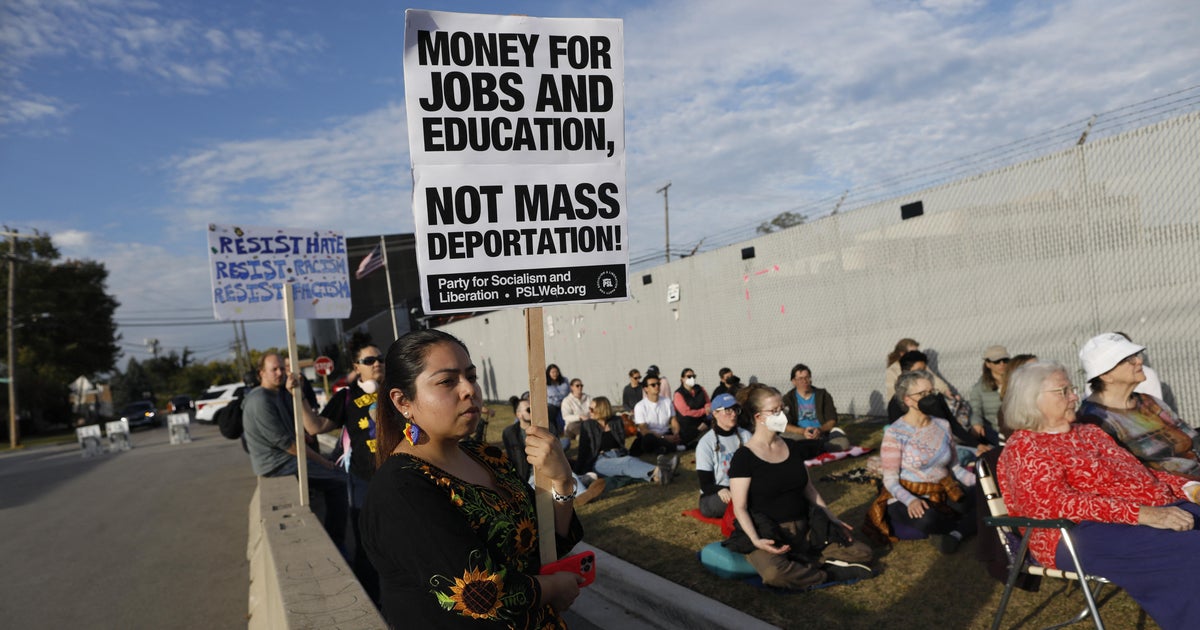
In a significant setback to the Trump administration’s immigration enforcement efforts, a federal judge in Massachusetts has declared that the Department of Homeland Security’s policy allowing the deportation of migrants to countries other than their own—without proper notification or the chance to object—violates both federal law and constitutional protections. U.S. District Judge Brian Murphy issued his ruling on Wednesday, siding with a group of immigrants who filed a class-action lawsuit against the government last year. The judge’s decision represents a major challenge to one of the administration’s key immigration tactics, though he temporarily paused the ruling for 15 days to allow the government time to file an appeal. The controversial policy, which was first introduced in March of last year and reaffirmed in July, permitted immigration officers to remove migrants to so-called “third countries”—nations that weren’t listed on their original deportation orders—as long as officials received assurances from those countries that deportees wouldn’t face persecution or torture.
How the Policy Worked and Its Place in Trump’s Immigration Agenda
The third-country removal policy was a cornerstone of President Trump’s broader immigration enforcement and mass deportation campaign. Under this approach, the administration reached out to various nations, including Costa Rica, Panama, and Rwanda, seeking agreements to accept migrants who weren’t citizens of those countries. The administration even arranged with El Salvador’s government to detain Venezuelan migrants at CECOT, the country’s infamous mega-prison facility. According to the policy’s terms, migrants could theoretically challenge their removal, but only if they specifically and voluntarily expressed fear about being sent to the designated country. Critically, the policy explicitly stated that immigration officers would not proactively ask migrants whether they feared removal to a particular country. If a migrant did manage to raise concerns and the government determined there was a likelihood of persecution or torture, officials could either designate a different country for deportation or send the case to immigration court for further review. This approach placed the burden entirely on vulnerable individuals, often in detention and without legal representation, to know their rights and speak up without any prompting.
Judge’s Scathing Critique of Government’s Approach
Judge Murphy didn’t mince words in his ruling, offering a pointed critique of the administration’s policy and its implementation. He questioned the entire foundation of the government’s assurances about migrants’ safety in third countries, writing: “This new policy—which purports to stand in for the protections Congress has mandated—fails to satisfy due process for a raft of reasons, not least of which is that nobody really knows anything about these purported ‘assurances.’ Whom do they cover? What do they cover? Why has the Government deemed them credible? How can anyone even know for certain that they exist?” The judge emphasized that these are fundamental questions that the Constitution guarantees people the right to ask before the government takes away what he called their “last and only lifeline.” Murphy, who was appointed by President Joe Biden, characterized the policy as allowing the government to essentially arrest migrants and drop them off “in parts unknown” as long as officials didn’t have specific knowledge that violence would await them upon arrival. He stated bluntly: “It is not fine, nor is it legal.” Drawing on federal immigration statutes and international protections against persecution and torture, the judge affirmed America’s bedrock constitutional principle that no person in the country can be deprived of life, liberty, or property without due process of law.
Allegations of Deception and Court Order Violations
Perhaps most troubling in Judge Murphy’s ruling were his accusations that the Trump administration had provided him with false information and repeatedly violated or attempted to violate his court orders throughout the legal proceedings. The judge highlighted the case of O.C.G., a Guatemalan national with no known criminal history who had been granted legal protection preventing his deportation to Guatemala. According to Murphy’s account, after receiving this protection, government officials placed O.C.G. on a bus to Mexico, where he had recently been sexually assaulted, and from there he was quickly returned to Guatemala—the very country where an immigration judge had determined he would likely face persecution. In the judge’s words: “And then Defendants lied about it.” Murphy also accused the Department of Homeland Security of placing what he called an “incendiary gloss” on the policy, deliberately ignoring the cases of migrants who had already been granted protection from deportation to their countries of origin. These individuals, the judge noted, were specifically targeted by the third-country removal policy despite having personal characteristics that placed them at heightened risk of persecution and oppression wherever they might be sent around the world.
The Legal Battle’s Progression Through the Courts
The case before Judge Murphy began last March when four immigrants filed a class-action lawsuit challenging the administration’s third-country removal policy. The legal dispute wound its way through various stages after Murphy issued a preliminary injunction in April, which required federal immigration authorities to provide written notice to affected individuals about the third country they might be deported to and give them a meaningful opportunity to express fears about torture, persecution, or death in that destination. The Trump administration didn’t accept these restrictions without a fight, and Murphy found they violated several of his orders beginning last March, when the Defense Department deported at least six migrants to El Salvador and Mexico without following the required procedures. The situation escalated in May when Murphy ruled that the administration had violated his preliminary injunction by attempting to remove a group of men with criminal histories to war-torn South Sudan with less than 24 hours’ notice and no opportunity for them to raise concerns about their safety. These men—who came from Cuba, Laos, Mexico, Myanmar, South Sudan, and Vietnam—ended up in legal limbo, held at a U.S. naval base in Djibouti, a small African country, after the judge blocked their transfer to South Sudan.
Supreme Court Intervention and Current Status
The conditions faced by these migrants in Djibouti became another point of controversy when a U.S. immigration official revealed in court filings that the men were being held in a conference room fashioned from a converted shipping container, with personnel guarding them facing deplorable and dangerous conditions themselves. The Trump administration escalated the legal battle by filing emergency appeals all the way to the Supreme Court, seeking to overturn Judge Murphy’s order. Last June, the nation’s highest court sided with the administration, ruling that immigration authorities could resume deportations to third countries while the legal proceedings continued in the lower courts. Several days later, the Supreme Court also cleared the way for the government to deport the migrants who had been held at the Djibouti naval base to South Sudan. Despite these earlier Supreme Court decisions allowing deportations to continue, Judge Murphy’s latest ruling represents a comprehensive rejection of the policy itself on both statutory and constitutional grounds. With the 15-day pause now in effect, the Trump administration faces a choice: accept the ruling and revise its approach to third-country removals, or continue the legal fight through the appeals process, potentially returning once again to the Supreme Court for a final determination on whether this controversial immigration enforcement tactic can survive judicial scrutiny.