


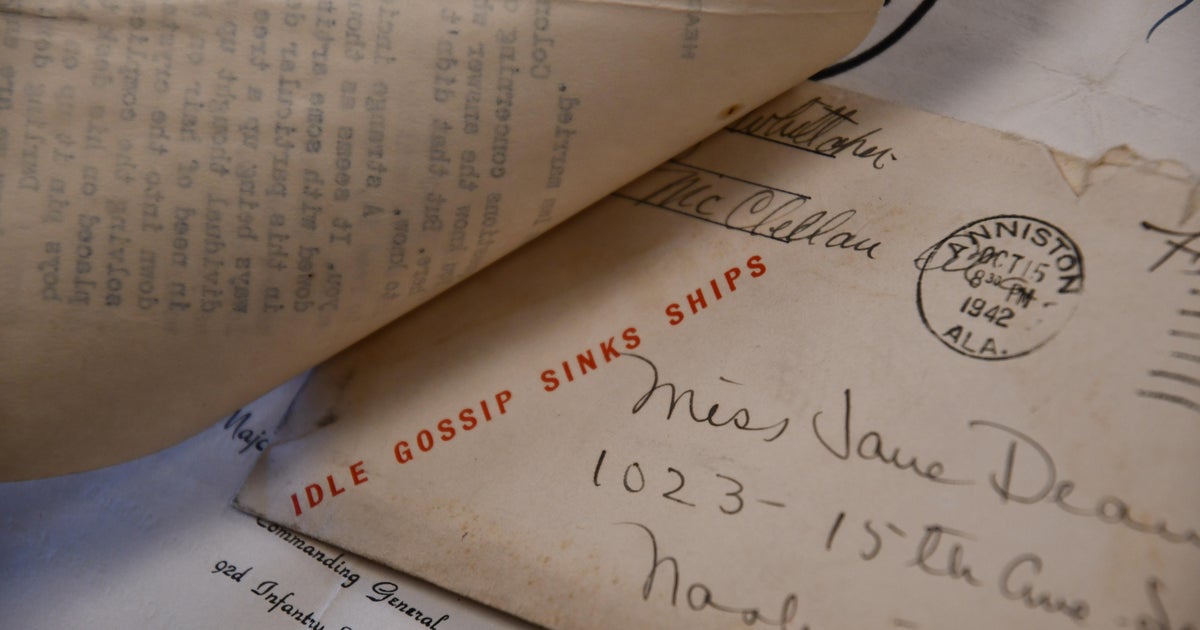

A Wartime Love Story: The Letters of Ray and Jane Whittaker
Discovering Love in a Nashville Fireplace
In a remarkable discovery that bridges the past and present, over 200 intimate love letters documenting a couple’s courtship and marriage during World War II have been digitized and made available through the Nashville Public Library. These precious documents, written between William Raymond Whittaker and Jane Dean, were discovered in 2016 near a fireplace in a Nashville home that had once belonged to Jane and her siblings, located close to what is now the city’s famous Music Row. Sarah Arntz from the Metro Nashville Archives explained how these letters, donated to the archives that same year, offer an extraordinarily personal window into not just a love story, but also the experiences of African Americans during one of history’s most turbulent periods. The collection provides modern readers with an unfiltered view of romance, separation, hope, and perseverance during wartime, told through the authentic voices of two young people navigating their relationship amid the uncertainties of war and the complexities of race in 1940s America.
From Medical School Romance to Wartime Separation
Ray Whittaker, who preferred to go by his middle name, originally hailed from New Rochelle, New York, but moved to Nashville to pursue his education at Meharry Medical College, a historically Black institution. It was there that he met Jane Dean, a fellow student who would eventually become his wife. According to Kelley Sirko, the library’s metropolitan archivist, the young couple dated during their time at Meharry before losing touch when Ray left Nashville. In the summer of 1942, as World War II intensified and the nation mobilized its forces, Ray was drafted into the Army and stationed at Fort Huachuca in Arizona. It was from this desert outpost, perhaps feeling the loneliness of military life and reflecting on what truly mattered to him, that Ray made the decision to reach out to Jane, who had by then established herself professionally as a medical lab technician at Vanderbilt University. This reconnection would mark the beginning of an extraordinary correspondence that would chronicle their journey from former acquaintances to devoted husband and wife, all while separated by the demands of war and military service.
“Pleasant and Sad Surprise”: The Correspondence Begins
Though the archives don’t possess Ray’s initial letter to Jane, her response reveals the tentative yet hopeful nature of their renewed connection. Writing on July 30, 1942, Jane greets him with a somewhat formal “Dear Wm R.” before expressing her mixed emotions about hearing from him again. “It sure was a pleasant and sad surprise to hear from you,” she wrote, explaining that the pleasure came from knowing he still thought of her—”you will always hold a place in my heart”—while the sadness stemmed from the dangerous reality that he was now in the armed forces during wartime. Her letter reveals both her romantic feelings and her practical concerns: “war is so uncertain, however I’m proud to know that you are doing your bit for your country.” In what might be interpreted as a not-so-subtle hint about her own hopes for the future, Jane then proceeds to update Ray on their mutual acquaintances, specifically noting which friends had recently married and who among them had children or were expecting. She closes her letter with an invitation that suggests she’s hoping for more than just casual correspondence: “Write, wire or call me real soon — Lovingly Jane.” This opening exchange sets the tone for what would become an intimate archive of their developing relationship, capturing the vulnerability, hope, and uncertainty that defined so many wartime romances.
An Intimate Window Into History
Kelley Sirko’s enthusiasm for this collection is palpable when she describes the experience of reading through the letters. “You can’t help but smile when you read through these letters,” she explained. “You really can’t. And this was just such an intimate look at two regular people during a really complicated time in our history.” Unfortunately, Nashville archivists have been unable to locate any living relatives of Ray and Jane, which means most of what is known about the couple comes directly from their correspondence and a few supplementary materials. According to Ray’s obituary, he passed away in Nashville in 1989, and the couple never had children. The donation to the archives included not only the letters but also several photographs and Ray’s patch from Alpha Phi Alpha, the historically Black fraternity. What makes this collection particularly valuable is that it extends beyond a simple love story—it provides what Sirko describes as “this in-the-moment perspective” of navigating racial issues, gender dynamics, professional life, and the unique experiences of Black soldiers during World War II. The letters capture unfiltered thoughts and feelings as they happened, rather than memories filtered through the lens of later years. This immediate, authentic quality is precisely why the archivists felt it was so important to digitize the collection and make it accessible to the public, ensuring that these voices from the past could speak directly to present and future generations.
From Courtship to Proposal: Love Accelerates
The romance between Ray and Jane intensified rapidly in the fall of 1942. Just two months after their initial exchange, Ray had been reassigned to Fort McClellan in Alabama, where he was tasked with helping to organize the reactivated 92nd Infantry Division—a segregated unit that would eventually see combat in Europe. In an undated letter from September 1942, Ray teases Jane with hints about his intentions: “I have something very important to tell you when I do see you and you will be surprise to know as to what it is. I might even ask you to marry me. One never knows.” With a combination of humor and practicality that characterized many of his letters, Ray mentioned the financial advantages of marriage for an officer in training, noting he could earn about $280 a month if married versus only $175 if single. “Really I can’t leave my excess amount of money to the government and must have someone to help me spend it,” he wrote playfully. Jane’s response on September 23 showed both her interest and her caution: “What makes you think you still love me? Is it that you are lonesome and a long way from home. I’m sure I want you to love me but not under those conditions.” Her skepticism reveals a woman who wanted genuine love, not simply a marriage of convenience or loneliness. Ray’s reply the following day turned more serious and sincere, acknowledging that “Events are changing so rapidly these days that one can’t really plan for the future. But I am going to make a decisive decision in matters of most importances.” He confessed that he had dated other women while they were apart but “I didn’t find the companionship and love that I so dearly wanted to find. All I ran into was trouble and more trouble.” This honest admission apparently convinced Jane of his sincerity, and on November 7, 1942, the couple married in Birmingham, Alabama.
Building a Life Together Despite the Distance
Following their wedding, the realities of wartime meant that Ray and Jane would have to endure separation as he continued his military service. A letter from Jane dated November 9, just two days after their marriage, captures both her joy and her heartache. Addressing Ray as “my darling husband,” she wrote with the euphoria of a new bride while simultaneously expressing the pain of their immediate separation: “It’s a wonderful thing to have such and sweet and lovely husband. Darling you’ll never know how much I love you. The only regret is that we didn’t marry years ago… As it is now things are so uncertain and we are not together but such a few happy hours. But maybe this old war will soon be over and we can be together for always.” She concluded with words that captured the hope that sustained countless wartime couples: “Darling be sweet and write to me soon. I want a letter from my husband. Remember I’ll always love you. Always — from Your Wife.” After Ray’s discharge from the military, the couple initially settled outside of New York City before eventually making Nashville their permanent home. The letters occasionally reference the particular challenges faced by African American soldiers, such as when Jane urged Ray to be careful during his time in Alabama, a reminder of the dual battles that Black servicemen faced—fighting for their country abroad while confronting discrimination and danger at home. Though archivists have not been able to locate living relatives to provide additional context or stories about the couple’s later years together, the letters themselves stand as a powerful testament to enduring love, resilience in the face of uncertainty, and the personal dimensions of historical events that too often get reduced to statistics and strategic discussions. Through the Nashville Public Library’s digital archive, anyone can now access these intimate documents and connect with Ray and Jane’s story, ensuring that their voices and their love continue to resonate across the decades.