


The Libra Token Scandal: Questions Mount Over President Milei’s Involvement
Emerging Evidence Contradicts Presidential Denials
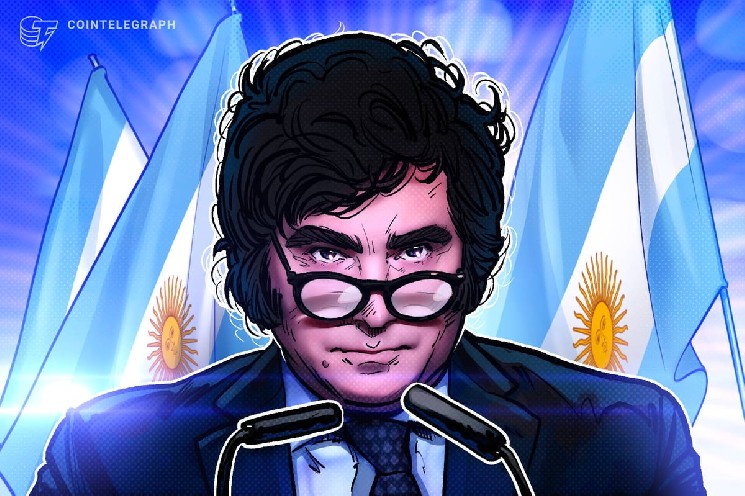
The cryptocurrency world has been rocked by fresh allegations surrounding Argentine President Javier Milei and his promotion of the now-collapsed Libra token. What initially appeared to be a simple case of presidential enthusiasm for a blockchain project has evolved into a full-blown scandal that threatens Milei’s political standing. Recent revelations have painted a far more complex picture than the President’s straightforward denial of involvement suggested. Call logs obtained by Argentine prosecutors and reviewed by The New York Times reveal that Milei engaged in seven separate phone conversations with one of the token’s creators on the very night he publicly endorsed the cryptocurrency on social media platform X. This pattern of communication directly challenges Milei’s previous assertions that he had no connection whatsoever to the project and was merely supporting what he believed to be a promising private venture. The timing of these calls—occurring both before and after his promotional post—has raised serious questions about the nature of his involvement and whether the public was misled about the independence of his endorsement.
The discovery of these communications has intensified scrutiny of the President’s actions and motivations. While the actual content of the seven phone calls remains unknown, their existence alone suggests a level of coordination that contradicts Milei’s public statements. Prosecutors investigating the token’s dramatic collapse are now piecing together a timeline that may reveal whether the President knowingly participated in promoting a cryptocurrency that would soon lose virtually all of its value, or whether he was himself misled by the project’s creators. The situation has placed Milei in an increasingly precarious position, as he faces not only legal jeopardy but also a crisis of public trust. In Argentina, where economic instability has long plagued citizens and many have turned to cryptocurrency as a hedge against inflation and currency devaluation, the collapse of a presidentially-endorsed token carries particular weight and has generated widespread anger among those who lost money based on what they perceived as an official endorsement.
A Quarter-Billion Dollar Collapse and Its Aftermath
The Libra token’s spectacular rise and fall represents one of the most dramatic cryptocurrency crashes in recent memory, particularly given its connection to a sitting head of state. In February 2025, President Milei took to X to promote the Libra token, framing it as an innovative mechanism to stimulate Argentina’s struggling economy by channeling investment into small businesses and startups—sectors desperately in need of capital in a nation grappling with chronic economic challenges. The presidential endorsement had an immediate and powerful effect on the token’s value. Investors, many of them ordinary Argentines looking for opportunities in a difficult economic climate, rushed to purchase Libra tokens, driving the price sharply upward. However, this surge proved tragically short-lived. Within a matter of days, the token began a catastrophic decline, ultimately losing more than 96% of its value from its peak. The financial devastation was immense: investors collectively lost at least $251 million, representing life savings, retirement funds, and money that many could ill afford to lose.
The aftermath of the collapse was swift and damaging. As the token’s value plummeted, investors noticed that Milei’s promotional posts had disappeared from his X account, deleted without explanation. This deletion fueled immediate speculation about the nature of the promotion and whether it had been part of a coordinated “rug pull”—a type of cryptocurrency fraud where promoters artificially inflate a token’s value before abandoning the project and leaving investors with worthless assets. The accusations grew louder as more details emerged about the token’s structure and the identities of those behind it. Argentine lawyers, representing groups of defrauded investors, moved quickly to file fraud charges against the President—a stunning development given his position. In Argentina’s legal system, fraud convictions can result in prison sentences ranging from one month to six years, meaning Milei potentially faces not just political consequences but actual criminal liability. Beyond the legal proceedings, calls for his impeachment began to echo through Argentina’s political landscape, with opposition lawmakers arguing that the President had abused his position to enrich either himself or his associates at the expense of trusting citizens.
Presidential Defense Meets Growing Skepticism
In response to the mounting criticism and legal pressure, President Milei issued a defense that emphasized his lack of detailed knowledge about the Libra project and characterized his promotion as merely one of many endorsements he had made for various private ventures. In a statement posted on X, he explained that he had promoted what he believed to be a legitimate private business initiative and insisted he had “no connection whatsoever” with the project or its creators. He further claimed that upon learning more details about the token’s structure and operations, he had decided to withdraw his support, which was why he deleted his promotional posts. This explanation was clearly intended to portray his involvement as innocent—a well-intentioned but ultimately misguided endorsement made without full information. However, this narrative has become increasingly difficult to maintain in light of the newly revealed phone records showing multiple conversations with a token entrepreneur on the night of his promotion.
The credibility gap between Milei’s public statements and the emerging evidence has created a serious problem for his administration. Critics point out that a president has both resources and responsibility to thoroughly vet any project before lending it the weight of official endorsement, regardless of whether that endorsement is framed as personal or professional. The fact that he was in direct communication with project insiders while simultaneously telling the public he had no connection to them strikes many observers as fundamentally dishonest. Furthermore, the pattern of behavior—promotion, collapse, deletion of evidence, and denial—follows a familiar script from previous cryptocurrency frauds, making it harder for the public to accept Milei’s claims of innocence. The President’s defenders argue that he may have been a victim himself, manipulated by sophisticated operators who exploited his enthusiasm for free-market solutions and technological innovation. However, even this sympathetic interpretation raises questions about judgment and due diligence that are troubling for a national leader responsible for economic policy.
The Federal Investigation Deepens
The legal dimensions of the Libra scandal continue to expand as federal prosecutors pursue their investigation with increasing intensity. The case has officially named Milei as a “person of interest,” a designation that falls short of formal charges but indicates that investigators believe his actions warrant serious scrutiny. This ongoing federal investigation represents an extraordinary moment in Argentine politics—a sitting president under investigation for potential involvement in cryptocurrency fraud. The complexity of the case reflects the broader challenges of regulating and prosecuting cryptocurrency crimes, which often involve international actors, complex technological systems, and ambiguous legal frameworks. Prosecutors are working to establish whether Milei’s actions constituted criminal fraud, whether he received any financial benefit from promoting the token, and whether there was a conspiracy among the token’s creators to deceive the public using the President’s endorsement as a key element of their scheme.
Interestingly, Argentina’s Anti-Corruption Office conducted its own review and issued findings last June that initially appeared to exonerate Milei. That review concluded that his promotional post did not violate public ethics rules because it was determined to be a personal statement rather than an official act made in his capacity as president. This distinction between personal and official conduct proved legally significant, at least for the ethics investigation, though it has done little to satisfy public anger or answer broader questions about appropriateness and judgment. The Anti-Corruption Office’s findings have been criticized by some legal experts who argue that the line between personal and official statements becomes impossibly blurred when made by a sitting president on the same social media account used for government communications. Moreover, the March 2025 discovery of a draft document on the phone of crypto lobbyist Mauricio Novelli has added explosive new evidence to the case. This document, uncovered during the judicial investigation, appears to outline a possible $5 million agreement connected to Milei’s promotion of the Libra token. The draft was reportedly written just three days before Milei’s promotional post—a timing that suggests planning and coordination rather than spontaneous endorsement.
The $5 Million Question and Unanswered Details
The draft document found on Mauricio Novelli’s phone represents perhaps the most incriminating piece of evidence to emerge thus far in the investigation. While the document does not explicitly identify who would receive the $5 million referenced in the agreement, its existence and timing create a powerful implication of financial motivation behind the presidential endorsement. Investigators are now working to determine the intended recipient of these funds, the source of the money, and whether the agreement was actually executed or remained merely a proposal. Several scenarios are possible: the funds might have been intended for Milei himself as payment for his promotion; they might have been directed to his political party or allies; they might have been meant for campaign purposes; or they might have been designated for some entirely different purpose that happens to coincide with the token promotion. Each possibility carries different legal implications and varying degrees of culpability for the President.
The involvement of Novelli, described as a crypto lobbyist, adds another layer to the scandal. Lobbyists operate in the space between private interests and public policy, and their presence in cryptocurrency promotion schemes raises questions about the broader ecosystem of influence that may have surrounded the Libra project. Was Novelli acting as an intermediary between the token’s creators and the President? Did he help craft the promotional message or coordinate its timing for maximum market impact? These questions remain unanswered as the investigation continues, but they point to a potentially sophisticated operation rather than the simple misunderstanding Milei has portrayed. The fact that Cointelegraph, a major cryptocurrency news outlet, reached out to Argentina’s presidential office for comment but received no response further suggests an administration struggling to manage a growing crisis. As the investigation proceeds and more evidence potentially emerges, the political and legal pressure on Milei will likely intensify, making this one of the most significant cryptocurrency-related political scandals in global history and a cautionary tale about the intersection of digital assets, political endorsement, and public trust.