



Cryptocurrency Markets Experience Sharp Reversal as Global Events Shake Investor Confidence
Political Developments Trigger Market Volatility
The cryptocurrency market experienced a dramatic shift in momentum on Monday, reversing course after a promising weekend as digital assets took a nosedive while traditional stock markets celebrated new record highs. The sudden change in market direction came as the White House confirmed that President Donald Trump and his national security team had discussions regarding a new proposal from Iran aimed at ending ongoing conflicts in the region. This geopolitical development sent ripples through financial markets, highlighting once again how sensitive cryptocurrency prices remain to global political events and investor sentiment shifts.
The announcement from White House Press Secretary Karoline Leavitt added to market uncertainty, as she remained cautious about providing specific details regarding the Iranian proposal. “I wouldn’t say they’re considering it. I would just say that there was a discussion this morning that I don’t want to get ahead of, and you’ll hear directly from the president,” Leavitt stated during the press briefing. Interestingly, no confirmation from Iran regarding this proposal has emerged, leaving investors and analysts to speculate about the potential implications for global markets. This lack of clarity contributed to the risk-off sentiment that gripped cryptocurrency traders throughout the day, prompting many to move their investments into more traditional safe-haven assets while waiting for more concrete information about the geopolitical situation.
Major Cryptocurrencies Face Intense Selling Pressure
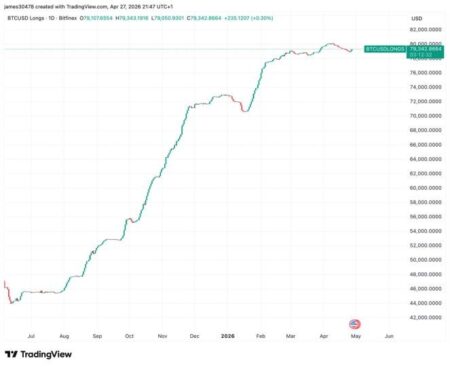
Bitcoin, the world’s largest cryptocurrency by market capitalization, experienced a particularly sharp pullback after enjoying gains over the weekend. The digital asset faced intense selling pressure as trading volumes exploded by an impressive 44% over a 24-hour period, indicating that significant market activity was taking place as traders rushed to adjust their positions. This volume surge typically signals major shifts in market sentiment and often accompanies substantial price movements in either direction. In this case, the elevated activity reflected investors’ desire to exit positions or take profits after recent gains, creating downward pressure on prices across the board.
Ethereum, the second-largest cryptocurrency, wasn’t spared from the selling wave either. After breaking through the psychologically important $2,400 price level just a day earlier, Ethereum tumbled to an intraday low of $2,267, representing a significant retreat from its recent highs. Other popular cryptocurrencies including Dogecoin, the meme-inspired digital asset that has gained a cult following, and XRP, which has been making headlines due to ongoing regulatory developments, also joined the retreat. The widespread nature of the selloff indicated that this wasn’t isolated to any particular cryptocurrency but rather represented a broader market correction affecting virtually all digital assets.
The damage was quantifiable and substantial. According to data from Coinglass, a leading cryptocurrency analytics platform, over $330 million in positions were liquidated within just 24 hours. The vast majority of these liquidations occurred in bullish long positions, meaning that traders who had bet on prices continuing to rise found themselves forced out of their positions as the market moved against them. This cascade of liquidations can create a self-reinforcing cycle, as forced selling puts additional downward pressure on prices, which in turn triggers more liquidations, and so on. Open interest in Bitcoin futures contracts, which represents the total number of outstanding derivative contracts, fell by 1.03% over the same period, further confirming that traders were scaling back their exposure to cryptocurrency markets.
Market Sentiment Shifts from Optimism to Fear
The emotional state of the cryptocurrency market, as measured by the Crypto Fear & Greed Index, flipped dramatically from “Neutral” back to “Fear” territory. This widely-watched indicator combines multiple factors including volatility, market momentum, social media sentiment, and trading volumes to gauge the overall emotional state of cryptocurrency investors. The shift to “Fear” suggests that traders have become more cautious and risk-averse, potentially setting the stage for further price declines if negative sentiment persists. However, contrarian investors often view periods of fear as potential buying opportunities, believing that excessive pessimism can create attractive entry points for long-term positions.
Interestingly, sentiment among derivatives traders on Binance, one of the world’s largest cryptocurrency exchanges, remained decidedly bearish. The platform’s data showed that short positions, which profit when prices fall, outnumbered long positions, which profit from price increases. This positioning suggests that professional traders and institutional participants expect further downside in the near term, though it’s worth noting that market sentiment can change rapidly in the cryptocurrency space. Despite the day’s volatility and negative price action, the global cryptocurrency market capitalization actually rose by 1.93% over the 24-hour period to stand at $2.64 trillion, indicating that the market maintained significant value and that some segments were experiencing growth even as major cryptocurrencies struggled.
Traditional Markets Hit Record Highs Amid Crypto Turmoil
While cryptocurrency markets were experiencing turbulence, traditional stock markets presented a mixed but generally positive picture. The Dow Jones Industrial Average, composed of 30 large-cap American companies, slipped modestly by 62.92 points or 0.13% to close at 49,167.79, representing a minor decline that hardly registered as significant. However, the S&P 500, which tracks 500 of the largest U.S. publicly traded companies and is often considered the best representation of the overall American stock market, rose 0.12% to close at a fresh record high of 7,173.91. The technology-focused Nasdaq Composite performed even better, adding 0.20% to reach a new record close of 24,887.10, demonstrating that investors remained confident in the growth prospects of technology companies.
The divergence between cryptocurrency and traditional stock market performance highlighted an interesting dynamic in financial markets. While digital assets were selling off, investors appeared to be rotating into established equities, particularly in the technology sector. This shift suggested that market participants were seeking more familiar territory amid geopolitical uncertainty rather than abandoning risk assets entirely. Meanwhile, oil prices continued their upward trajectory, with the United States Oil Fund, which tracks West Texas Intermediate crude oil prices, closing up 1.75% at $134.62. Rising oil prices often reflect concerns about supply disruptions or expectations of increased demand, and in this case, likely incorporated some premium related to Middle Eastern geopolitical tensions.
Technical Analysis Points to Critical Support Levels
Despite the day’s negative price action, some cryptocurrency analysts are identifying technical factors that could support prices going forward. Ali Martinez, a widely followed cryptocurrency analyst and trader, pointed out that Ethereum is currently sitting on what he describes as a “significant support zone” between $2,277 and $1,980. Martinez bases this analysis on the Unspent Transaction Output Realized Price Distribution indicator, a technical metric that shows the price at which the current supply of Ethereum was created or last moved on the blockchain. This data essentially reveals where large numbers of investors acquired their Ethereum holdings, and these levels often act as support because holders are psychologically inclined to defend their entry prices. Martinez refers to this concept as “The Market’s Memory” because it shows exactly where the “Buy Walls” are located—price levels where significant buying interest exists that could prevent further declines.
For Bitcoin, Martinez identified what technical analysts call a Morning Star candlestick pattern on the cryptocurrency’s monthly chart. This pattern is considered one of the more reliable bullish reversal signals in technical analysis, typically appearing at the bottom of downtrends and indicating a potential shift from selling pressure to buying momentum. The Morning Star pattern consists of three candlesticks: a long bearish candle, followed by a small-bodied candle (the “star”) that gaps down, and finally a long bullish candle that closes well into the body of the first candle. According to Martinez’s analysis, “As long as we stay above the ‘star’ candlestick low near $73,000, the structural bias is firmly to the upside.” This technical perspective offers a more optimistic view for Bitcoin investors, suggesting that despite Monday’s pullback, the longer-term trend structure remains intact as long as this critical support level holds. These technical observations provide traders with specific price levels to monitor in determining whether the current correction represents a temporary pullback within an ongoing uptrend or the beginning of a more sustained decline in cryptocurrency valuations.