



A Deep Dive into Modern Bear Hunting: Tradition, Ethics, and Conservation
The Photograph That Sparks a National Conversation
There’s a family photograph that serves as a fascinating window into one of America’s most contentious debates. In the image, a young father proudly holds his infant son near a deer he’s just harvested with a traditional bow. The baby, just a couple of months old, nestles in a pack on his father’s back during the deer retrieval. For some, this picture represents a beautiful introduction to outdoor traditions, self-reliance, and respect for nature. For others, it raises eyebrows and questions about what’s appropriate for young children. This isn’t just any family photo—it’s a snapshot that captures Clay Newcomb and his son Bear, now twenty years old, at the very beginning of a hunting journey that would define their relationship and lifestyle. Clay Newcomb, a lifelong hunter and respected historian of bear hunting in North America, sees nothing controversial in the image. To him and his family, it represents the passing down of values that stretch back generations—responsibility, patience, land ethics, and a tangible connection to where food comes from. The photograph encapsulates what Clay believes is “a really unique way to raise up a child,” teaching lessons about the natural world that simply can’t be learned in a classroom or shopping mall.
Growing Up Wild: Bear’s Journey from Infant to Hunter
Bear Newcomb—yes, that’s his legal first name, not a nickname—embodies the culmination of his father’s philosophy on raising children in the hunting tradition. Now twenty years old, Bear has been tracking bears in the Arkansas wilderness since he was just eleven years old. Those early years taught him something that modern society often struggles to instill in young people: profound patience and the acceptance that worthwhile goals sometimes take years to achieve. Bear hunting is what he calls “a very low-odds hunt,” and it took him five full years before he successfully harvested his first bear at age fifteen. The breakthrough came when he decided to commit completely, spending several days in the wilderness rather than just day trips. The video footage of that hunt captures something remarkable—the transformation from an embarrassed teenager saying goodbye to his proud but emotional father, to a young man returning with a sense of accomplishment that brought tears to his eyes. Bear admits he’s never gotten “super-emotional” after harvesting an animal except that one time, describing it as deeply fulfilling after pursuing a five-year goal. This experience illustrates something fundamental about the hunting culture the Newcombs represent: it’s not about the casual taking of life, but about dedication, respect, and the serious commitment required to succeed in matching wits with wild animals in their own environment.
The Reality of Hunting: When Things Don’t Go as Planned
Not every hunting story ends in triumph, and the Newcombs don’t shy away from the difficult aspects of their pursuit. During one September bear hunting trip—a tradition among their circle of friends—a visitor named Lake Pickle, an experienced bow-hunter from Mississippi trying bear hunting for the first time, faced every hunter’s nightmare. He shot a bear, but the arrow didn’t strike true. The animal was wounded but not mortally, likely clipped high on the back rather than hitting vital organs. As darkness fell and they searched unsuccessfully for the bear, the mood around the campfire was somber. Clay Newcomb was candid about this reality: “That’s the part of hunting that we don’t like to talk about. It’s the part of hunting that we have nightmares about, because the last thing we want to do is to shoot an animal that we don’t recover. That’s not something we’re proud of.” This honesty reveals something important about modern ethical hunters—they don’t glorify every aspect of what they do, and they genuinely grieve when things go wrong. The incident also highlights the gulf between hunters and non-hunters in how they perceive these situations. Around that campfire, more than one hunter wondered why people who purchase their meat wrapped in plastic at the supermarket would be more concerned about a bear with a non-mortal wound than about the conditions of animals raised in industrial agriculture. As Josh Spielmaker, one of the hunters, put it, people “attribute feelings towards a bear that they wouldn’t necessarily attribute to a chicken in a chicken house somewhere,” noting that many people imagine bears as “Winnie the Pooh” rather than as wild animals that have been a food source for humans throughout history.
The Art and Tradition Behind the Hunt
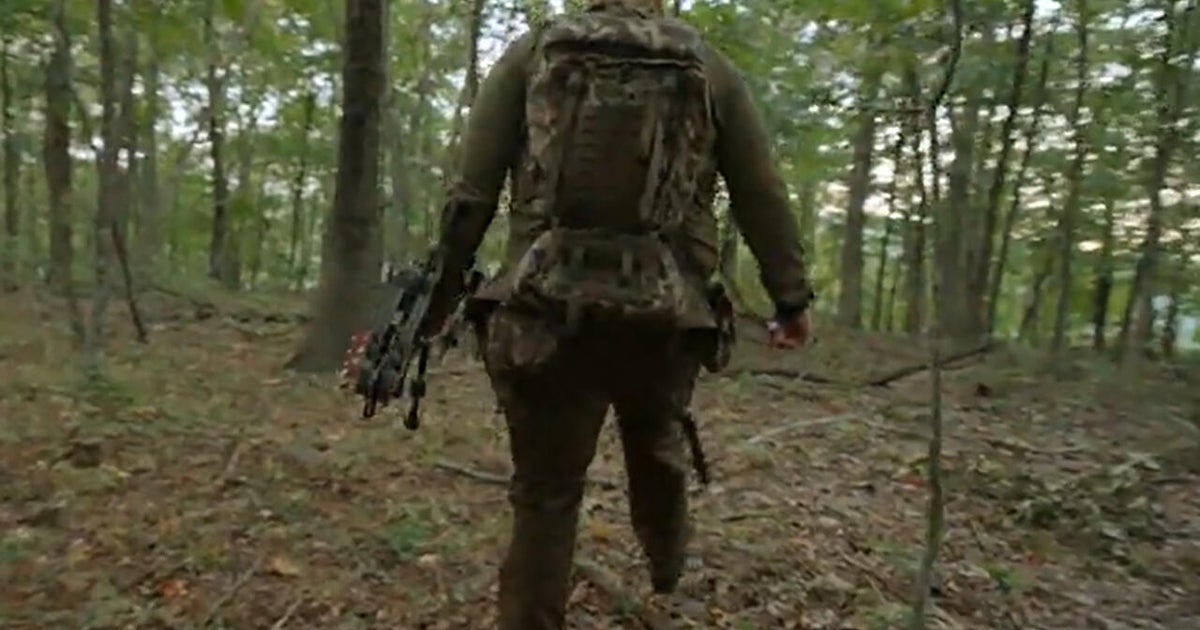
The Newcomb family’s approach to bear hunting is anything but casual or thoughtless. It represents a commitment to tradition and craftsmanship that connects them to hunters stretching back centuries. Bear Newcomb spent sixty hours hand-crafting his hunting bow from Osage orange wood, chosen specifically because it’s strong in both tension and compression—the same wood preferred by Native American bow makers. The bow incorporates sturgeon skins, water buffalo horns on the tips, deer antler, moose leather from Alaska, and even a seashell he collected in Texas. This level of dedication to creating his own hunting tools demonstrates that for the Newcombs, hunting isn’t about convenience or taking the easy path—it’s about connecting with history and doing things the hard way because it deepens the meaning of the experience. The care extends beyond the hunt itself to how they utilize every part of the animal. Bear fat, Clay explains, “renders down into some of the finest oil on Planet Earth,” and the family uses it for anything you’d use cooking oil for. What makes bear grease special is that it has virtually no taste and doesn’t go rancid as quickly as pork or beef fat. This made it incredibly valuable on the American frontier and among indigenous peoples. In fact, during the mid-1700s, a staggering fourteen percent of all exports leaving New Orleans was bear fat, shipped down the Mississippi River, which ran through prime black bear habitat. Clay sees bear grease as a metaphor for “things forgotten but relevant,” representing knowledge and traditions that modern society has lost but which still hold value for those willing to learn them.
From Exploitation to Conservation: The Evolution of Hunting
The history of bear hunting in America tells a cautionary tale about exploitation and a redemption story about conservation. Clay Newcomb has deeply researched this history for his podcast “Bear Grease,” including profiling what may have been the most prolific bear hunter ever: Holt Collier, a former enslaved person who later worked as a hunting guide for President Teddy Roosevelt. Roosevelt documented that Collier killed approximately 3,000 bears during his lifetime—not for sport, but for commercial sale of meat and hides. This kind of unregulated market hunting, where animals were killed for commerce rather than personal sustenance, nearly wiped out black bear populations in Arkansas and across much of their range. The 1800s were particularly devastating for wildlife across North America as market hunters supplied growing urban populations with wild game. But the story didn’t end there. As Clay explains, “Hunters have really been the champions of wildlife and preservation of wild places.” In the 1950s, when bear populations had been decimated, it was hunters who led the effort to restock bears in Arkansas during a ten-year restoration program. This might seem counterintuitive—why would people who kill bears for recreation want to bring them back? The answer lies in understanding that modern regulated hunting is fundamentally different from the market hunting of the past. Today’s hunters are limited by strict seasons, bag limits, and licensing requirements that ensure sustainable populations. The fees they pay for licenses and equipment fund conservation efforts through the Pittman-Robertson Act, which has generated billions of dollars for wildlife management since 1937.
The Ethics of the Hunt: A Modern Perspective on an Ancient Practice
The ethical argument for hunting, as the Newcombs present it, challenges many assumptions held by people who have never considered where their meat actually comes from. When confronted with the seeming contradiction of “we love wildlife, but we kill it,” Clay Newcomb doesn’t dodge the complexity. He acknowledges it’s a complicated story, but he makes a compelling case for hunting as more ethical than industrial agriculture. His argument centers on transparency and animal welfare: when he takes wild game, he knows exactly where that animal lived, what it ate, how it died, and how it was processed. He can guarantee that the bear spent its entire life wild and free, eating natural foods in its mountain habitat, until the moment of death. Compare this, he suggests, to the reality behind most meat purchased at grocery stores—animals raised in confinement, often in crowded conditions, fed processed diets, and processed in industrial facilities far removed from consumers. As Bear Newcomb points out, “the beef that you’re getting at the store is coming from a cow that has a terrible quality of life.” This perspective doesn’t necessarily make hunting right for everyone, but it does challenge the moral certainty with which some non-hunters condemn the practice. The mass production of chicken, cattle, and hogs has satisfied America’s appetite for affordable meat, but it comes with environmental, ethical, and health costs that are often invisible to consumers. The Newcombs argue that their approach—taking personal responsibility for harvesting meat, using every part of the animal, limiting their take to what they can use, and supporting conservation through their licenses and advocacy—represents a more honest and potentially more ethical relationship with the animals that feed us. Whether you find their argument convincing or not, they’re asking important questions about consumption, responsibility, and our relationship with the natural world that deserve serious consideration.