
The Mysterious Disappearance of a Retired Air Force General
A High-Ranking Military Officer Goes Missing
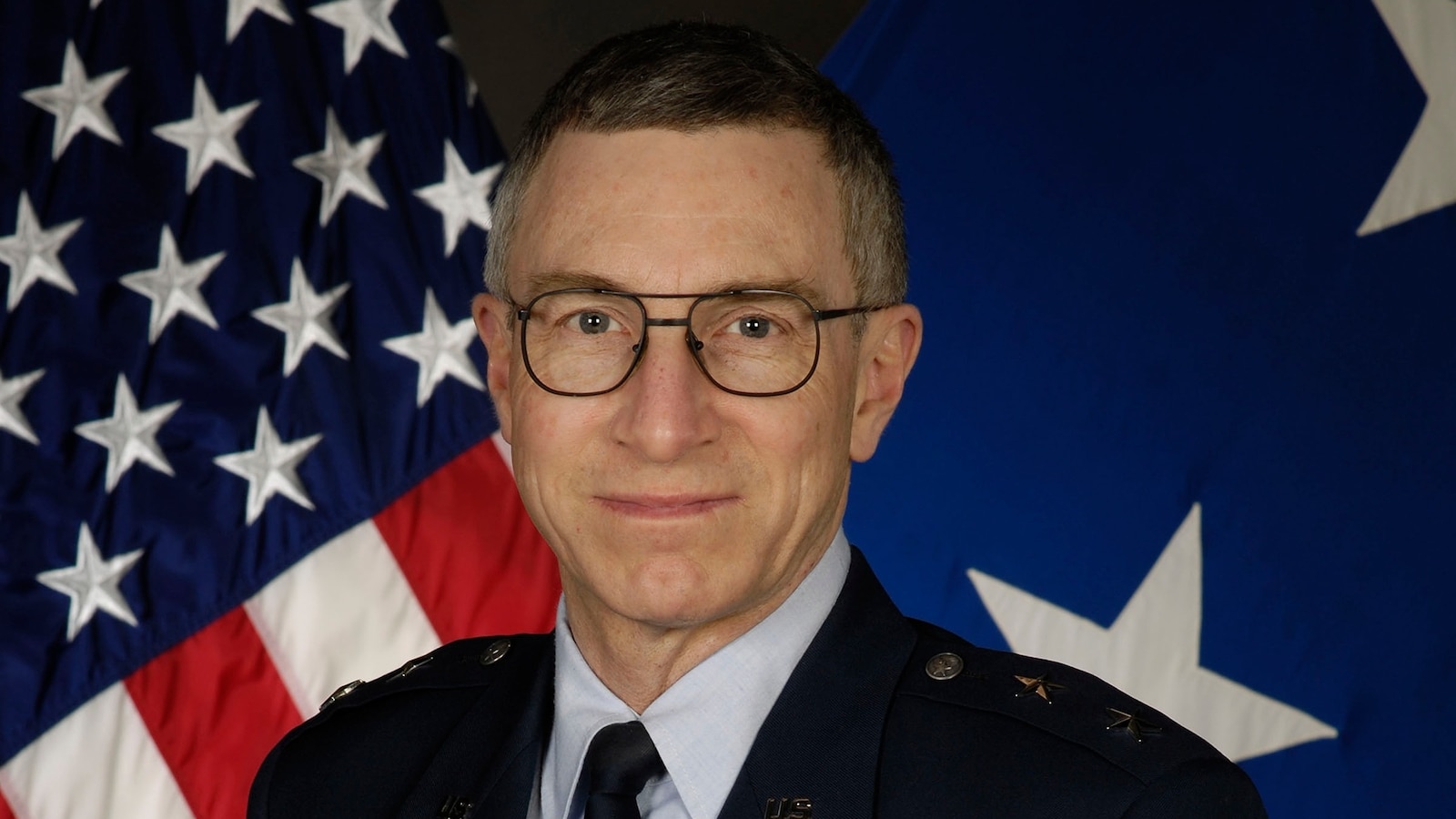
In a case that has captured the attention of both military and civilian communities, a retired United States Air Force major general has vanished without a trace from his New Mexico home. William N. “Neil” McCasland, 68, was last seen leaving his Albuquerque residence on February 27, and despite extensive search efforts by multiple law enforcement agencies, his whereabouts remain unknown. The disappearance of someone with such a distinguished military background has raised concerns and questions, prompting a coordinated response from local authorities and federal agencies alike. The Bernalillo County Sheriff’s Office, which is leading the investigation, has enlisted the help of the FBI’s Albuquerque Field Office to assist in locating the missing general. What makes this case particularly noteworthy is not just McCasland’s age or the circumstances of his disappearance, but his extensive history working in some of the most sensitive and classified areas of the U.S. military and intelligence community.
A Distinguished Career in Aerospace and Intelligence
Major General McCasland’s military career was nothing short of remarkable, spanning decades of service in some of the most critical and secretive areas of national defense. Throughout his time in uniform, he held numerous high-level positions focused on space research, acquisition, and operations within both the Air Force and the National Reconnaissance Office—the latter being one of the nation’s most classified intelligence agencies responsible for designing, building, and operating spy satellites. His career trajectory took him through various commanding and director-level positions that would have granted him access to some of the country’s most closely guarded secrets. Among his notable assignments, McCasland commanded the Phillips Research Site of the Air Force Research Laboratory at Kirtland Air Force Base in New Mexico, a facility known for its work on advanced weapons systems and directed energy research. He also led the Air Force Research Laboratory at Wright-Patterson Air Force Base in Ohio, one of the military’s premier research and development centers. Additionally, he held director-level positions at the Pentagon, placing him at the heart of military strategic planning and operations. This impressive resume highlights not only his expertise and trustworthiness but also explains why his sudden disappearance has drawn the attention of federal investigators who understand the sensitivity of the knowledge he possesses.
The Day He Vanished
According to the Bernalillo County Sheriff’s Office, McCasland left his Albuquerque home on the morning of February 27 and simply never returned. What makes his disappearance particularly puzzling is that authorities believe he left on foot, without taking a vehicle. For a 68-year-old man to leave his home on foot and vanish completely in a matter of hours raises numerous questions about what might have happened. Did he go for a routine walk and become disoriented? Did he leave intentionally with a specific destination in mind? Or did something more sinister occur? The sheriff’s office has been careful to note that despite their extensive investigation, they have uncovered no evidence of foul play thus far. This statement, while perhaps intended to ease public concern, also leaves the door open to numerous possibilities about what might have happened to the retired general. The lack of evidence pointing to criminal activity doesn’t necessarily mean that McCasland is safe or that his disappearance was voluntary—it simply means that investigators haven’t found signs of violence or forced abduction. His family, friends, and former colleagues are undoubtedly anxious for any news about his whereabouts and wellbeing.
A Multi-Agency Search Effort
The search for Major General McCasland has become a coordinated effort involving multiple law enforcement agencies, reflecting both the seriousness of the situation and the unique circumstances surrounding his disappearance. The Bernalillo County Sheriff’s Office acknowledged that due to McCasland’s background and the established partnerships that come with someone of his rank and experience, they are working closely with several agencies, most notably the FBI’s Albuquerque Field Office. This level of federal involvement isn’t typical for all missing persons cases, but given McCasland’s decades of service in sensitive positions dealing with national security matters, it’s understandable that the FBI would take an interest. The collaboration between local and federal authorities suggests that investigators are taking every possible angle into consideration, from the mundane possibilities like a medical emergency or voluntary disappearance to more complex scenarios that might involve his past work in classified programs. Sheriff John Allen has made public appeals for assistance, emphasizing that finding McCasland safely is their top priority. He’s specifically asked members of the community to check their security camera footage from the area around the time of McCasland’s disappearance and to preserve any recordings that might be relevant. In today’s world, where doorbell cameras, traffic cameras, and business security systems are ubiquitous, there’s hope that somewhere in that vast network of surveillance, there might be a clue about which direction McCasland went and what happened to him.
Physical Description and Public Appeal
Authorities have released a detailed physical description of McCasland to aid in the search efforts. He is described as standing 5 feet 11 inches tall and weighing approximately 160 pounds—a relatively slender build for his height. He has white hair and blue eyes, features that might make him stand out in certain contexts but could also make him blend in among other men of his age group. The fact that he’s believed to have left on foot is a crucial detail that has shaped the search strategy. Without a vehicle, his range of movement would be more limited, unless he accepted a ride from someone, used public transportation, or had arranged for alternative transportation. The sheriff’s office and FBI have likely been canvassing the neighborhood, talking to residents, checking with local businesses, and reviewing any available surveillance footage from the area. They’ve also probably checked with hospitals, homeless shelters, and other facilities where someone experiencing a medical or mental health crisis might end up. The public appeal for information has been widespread, with McCasland’s photo circulated through traditional media, social media platforms, and official law enforcement channels. The community response has likely been strong, given the general’s service to his country and the mysterious nature of his disappearance. However, as Sheriff Allen noted, despite the collective efforts of law enforcement and the community, the fundamental question remains unanswered: what happened to Neil McCasland after he walked out his door on February 27?
The Ongoing Mystery and Hope for Resolution
As the days turn into weeks, the mystery of Major General McCasland’s disappearance only deepens. The sheriff’s office has been transparent in acknowledging that they still don’t know what happened to him after he left home, which is both honest and deeply concerning. In missing persons cases, the first 48 to 72 hours are considered critical, and we’re now well beyond that window. However, that doesn’t mean hope is lost—there have been numerous cases where missing individuals have been found safe after extended periods, sometimes having experienced medical events like strokes or episodes of amnesia, sometimes having voluntarily stepped away from their lives due to personal crises, and sometimes having simply gotten lost or injured in remote areas. The involvement of the FBI suggests that authorities are being thorough and considering all possibilities, including those that might relate to McCasland’s past work in classified programs. While there’s no public indication that his disappearance is related to his military service, his background naturally raises questions that must be explored. The fact that no evidence of foul play has been found is encouraging, but it also means that investigators are working with very few leads. For McCasland’s family and friends, this waiting period must be agonizing, filled with worst-case scenarios and hopeful possibilities in equal measure. The military community, which takes care of its own even after retirement, is undoubtedly rallying around the family and supporting the search efforts however possible. As the investigation continues, authorities are urging anyone with information, no matter how insignificant it might seem, to come forward. Sometimes the smallest detail—a sighting, a conversation overheard, an odd occurrence noticed—can be the piece that breaks a case wide open and brings a missing person home safely.