
Terror at Temple Israel: A Violent Attack on Michigan’s Largest Jewish Congregation
The Attack Unfolds
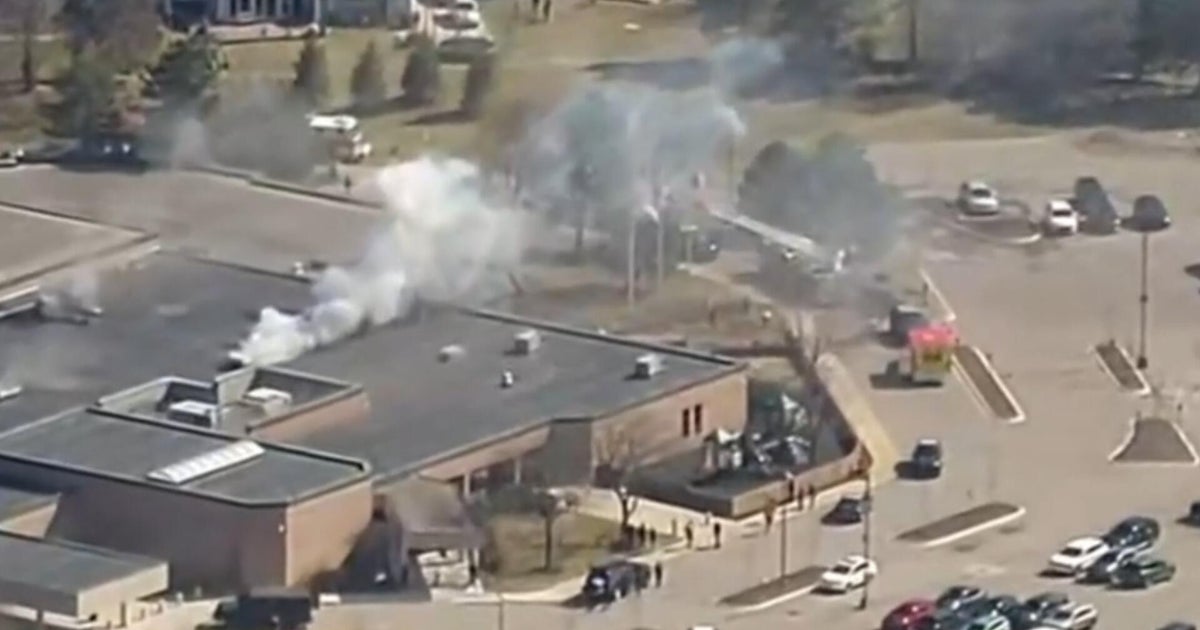
On a Thursday afternoon that began like any other, the peaceful sanctuary of Temple Israel in West Bloomfield, Michigan, was shattered by violence when an individual deliberately drove a vehicle through the building’s entrance. The incident, which occurred around 1:35 p.m. in the suburban community northwest of Detroit, quickly escalated into what authorities initially described as an active shooter situation. According to Oakland County Sheriff Michael Bouchard, the attacker drove not just into the building but continued down a hallway inside the synagogue, bringing the threat directly into the heart of this sacred space. What could have been an unthinkable tragedy was met with quick action from the synagogue’s security team, who engaged the suspect with defensive gunfire. In those terrifying moments, as congregation members and staff faced an unimaginable threat, the security personnel put themselves in harm’s way to protect others. The situation ended with the suspect found dead, though the exact circumstances of the death remained under investigation, with Sheriff Bouchard noting that in such chaotic situations, it’s sometimes unclear whether suspects are killed by security forces or take their own lives.
The Immediate Aftermath and Investigation
The scene that emergency responders encountered was complex and dangerous. Law enforcement sources revealed that the suspect had exited the vehicle carrying a rifle before being confronted by synagogue security, though conflicting reports about the exact sequence of events highlighted the confusion typical of such traumatic incidents. Adding to the chaos, the vehicle burst into flames after ramming into the building, raising immediate concerns among investigators about the possibility of explosives being present. “Something ignited in the vehicle. That’s a work in progress,” Sheriff Bouchard told reporters, underscoring the ongoing nature of the investigation and the many questions that remained unanswered in those first critical hours. There was also initial confusion about whether there were one or two suspects involved, with Secure Community Network—an organization that provides security coordination for Jewish institutions nationwide—reporting two suspects in the vehicle, while Sheriff Bouchard believed there was only one. This discrepancy illustrated how even with multiple witnesses and security footage, piecing together exactly what happened in moments of extreme violence takes time and careful investigation. It remained unclear whether the suspect had actually fired any shots or if all gunfire came from the security team responding to the threat.
Heroes and Victims
While the attack resulted in no deaths among the synagogue’s congregation, staff, or visitors—a fact that stands as a testament to the effectiveness of the security measures in place—there were casualties among those who stood between evil and innocent lives. One of the lead security personnel was struck by the vehicle as it crashed through the building’s entrance, suffering injuries that required hospitalization. However, officials reported that this brave individual was expected to recover, providing a small measure of relief amid the trauma. The fact that this security person was willing to put themselves directly in harm’s way, literally standing between a speeding vehicle and the people inside the building, speaks volumes about the dedication of those who take on the responsibility of protecting vulnerable communities. Their actions, along with those of other security team members who engaged the armed suspect, likely prevented what could have been a massacre. The broader community held its breath as reports first emerged, fearing the worst, but the professionalism and preparedness of Temple Israel’s security team had made all the difference between a prevented attack and an unspeakable tragedy.
Understanding the Target: Temple Israel’s Significance
Temple Israel isn’t just any synagogue—it holds the distinction of being the largest Reform synagogue in the entire United States, making it both a significant religious institution and, tragically, a high-profile target. The facility serves not only as a house of worship but as a comprehensive community center that includes educational facilities, notably a school with an early childhood center and kindergarten classes. On the day of the attack, children as young as preschool age were present in the building, a fact that makes the successful evacuation and protection of all individuals even more remarkable. According to statements from the synagogue, all children and staff members were safely evacuated and accounted for, a process that undoubtedly involved careful coordination between security personnel, teachers, and staff members who had to balance moving quickly with keeping young children calm during a terrifying situation. For many of these children and their families, this will be a formative trauma, a moment when their place of learning and spiritual growth became the site of violence. The attack on Temple Israel represents an assault not just on a building or even on a particular congregation, but on the values of religious freedom and safety that Americans of all faiths hold dear.
Official Response and the Broader Context
Government officials quickly responded to news of the attack with statements condemning antisemitism and violence. Michigan Governor Gretchen Whitmer released a statement saying she was monitoring the situation closely, emphasizing that “Michigan’s Jewish community should be able to live and practice their faith in peace. Antisemitism and violence have no place in Michigan.” Her words reflected not just sympathy but a recognition of the particular vulnerability that Jewish communities face in an era of rising antisemitic incidents nationwide. Michigan Attorney General Dana Nessel echoed these sentiments, stating, “Antisemitism has no place in Michigan and cannot be tolerated. In moments like these, it’s more important than ever that we come together, stand with our neighbors, confront hate whenever it appears, and build stronger communities.” These official responses, while expressing appropriate horror and solidarity, also acknowledged an uncomfortable reality: this attack didn’t happen in isolation. Jewish communities across the United States have been experiencing increased threats and violence, necessitating enhanced security measures at synagogues, Jewish community centers, and schools. The fact that Temple Israel had robust security protocols in place—and that these protocols proved effective—reflects the sad reality that Jewish institutions have had to become fortified spaces, where worship and learning happen behind security checkpoints and trained guards.
Moving Forward: Questions and Community Resilience
In the immediate aftermath of the attack, many critical questions remained unanswered. Authorities had not publicly identified the attacker, and more importantly, no clear motive had been established, though the choice of target—one of America’s most prominent synagogues—certainly suggested a hate crime. Investigators were working to piece together the suspect’s background, movements leading up to the attack, and any communications or manifestos that might explain what drove this act of violence. The question of whether there were explosives in the vehicle remained under investigation, a detail that could significantly alter understanding of the attacker’s intentions and level of premeditation. For the congregation of Temple Israel and the broader Jewish community in Michigan and beyond, the coming days and weeks would bring the difficult work of processing trauma, supporting those directly affected, and deciding how to move forward. Would they allow this attack to make them feel less safe, less welcome in their own community? Or would they, as so many targeted communities have done before, find strength in solidarity and refuse to be intimidated? The physical damage to the building could be repaired, but the psychological impact—especially on the children who were present—would require careful, compassionate attention. Community leaders would need to balance reassuring members about enhanced security measures with maintaining the welcoming, open atmosphere that makes a house of worship feel like home rather than a fortress. The attack on Temple Israel serves as a stark reminder that the fight against hatred and antisemitism remains urgent and ongoing, requiring vigilance, courage, and an unwavering commitment to the principles of religious freedom and human dignity.