


The Frozen Faces of Pompeii: A Haunting Window into Ancient Tragedy
A Permanent Memorial to the Victims of Mount Vesuvius
After centuries of careful preservation and study, more than twenty plaster casts of individuals who perished in one of history’s most devastating natural disasters have finally found a permanent home. These haunting reproductions, which capture the final moments of Pompeii’s residents during the catastrophic eruption of Mount Vesuvius in 79 AD, are now on permanent display at the Archaeological Park of Pompeii in Italy. The exhibition represents far more than just an archaeological collection—it’s a deeply human memorial to ordinary people whose lives were suddenly and violently cut short nearly two thousand years ago. These casts, which scholars have poignantly described as “imprints of pain,” preserve with startling clarity the exact positions in which men, women, and children died as their world literally came crashing down around them. Gabriel Zuchtriegel, the director of the Archaeological Park of Pompeii, explained that curators approached this exhibition with a delicate balance in mind: they wanted to honor the dignity of these victims—people who were fundamentally just like us—while also making the historical reality of what happened accessible, inclusive, and educational for modern visitors. The result is an exhibition that manages to be both profoundly moving and deeply informative, offering visitors a uniquely intimate connection to the past.
The Revolutionary Technique That Brought the Past to Life
The remarkable plaster casts that form the centerpiece of this exhibition owe their existence to an ingenious technique developed by Giuseppe Fiorelli in 1863. Fiorelli, an Italian archaeologist working at Pompeii, made a breakthrough discovery: when the bodies of Pompeii’s victims decomposed over the centuries, they left perfect hollow spaces within the hardened volcanic ash that had engulfed them. By carefully pouring liquid plaster into these voids, Fiorelli could create precise three-dimensional reproductions of the victims in their final moments. This revolutionary method faithfully preserves not just the position of each person, but also their expressions of pain, the draping of their clothing, and even small personal details that make each cast heartbreakingly unique. What makes this technique even more remarkable is its continued relevance—nearly 160 years after Fiorelli first developed it, the same basic method is still used by the team of scholars conducting research at Pompeii today, though enhanced with modern technology and scientific analysis. Pompeii holds a unique position among archaeological sites worldwide as the only location where this type of evidence can be recovered. The specific conditions created by the eruption—the way the ash fell and then was solidified by pyroclastic flows—created a perfect time capsule that allows us not only to see buildings and artifacts from the ancient world but also to witness reproductions of people and even organic materials like plants and food that would normally have vanished without a trace.
The Catastrophe That Froze a City in Time
To understand the significance of these casts, it’s essential to grasp the magnitude of the disaster that created them. When Mount Vesuvius erupted on that fateful day in 79 AD, it unleashed one of the most powerful and deadly volcanic events in recorded history. An estimated two thousand people died within the city of Pompeii itself, with total regional casualties potentially reaching as high as sixteen thousand when considering all the surrounding areas affected by the eruption. The sequence of the disaster was terrifying and relentless. First came a rain of pumice stones and volcanic rock that poured down on the city, trapping many residents in their homes or in shelters where they had sought refuge. Buildings began to collapse under the immense weight of the accumulating volcanic debris, which eventually reached heights of approximately three meters—about ten feet. Those who weren’t killed by the initial collapse or falling debris faced an even more horrific fate when pyroclastic flows—superheated currents of gas and volcanic matter that can move at tremendous speeds—swept through the area, instantly killing anyone in their path and sealing the city under a thick blanket of ash. During excavations at Pompeii over the centuries, archaeologists have discovered the remains of over a thousand victims of the eruption, each telling their own tragic story of that day.
The Faces Behind the Archaeological Evidence
The twenty-two casts selected for this permanent exhibition represent the best-preserved remains discovered across different areas of the ancient city. They were found in locations that paint a vivid picture of the chaos and terror of that day—some victims were discovered in the inner areas of Pompeii, caught in their homes or places of work, while others were found near the city gates and along the roads leading out of town, frozen in their desperate attempts to flee to safety. As Silvia Martina Bertesago, an archaeologist at the Pompeii Archaeological Park, notes, these casts have a powerful emotional impact on visitors and can be deeply moving experiences. But these reproductions offer far more than just emotional connection—they’re also invaluable scientific documents. Modern archaeological techniques have transformed our ability to extract information from these remains. Through advanced analytical methods, researchers can now determine the age and sex of individual victims, identify diseases they may have suffered from, and even reconstruct details about their diets and lifestyles. Each cast becomes not just a memorial to an individual tragedy but also a window into daily life in ancient Pompeii, telling us about social structures, health conditions, nutrition, and the diverse population of this Roman city. The victims represented in the casts span the full range of Pompeii’s society—men, women, and children of various ages and social classes, all equal in their vulnerability before the overwhelming power of nature.
A Museum Experience That Balances Respect and Education
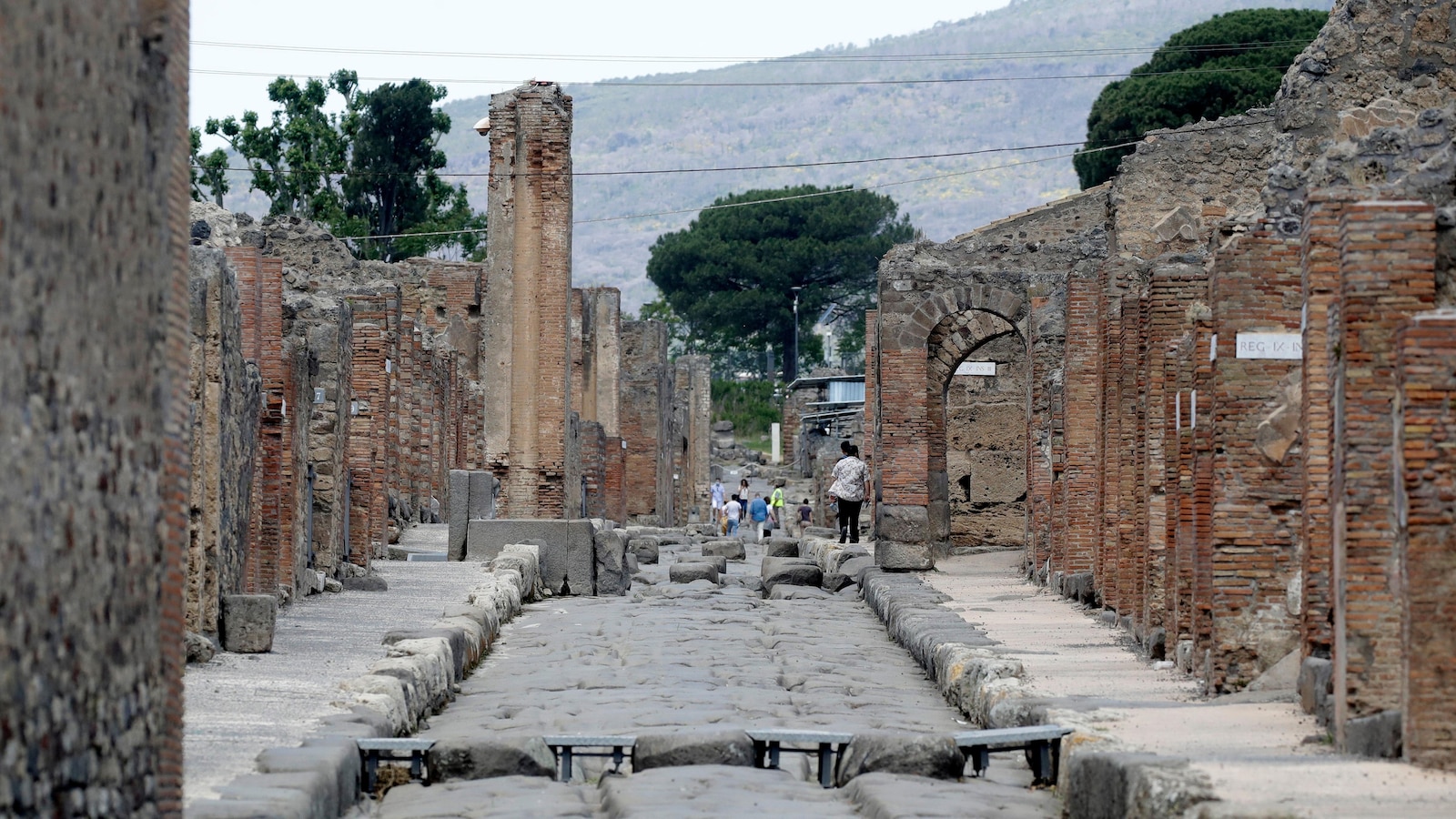
The permanent exhibition housing these remarkable artifacts has been thoughtfully designed within the porticoes of the Palestra Grande, a large ancient gymnasium complex located opposite the city’s Amphitheatre. This architectural setting provides both practical space for the exhibition and appropriate historical context, placing these human remains within the urban landscape where these people once lived and died. The exhibition goes beyond just displaying the human casts, incorporating a broader narrative about life and death in ancient Pompeii. Alongside the area dedicated to the human remains, visitors can explore displays featuring other discoveries from the excavations, including reproductions of plants and food items that remained buried for centuries under meters of ash and lava. These botanical and culinary artifacts provide additional context for understanding daily life in Pompeii, showing what people ate, what plants they cultivated, and how they lived before disaster struck. The curatorial approach throughout emphasizes making the exhibition “joyful” in the sense of being enlightening and meaningful rather than merely morbid or sensational. The goal is to help visitors understand what really happened in Pompeii—not just the mechanics of the volcanic eruption, but the human experience of that catastrophe and what it tells us about our shared humanity across the millennia.
The Enduring Legacy and Lessons of Pompeii
The opening of this permanent exhibition represents an important moment in the ongoing story of Pompeii—a site that has captured human imagination for centuries and continues to yield new discoveries and insights. These plaster casts serve multiple purposes simultaneously: they are scientific artifacts that provide valuable data for researchers; they are historical documents that preserve information about life in the Roman Empire; they are artistic objects that demonstrate the power of archaeological technique; and perhaps most importantly, they are memorials to real human beings whose individual stories would otherwise have been lost to history. The exhibition invites reflection on universal themes—the fragility of human life in the face of natural forces, the ways we respond to crisis and disaster, the bonds that connected families and communities, and the similarities that transcend the vast gulf of time separating us from the ancient world. When we look at these casts, we’re not just observing distant historical figures; we’re seeing people who loved, feared, hoped, and suffered just as we do. The permanent display at Pompeii ensures that future generations will have the opportunity to connect with these victims of Mount Vesuvius, to learn from their tragedy, and to recognize our shared humanity with people who lived and died two thousand years ago. In giving dignity to these long-dead victims, the exhibition ultimately reminds us of the dignity inherent in all human life and our responsibility to remember and learn from the past.