



A Deadly Love Triangle: The Virginia Au Pair Murder Case
The Shocking Discovery That Unraveled a Marriage
On a February morning in 2023, what appeared to be a straightforward case of a husband defending his home turned into one of Virginia’s most chilling murder conspiracies. Brendan Banfield, a 40-year-old former IRS law enforcement officer, initially told police a harrowing story: he had come home to find a stranger, Joseph Ryan, attacking his wife Christine with a knife. According to his account, he shot the intruder to protect his family, and the couple’s Brazilian au pair, Juliana Magalhães, fired additional shots at the attacker. On the surface, it seemed like a tragic but justifiable act of self-defense. However, as investigators dug deeper into the circumstances surrounding the deaths of both Christine Banfield and Joseph Ryan, they uncovered a web of deception, infidelity, and calculated murder that would ultimately lead to Brendan Banfield’s conviction for aggravated murder on Monday.
The case captivated the community and raised disturbing questions about how far someone might go to escape an unwanted marriage. Christine Banfield, a dedicated pediatric intensive care nurse, had devoted her life to caring for children in their most vulnerable moments. She had trusted her husband and welcomed Juliana Magalhães into their home to help care for their family. Neither she nor Joseph Ryan could have imagined they were being drawn into a deadly plot orchestrated by the very people who should have protected them. The verdict, delivered after nearly nine hours of jury deliberation spread across two days, brought a measure of justice to the victims’ families, though it could never undo the devastating loss they suffered.
The Affair That Set Everything in Motion
At the heart of this tragic case was a secret relationship between Brendan Banfield and Juliana Magalhães, the young woman hired to care for the Banfield children. What began as a professional arrangement deteriorated into an illicit affair that prosecutors argued became the motive for murder. Rather than ending his marriage through conventional means, Banfield allegedly chose a far more sinister path. The relationship between employer and employee crossed boundaries that would have catastrophic consequences, transforming a family home into a crime scene and destroying multiple lives in the process.
The affair wasn’t just a betrayal of marital vows—it became the foundation for an elaborate murder plot. According to testimony that emerged during the trial, Banfield and Magalhães didn’t simply want to be together; they wanted to eliminate Christine Banfield entirely while avoiding suspicion. This required a plan so calculated and cold-blooded that it shocked even seasoned prosecutors and investigators. The scheme they allegedly devised involved manipulating an innocent third party, Joseph Ryan, positioning him as the perfect scapegoat who would take the blame for Christine’s murder even as he became a victim himself.
The Elaborate Catfishing Scheme
Prosecutors presented a theory that was as disturbing as it was creative: Banfield and Magalhães had impersonated Christine Banfield on websites dedicated to sexual fetishes and alternative lifestyles. Using her identity, they allegedly reached out to Joseph Ryan, luring him to the Banfield home with promises of a sexual encounter that would involve knife play—a specific fetish that would later be used to explain his presence at the crime scene. Ryan, thinking he was meeting Christine for a consensual encounter, walked into a trap that would cost him his life. The plan was designed to create a scenario where Ryan would appear to be an attacker who had come to harm Christine, giving Banfield justification to shoot him while simultaneously killing his wife and making it look like she had been Ryan’s victim.
This “catfishing” element of the case became one of its most contested aspects. During the trial, defense attorney John Carroll introduced evidence showing that there was significant disagreement within the police department about whether Christine Banfield or someone impersonating her had created these online profiles. One officer who concluded from digital evidence that Christine herself was behind the social media accounts was reportedly transferred from the case, which Carroll characterized as retaliation for disagreeing with the theory preferred by department leadership. This internal conflict within the investigation added another layer of complexity to an already intricate case, raising questions about investigative bias and the pressure to build a narrative that fit the prosecution’s theory.
Testimony, Betrayal, and the Trial
The trial itself was a dramatic affair, with the prosecution’s case heavily dependent on testimony from Juliana Magalhães, who had pleaded guilty to manslaughter in 2024. In exchange for a reduced sentence and potential release for time served, Magalhães turned against her former lover and provided detailed testimony about their alleged plot. She described how they had worked together to set up the deadly encounter, using Christine’s identity to manipulate Ryan into coming to the house. Her testimony painted Brendan Banfield as the architect of the murder scheme, a calculating individual who was willing to kill both his wife and an innocent stranger to pursue his relationship with her.
However, the defense fought hard to discredit Magalhães’ account. Defense attorney John Carroll argued passionately that her testimony was fundamentally unreliable because she had every incentive to lie. Facing potentially decades in prison, Magalhães had made a deal with prosecutors that could result in her walking free if she testified against Banfield. Carroll suggested to the jury that she was willing to say whatever prosecutors wanted to hear in order to secure her own freedom, even if it meant falsely implicating Banfield. When Banfield took the stand in his own defense—a risky move that many defendants avoid—he called Magalhães’ version of events “absolutely crazy,” maintaining his innocence and insisting that the prosecution’s theory was fabricated.
Despite the defense’s efforts to undermine Magalhães’ credibility, prosecutor Jenna Sands emphasized in her closing arguments that the case didn’t rest solely on the au pair’s testimony. She pointed to what she called a “plethora of evidence” that corroborated the prosecution’s theory. Perhaps most damning was expert testimony regarding blood stain patterns found on Joseph Ryan’s hands. Forensic analysts testified that the pattern suggested Christine Banfield’s blood had been dripped onto Ryan’s hands from above, rather than transferred during an attack. This physical evidence contradicted the scenario Brendan Banfield had described to police and supported the theory that the scene had been staged to look like something it wasn’t.
The Verdict and Its Aftermath
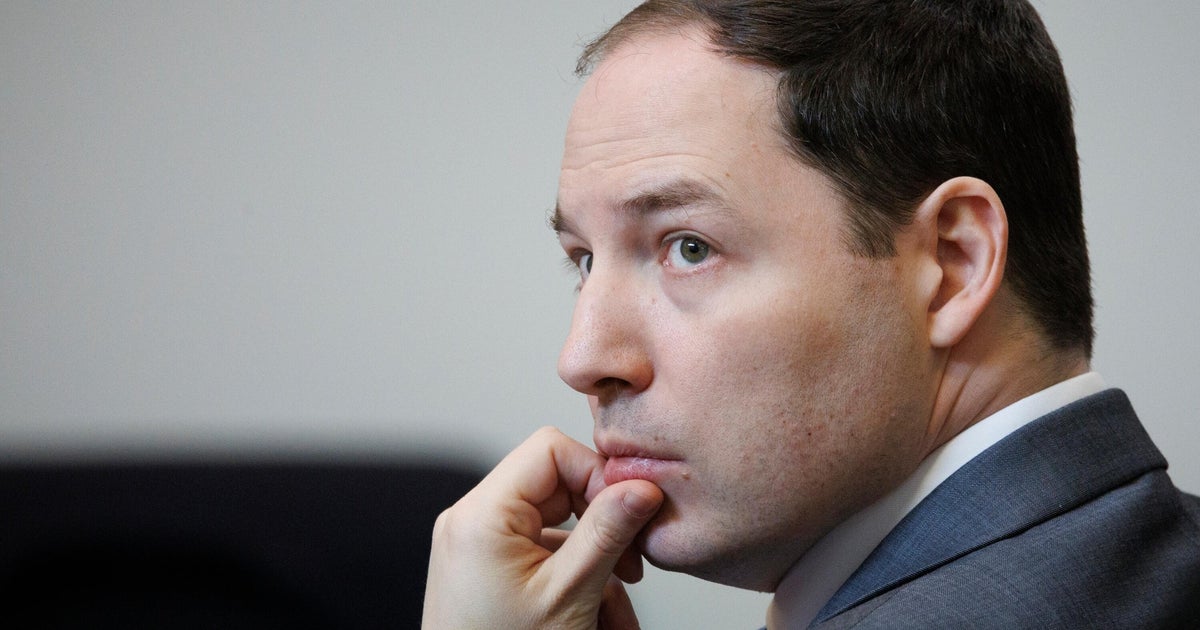
On Monday, as the jury foreman read the guilty verdict on charges of aggravated murder, Brendan Banfield showed remarkably little emotion. He shifted slightly in his seat but otherwise maintained his composure as his fate was sealed. The jury’s decision came after careful deliberation, weighing the testimony of a admitted killer with a motive to lie against physical evidence, circumstantial details, and the inherent implausibility of Banfield’s original story. In the end, they concluded that the prosecution had proven beyond a reasonable doubt that Banfield had orchestrated the murders of both his wife and Joseph Ryan.
The conviction carries the possibility of life in prison, and Banfield now awaits his sentencing hearing scheduled for May 8th. For the families of Christine Banfield and Joseph Ryan, the verdict provides some measure of justice, though it cannot restore what was taken from them. Christine’s colleagues remember her as a compassionate nurse who dedicated herself to caring for critically ill children, while Ryan’s loved ones mourn a man whose life was cut short simply because he was in the wrong place at the wrong time, manipulated into a situation he couldn’t have understood. Meanwhile, Juliana Magalhães awaits her own sentencing, scheduled to occur after Banfield’s trial concluded. Legal experts suggest she may indeed be released for time served, a outcome that some may find difficult to accept given her admitted role in the deaths, but which reflects the prosecution’s assessment that her cooperation was essential to securing a conviction against the person they believe was the primary architect of the crime.
This case serves as a disturbing reminder of how infidelity and selfishness can escalate into violence, and how the desire to avoid the social and financial consequences of divorce can lead some individuals down unthinkably dark paths. What might have been resolved through honest conversation and legal separation instead became a double homicide that devastated families and betrayed every bond of trust that should have protected those involved.