


A Son’s Tribute: Maxim Naumov’s Emotional Olympic Debut
Skating Through Grief on the World’s Biggest Stage
When U.S. figure skater Maxim Naumov stepped onto the ice at the Milano Ice Skating Arena for his Olympic debut in the men’s singles competition, he wasn’t alone. Though his parents—1994 World Figure Skating Champions Vadim Naumov and Evgenia Shishkova—had tragically passed away just one year earlier in a devastating plane crash, their son felt their presence guiding him through every jump, every turn, every graceful movement across the ice. For Naumov, this performance wasn’t just about competing at the highest level of his sport; it was a deeply personal tribute to the two people who had shaped his life and skating career from the very beginning. As he glided across the ice on that Tuesday in February 2026, he carried with him not just the weight of Olympic expectations, but the profound loss of both parents and the determination to honor their memory on the world’s biggest athletic stage.
The Tragedy That Shook the Figure Skating World
The crash that claimed the lives of Maxim’s parents occurred in January 2025, exactly one year before his Olympic performance. The tragedy unfolded over the Potomac River in the Washington, D.C., area when a commercial jet collided mid-air with an Army Black Hawk helicopter, killing all 67 people aboard. The commercial flight carried a particularly poignant passenger list—several young figure skaters, their parents, and their coaches, all returning home from a national figure skating development camp in Wichita, Kansas. Among those lost were Vadim Naumov and Evgenia Shishkova, accomplished champions in their own right who had reached the pinnacle of their sport by winning the World Figure Skating Championships in 1994. The accident sent shockwaves through the tight-knit figure skating community, leaving families shattered and a generation of young skaters mourning mentors, friends, and loved ones. For Maxim, the loss was unfathomable—both parents taken in a single moment, leaving him to navigate not only his grief but also his Olympic dreams without the two people who understood his journey better than anyone else.
A Performance Guided by Love and Memory
When Naumov took to the ice for his short program, something extraordinary happened. Despite the immense pressure of Olympic competition and the emotional weight of his recent loss, he experienced an unusual sense of calm and focus. In his own words to Olympics.com, he described feeling “guided” throughout his performance, as though an invisible hand was on his back, gently pushing him forward and moving him seamlessly from one element to the next. This wasn’t the typical nervousness or adrenaline that athletes often describe before major competitions; instead, Naumov felt a profound stillness and peace that he had never experienced before. He leaned into this feeling, trusting it completely, and delivered a moving performance that captivated audiences and judges alike. The emotional connection to his late parents was palpable—Naumov didn’t just skate for himself or for his country that day; he skated for Vadim and Evgenia, channeling their spirit and expertise into every movement. After his performance, he openly acknowledged feeling their presence, describing them as his “superheroes,” his “role models,” and his “biggest support system,” expressing his deepest hope that they would be proud of what he had accomplished in their honor.
A Powerful Visual Tribute in the Kiss-and-Cry
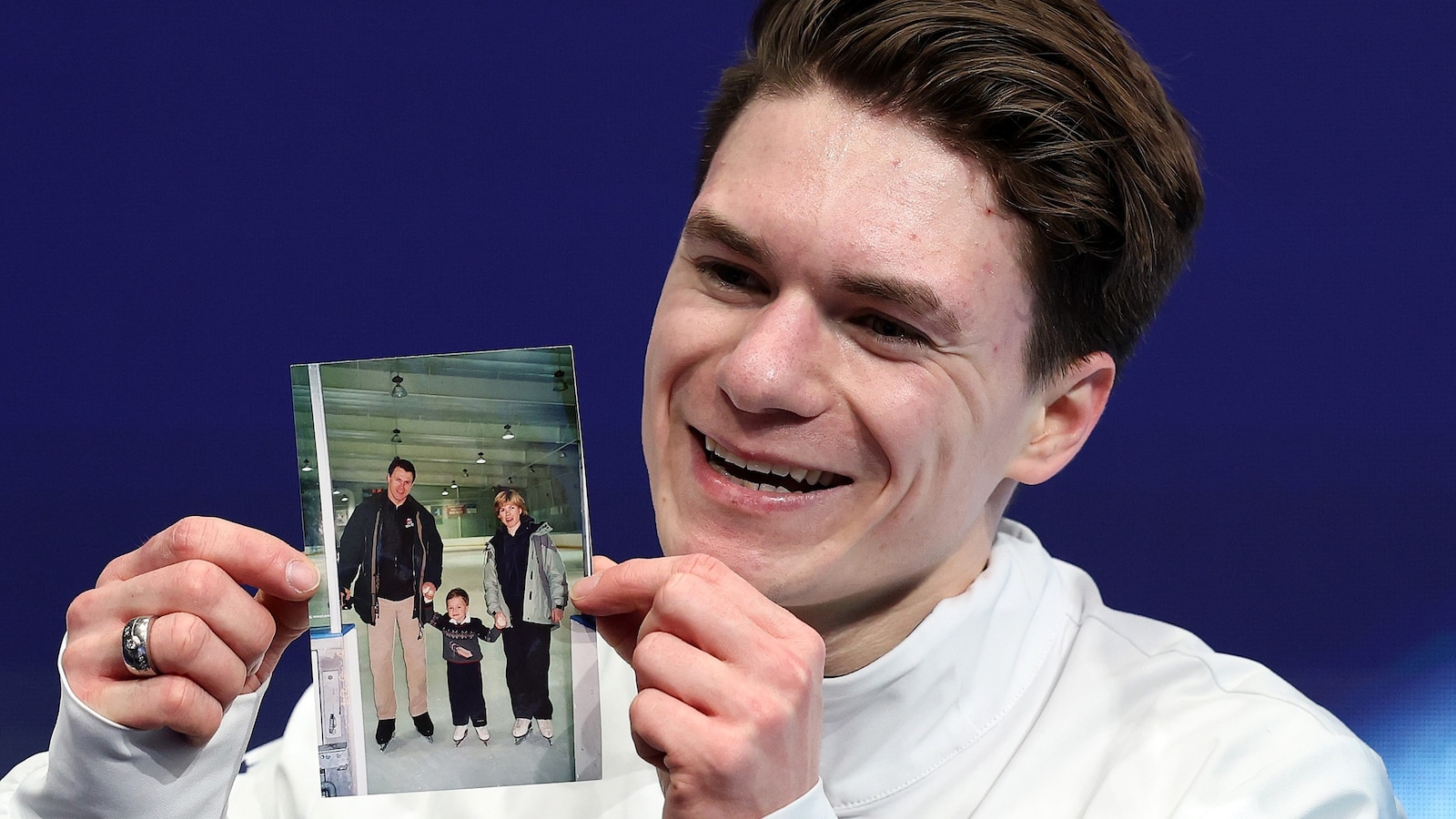
One of the most touching moments of Naumov’s Olympic debut came not on the ice, but in the kiss-and-cry area—the space where skaters sit with their coaches and await their scores. As the judges tallied their marks, Naumov held up a photograph of himself with his parents, ensuring that Vadim and Evgenia were visibly present for this monumental moment in his career. The image, captured by photographers from around the world, became an instant symbol of love, loss, and resilience. It was a simple gesture, but profoundly meaningful—a son publicly acknowledging the two people who had given him life, nurtured his talent, and inspired his dreams. When his scores were announced, Naumov had achieved a season-best 85.65 points, a remarkable accomplishment under any circumstances, but especially extraordinary given the emotional journey that had brought him to that moment. The photograph he held spoke volumes about the relationship between parent and child, coach and athlete, and the enduring bonds that not even tragedy can break. For those watching, whether in the arena or around the world, it was impossible not to be moved by the raw emotion and genuine tribute that Naumov offered to his beloved parents.
The Road to Milan: Earning His Place on Team USA
Maxim Naumov’s journey to the 2026 Winter Olympics in Milano Cortina was itself an achievement worth celebrating. He earned his spot on the U.S. men’s Olympic team alongside fellow skaters Ilia Malinin and Andrew Torgashev, beating out talented alternates including Jason Brown, Tomoki Hiwatashi, and Jacob Sanchez. This accomplishment required not only exceptional skill and dedication but also remarkable mental fortitude, particularly as Naumov processed his grief while maintaining the intense training schedule necessary for Olympic-level competition. The selection process for Olympic teams is rigorous and unforgiving, demanding consistent performance at qualifying events and competitions throughout the season. That Naumov could maintain his focus and competitive edge during one of the most difficult periods of his life speaks to both his natural talent and his incredible strength of character. His parents, both former world champions, had undoubtedly passed on not just their technical expertise but also their competitive spirit and mental toughness. Even in their absence, their influence shaped his preparation and helped carry him through to Olympic qualification.
Legacy, Healing, and Moving Forward
Maxim Naumov’s Olympic debut represents more than just an athletic achievement—it’s a testament to the human capacity for resilience, the enduring power of familial love, and the ways in which we carry forward the legacies of those we’ve lost. His performance in Milan, coming just days after Team USA captured the gold medal in the figure skating team event earlier in the week (defeating Team Japan by a single point), added another chapter to what has already been a remarkable Olympic Games for American figure skating. For Naumov personally, the experience offered a form of healing, a way to channel his grief into something beautiful and meaningful. By skating in his parents’ honor, he ensured that Vadim Naumov and Evgenia Shishkova’s contributions to the sport they loved would be remembered and celebrated. Their legacy now extends beyond their own 1994 World Championship title to include their son’s courage, grace, and determination on the Olympic stage. As Maxim continues his skating career, he does so carrying forward not just his own dreams but also the dreams his parents had for him—and in doing so, he keeps their memory alive in the most fitting way possible: through the sport that brought them all together.