


U.S. Reviews Mexican Consulates Amid Growing Diplomatic Tensions
A Comprehensive Examination of 53 Diplomatic Offices
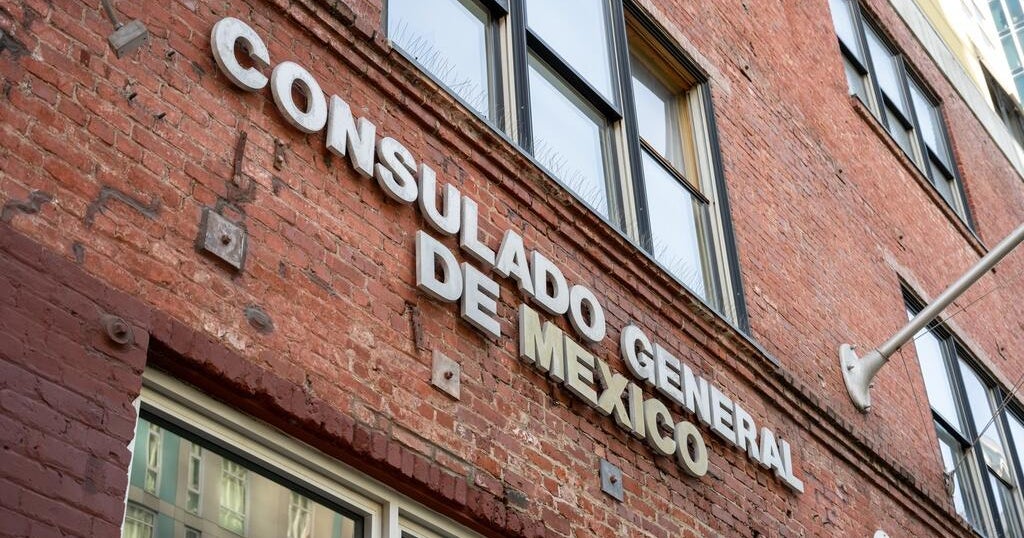
The United States State Department has launched a sweeping review of all 53 Mexican consular offices operating across American territory, according to a U.S. official who spoke with CBS News this past Thursday. This unprecedented move signals a potentially significant shift in diplomatic relations between the neighboring nations, as Secretary of State Marco Rubio now holds the authority to recommend closing some of these diplomatic facilities. The timing of this review is particularly notable, coming at a moment when relations between Washington and Mexico City have grown increasingly strained over fundamental issues including security cooperation, the ongoing battle against powerful drug cartels, and tragic loss of American lives. The immediate catalyst for heightened tensions was the devastating deaths of two CIA officers who lost their lives during a counter-narcotics operation in northern Mexico just last month, an incident that has sent shockwaves through both governments and raised serious questions about operational protocols and bilateral cooperation in the fight against drug trafficking.
Understanding Mexico’s Extensive Consular Presence in America
To fully grasp the significance of this review, it’s important to understand the scale and purpose of Mexico’s consular network within the United States. Mexico maintains the most extensive foreign consular presence of any nation operating on American soil, with these 53 offices strategically distributed across the country to serve the needs of millions of Mexican citizens living, working, and building lives in communities from coast to coast. These consular offices serve vital functions that go far beyond ceremonial diplomatic duties—they provide essential documentation services, offer crucial legal assistance, and act as lifelines for Mexican nationals navigating complex situations far from home. The geographic distribution of these consulates reflects demographic realities, with the heaviest concentration found in border states and urban centers that are home to substantial Mexican American populations. States like California, Texas, and Arizona host numerous consular offices that process everything from passport renewals and birth certificates to providing emergency assistance for Mexican citizens in distress. Dylan Johnson, serving as assistant secretary of state for global public affairs, framed the review within the broader context of the current administration’s foreign policy philosophy, stating that the “Department of State is constantly reviewing all aspects of American foreign relations to ensure they are in line with the President’s America First foreign policy agenda and advance American interests.” This statement suggests that the review isn’t merely about Mexico but represents part of a comprehensive reassessment of how American diplomatic relationships serve national priorities.
Historical Context: When Consulates Close
While routine diplomatic adjustments occur regularly in international relations, the closure of consular facilities typically carries deeper significance, often serving as a barometer of deteriorating relations between nations. Recent history provides instructive examples of how the United States has wielded consulate closures as tools of diplomatic pressure or retaliation against countries considered adversarial. In 2020, as the relationship between Washington and Beijing descended into what many characterized as a new cold war, the Trump administration ordered the closure of China’s consulate in Houston, Texas. The official justification centered on serious allegations of espionage activities and systematic theft of American intellectual property, with U.S. officials describing the facility as a hub for intelligence operations targeting American technology and research institutions. Similarly, in 2017, the United States ordered Russia to shutter its consulate in San Francisco, along with closing diplomatic facilities in Washington D.C. and New York City. This action came as direct retaliation after Moscow expelled American diplomats in a tit-for-tat escalation that reflected the broader deterioration of U.S.-Russian relations. These precedents establish that consulate closures represent significant diplomatic moves, typically reserved for situations involving serious breaches of trust, national security concerns, or fundamental breakdowns in bilateral relations. The current review of Mexican consulates, therefore, cannot be dismissed as routine administrative housekeeping—it carries the potential for real consequences that could fundamentally alter how the two nations interact and cooperate.
The Tragic Incident That Sparked Current Tensions
The current diplomatic crisis between the United States and Mexico can be traced directly to a tragic incident that unfolded last month in the remote mountain regions of northern Mexico, where rugged terrain has long provided sanctuary for drug cartel operations and clandestine laboratories. Two American officials—later confirmed by CBS News to have been working for the Central Intelligence Agency—lost their lives alongside two Mexican investigators when their vehicle crashed during what was described as a counter-narcotics operation targeting suspected drug production facilities hidden in the mountainous landscape. U.S. Ambassador to Mexico Ronald Johnson publicly announced the deaths of the two embassy staff members through a post on the social media platform X on April 19, a somber acknowledgment that quickly ignited political controversy on both sides of the border. The operation that claimed these lives immediately became a flashpoint for broader questions about sovereignty, cooperation protocols, and the extent of American intelligence operations on Mexican soil. Mexican President Claudia Sheinbaum publicly stated that the American officers may not have secured proper authorization from Mexico’s federal government to conduct operations within the country’s borders, a serious allegation that strikes at the heart of national sovereignty concerns. Sheinbaum didn’t stop at raising questions—she publicly demanded comprehensive explanations from the Trump administration about how American intelligence officers came to be operating in Mexican territory, whether proper channels were followed, and what protocols govern such joint operations.
Escalating Disputes Over Corruption and Extradition
The diplomatic dispute has expanded well beyond questions about the fatal operation, growing into a broader confrontation over corruption allegations, criminal charges, and extradition demands that have placed senior Mexican political figures in the crosshairs of American law enforcement. In recent days, the United States announced drug trafficking and weapons charges against prominent Mexican political officials, sending shockwaves through Mexico’s political establishment. Among the most significant developments, American authorities issued multiple extradition requests, including a particularly controversial demand for Sinaloa Governor Rubén Rocha Moya, a sitting state governor whose extradition request represents an extraordinary escalation in U.S. pressure on Mexican officials suspected of cartel connections. President Sheinbaum responded this week by announcing that Mexico’s Foreign Ministry had dispatched a formal diplomatic note to Washington, requesting that the U.S. Justice Department provide concrete evidence supporting the allegations against Rocha and other senior officials named in American indictments. Sheinbaum emphasized that Mexico’s Attorney General’s Office stands ready to investigate these serious allegations, but only if the United States provides credible, substantive evidence rather than mere accusations. Governor Rocha has vehemently denied the accusations leveled against him, characterizing them as completely false and politically motivated. In response to the charges, Rocha announced he would temporarily step away from his gubernatorial duties to focus on mounting his legal defense and cooperating fully with Mexican authorities as the case moves forward, a decision that underscores the gravity of the situation while allowing him to maintain his innocence. The U.S. Embassy in Mexico attempted to strike a more conciliatory tone, issuing a statement affirming that combating corruption and dismantling transnational organized crime remains a shared priority for both governments. While diplomatically declining to comment on specific allegations against individual Mexican officials, the embassy statement made clear that corruption enabling organized crime “will be investigated and prosecuted wherever U.S. jurisdiction applies,” a phrase that itself raises questions about the extraterritorial reach of American law enforcement.
The Broader Context of Security Cooperation and Sovereignty Concerns
These diplomatic tensions are unfolding against the backdrop of an expanded CIA counternarcotics initiative under the leadership of Director John Ratcliffe, who has made combating Mexican drug cartels a centerpiece of the agency’s mission in alignment with Trump administration priorities. Ratcliffe’s approach has involved deepening intelligence-sharing arrangements with Mexican antidrug units, providing enhanced training to Mexican counternarcotics forces, and perhaps most controversially, deploying surveillance drone flights over Mexican territory to monitor and target cartel operations. This growing American operational footprint on Mexican soil has ignited intense debate within Mexico about national sovereignty, the appropriate boundaries of security cooperation with Washington, and whether the country is ceding too much control over its own territory to foreign forces. These concerns have been amplified by President Trump’s repeated public statements floating the possibility of unilateral American military action against cartels operating in Mexico, suggestions that many Mexicans view as threats to their nation’s sovereignty and territorial integrity. The CIA has declined to comment on these operations or the broader strategic direction of its counternarcotics efforts, maintaining the veil of secrecy that typically surrounds intelligence activities. As this complex diplomatic situation continues to evolve, with the State Department’s review of Mexican consulates proceeding and both nations navigating sensitive questions of sovereignty, security cooperation, and mutual trust, the relationship between these two neighboring countries stands at a critical juncture that will likely shape border security, immigration policy, and counter-narcotics efforts for years to come.