


Cleveland Guardians Pitcher Emmanuel Clase Faces Federal Charges in Sports Betting Scandal
Arrest and Court Appearance at JFK Airport
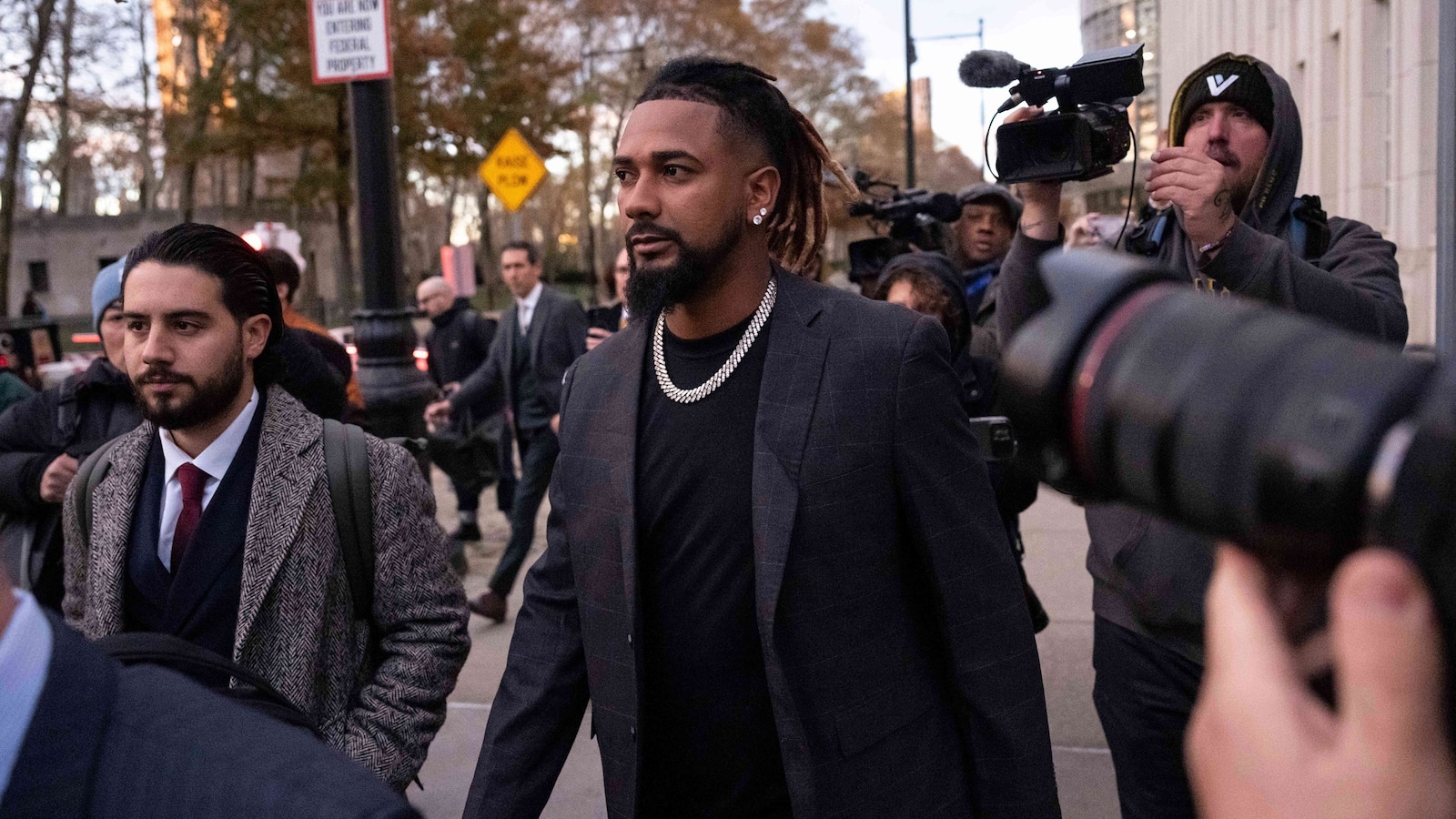
In a shocking development that has sent ripples through Major League Baseball, Cleveland Guardians pitcher Emmanuel Clase found himself in federal custody after arriving at New York’s John F. Kennedy Airport from the Dominican Republic. The star closer, who has been a crucial part of the Guardians’ bullpen, was arrested by FBI agents just hours before his scheduled court appearance on Thursday. Clase stands accused of deliberately manipulating his pitches during actual MLB games to help sports bettors win hundreds of thousands of dollars through fraudulent prop bets. The 27-year-old pitcher appeared in Brooklyn federal court wearing casual attire—jeans, a black T-shirt, and a gray sport jacket—a stark contrast to the uniform he’s accustomed to wearing on the mound. During the hearing, Clase remained mostly silent as he entered a not guilty plea to charges that he conspired with sports bettors to intentionally throw pitches in the dirt, allowing gamblers to profit from rigged wagers. The magnitude of the situation was evident when Magistrate Judge Joseph Marutollo set Clase’s bond at $600,000, which was secured by his agent, Kelvin Nova, who participated in the proceedings via phone from a player’s union meeting in Las Vegas.
The Alleged Conspiracy and How It Worked
According to federal prosecutors in Brooklyn and the FBI, the scheme began in 2023 when Clase allegedly started coordinating with sports bettors on specific pitches he would throw during actual games. The operation was surprisingly brazen and sophisticated, with Clase reportedly communicating with bettors not just before games, but sometimes even during live play. The conspiracy centered around prop bets—specialized wagers that focus on specific events within a game rather than the final outcome. In this case, bettors placed wagers on the speed and type of pitches Clase would throw, armed with inside information that gave them an unfair and illegal advantage. Investigators say that Clase would often throw these rigged pitches as the first pitch of an at-bat, making them easier to predict and bet on. To ensure these pitches would be called as balls rather than strikes, he allegedly threw many of them in the dirt, well outside the strike zone where no batter could reasonably make contact. This seemingly small manipulation allowed the bettors to consistently win wagers worth hundreds of thousands of dollars while maintaining enough plausibility to avoid immediate detection.
A Detailed Example of the Alleged Scheme
The indictment provides several specific examples that paint a vivid picture of how the alleged conspiracy operated. One particularly telling instance occurred during a Cleveland Guardians versus Boston Red Sox game in April. According to court documents, Clase had arranged for one of the bettors to attend the game in Cleveland, providing tickets for the individual. During the middle of the game itself, while Clase was actively playing, he sent a text message to the bettor, followed seconds later by a phone call. Just four minutes after that phone conversation ended, the bettor and his associates placed a wager that Clase’s next pitch would be slower than 98 mph—and they won $11,000 when the pitch came in exactly as predicted. This level of coordination during an actual professional baseball game demonstrates the audacity of the alleged scheme and the degree to which Clase was willing to compromise the integrity of the sport. In exchange for manipulating these pitches, prosecutors say Clase received bribes and kickbacks from the bettors. In total, investigators believe that through his participation in rigging pitches, Clase helped his co-conspirator bettors win at least $400,000 in fraudulent wagers. For a player with a five-year, $20 million contract that paid him $4.5 million in 2025 alone, the financial motivation behind participating in such a scheme raises serious questions about judgment and ethics.
Fellow Pitcher Also Implicated
Clase wasn’t the only Cleveland Guardians pitcher caught up in this scandal. His teammate, Luis Leandro Ortiz, also faces charges for allegedly participating in the same scheme. According to the indictment, Ortiz joined the conspiracy more recently, in June 2025, when he allegedly agreed to throw balls instead of strikes on pitches in two separate games in exchange for bribes and kickbacks. Ortiz appeared for his own arraignment in Brooklyn federal court on Wednesday, one day before Clase’s hearing, where he also entered a not guilty plea to several conspiracy charges. Magistrate Judge Marutollo set Ortiz’s bond at $500,000, secured by his wife, with a second surety to be named by the following week. Both Ortiz and Clase are scheduled to return to Brooklyn federal court on December 2 for their next hearing. The involvement of two players from the same team raises concerns about how widespread this type of manipulation might be and whether other players or teams could be involved in similar schemes that haven’t yet been uncovered.
Release Conditions and Flight Risk Concerns
Following his arraignment, Clase was released on bond, but not without significant restrictions reflecting the court’s concerns about whether he might flee the country. Judge Marutollo ordered Clase to remain in Ohio, where he maintains a home that he lives in during the baseball season. The judge also imposed a gambling restriction and location monitoring as conditions of his release. “I do have serious concerns of risk of flight,” Marutollo stated explicitly during the hearing, acknowledging that despite Clase’s voluntary surrender, his financial resources and international connections made him a potential flight risk. The judge noted that Clase has “ample means to finance flight,” given his multi-million dollar contract and apparent willingness to engage in illegal activity for financial gain. Clase’s defense attorney, Michael Ferrara, attempted to emphasize his client’s cooperation and lack of flight risk by pointing to his voluntary surrender. “Mr. Clase voluntarily traveled here from the Dominican Republic this morning,” Ferrara told the court. “His actions speak louder than any words in court.” The defense’s argument was that by choosing to fly to New York and turn himself in rather than forcing an extradition proceeding, Clase demonstrated his willingness to face the charges and his commitment to seeing the legal process through to its conclusion.
Broader Implications for Professional Sports
The criminal investigation into Clase and Ortiz began after betting platforms noticed unusual patterns during certain games and received referrals from various professional sports leagues. This case represents part of a broader crackdown on sports gambling corruption that has affected multiple leagues. The MLB betting probe comes on the heels of other recent Department of Justice actions, including unsealed indictments accusing NBA Hall of Famer Chauncey Billups and former player Damon Jones of participating in rigged poker games, while Jones and current Miami Heat player Terry Rozier allegedly took part in illegal betting schemes. According to a source familiar with the investigation, the case against Clase and Ortiz is not connected to the NBA indictment and is also separate from an NCAA disclosure about six former college basketball players accused of allegedly rigging games. This revelation is particularly troubling because it suggests that sports betting corruption may be more widespread than previously thought, affecting multiple sports at both professional and collegiate levels. The integrity of professional sports depends on the belief that athletes are competing fairly and giving their best effort. When players manipulate even seemingly minor aspects of the game—like the speed or location of a single pitch—it undermines public trust in the entire enterprise. For baseball specifically, which has a long and painful history with gambling scandals dating back to the 1919 Black Sox scandal, these new allegations are particularly damaging. The case also highlights the challenges that the legalization of sports betting has created for professional sports leagues, as the proliferation of prop bets on increasingly specific aspects of games creates new opportunities for manipulation and corruption that are difficult to detect and prevent.