


Explosive Confirmation Hearing: Rand Paul Confronts Markwayne Mullin Over Past Violence Remarks
A Heated Exchange Over Political Violence and Personal Attacks
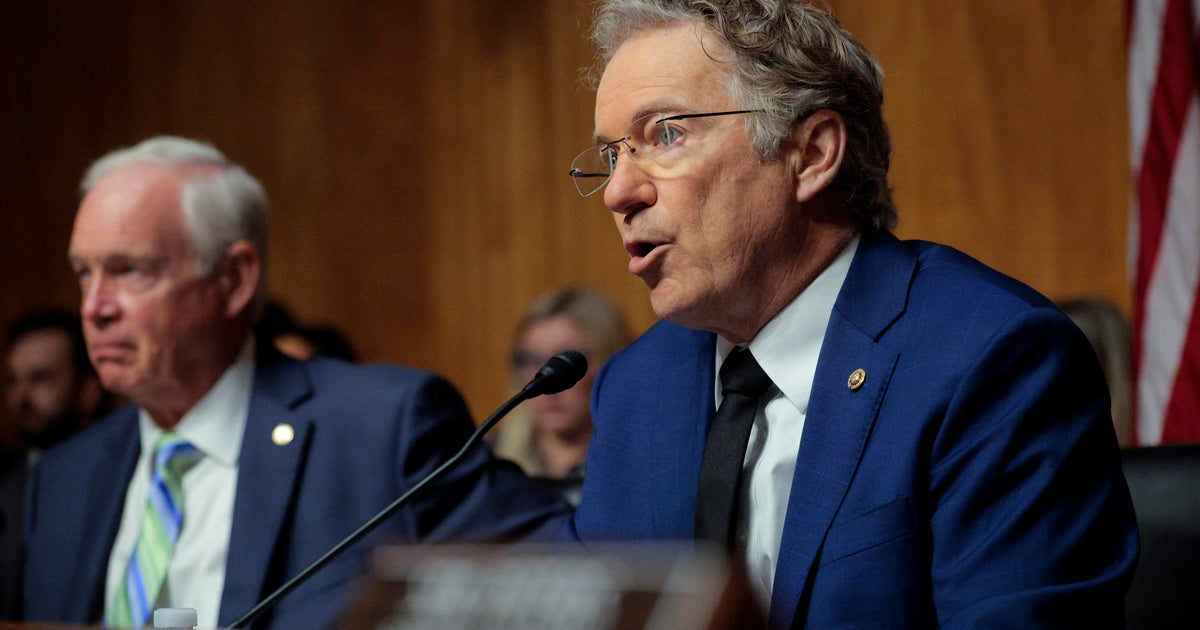
The confirmation hearing for Senator Markwayne Mullin’s nomination as Secretary of Homeland Security turned into a dramatic confrontation when Senate Homeland Security Chairman Rand Paul launched a scathing critique of the nominee’s past behavior and comments. The tension between these two Republican senators erupted into public view as Paul questioned whether someone with what he called “anger issues” should lead an agency responsible for overseeing a quarter-million federal employees. This wasn’t just political theater—it was deeply personal. Paul opened his remarks by recounting a traumatic 2017 incident where he was violently attacked by a neighbor in his own yard, an assault that left him with six broken ribs, three of them separated, and a damaged lung that eventually required partial removal. The recovery was excruciating, with Paul describing the pain as feeling like “1,000 knives” stabbing him constantly for months. What made this hearing particularly explosive was that Mullin had previously made public comments suggesting he understood why Paul’s neighbor had attacked him, calling Paul a “freaking snake” in media interviews. This set the stage for one of the most contentious confirmation hearings in recent memory, where personal grievances collided with questions about temperament and leadership.
Paul’s Direct Challenge: A Demand for Accountability
Chairman Paul didn’t mince words as he directly challenged Mullin to address his past statements. With cameras rolling and the nation watching, Paul put Mullin on the spot, demanding he either retract his previous comments or stand by them in front of the committee and the American people. “You’ve got a chance today. You can either continue to lie or you can correct the record,” Paul declared forcefully. He accused Mullin of never having the courage to say such things to his face despite claiming he had done so. Paul’s challenge was stark and uncomfortable: “Tell it to my face, if that’s what you believe. Tell it to me today. Tell the world why you believe I deserved to be assaulted from behind, have six ribs broken and a damaged lung.” This wasn’t just about settling a personal score—Paul framed his concerns around a fundamental question of fitness for office. He questioned whether someone who appeared to condone violence against political opponents could be trusted to lead the Department of Homeland Security, an agency that has historically faced criticism over the use of force by its agents. The implication was clear: if Mullin couldn’t show proper judgment and restraint in his personal conduct and public statements, how could he be expected to set the right tone for agencies like ICE and Border Patrol?
The Senate Brawl Incident and Pattern of Behavior
Paul didn’t stop at the comments about his assault. He brought up another incident that raised questions about Mullin’s temperament—a bizarre 2023 moment during a Senate Health, Education, Labor, and Pensions committee hearing when Mullin challenged Teamsters President Sean O’Brien to a physical fight. In that memorable exchange, Mullin taunted O’Brien to “stand your butt up” and appeared ready to actually engage in fisticuffs before committee chairman Bernie Sanders intervened to restore order. The absurdity of a sitting U.S. Senator nearly coming to blows during an official hearing wasn’t lost on anyone, and Paul used it to paint a picture of someone with a pattern of aggressive, confrontational behavior. Interestingly, O’Brien and Mullin eventually became friends after that incident, and O’Brien was even present at this confirmation hearing, apparently in support of Mullin. But Paul argued this didn’t erase the concerning behavior. “Explain how a man who has no regrets about brawling in a Senate committee can set a proper example for over 250,000 men and women who work at the Department of Homeland Security,” Paul demanded. The question cut to the heart of leadership expectations—should someone who struggles to control their own impulses be entrusted with overseeing agencies that must exercise force judiciously and with restraint?
Mullin’s Response: Defiant Rather Than Apologetic
When Mullin finally had his chance to respond during his opening remarks, he addressed Paul’s accusations directly but offered no apology. Instead, Mullin doubled down on his previous position, though with slightly more careful wording. “I said I could understand, because of the behavior you were having, that I can understand why your neighbor did what he did,” Mullin stated, essentially reaffirming his earlier controversial comments while trying to frame them as a response to Paul’s political behavior rather than condoning violence. Mullin went on the offensive, criticizing Paul’s approach to politics within the Republican Party. “As far as my terms and snake in the grass, sir, I work around this room to try to fix problems. I worked with many people in this room. Seems like you fight Republicans more than you work with us,” Mullin said, attempting to shift the narrative to portray Paul as the problematic figure in their relationship. He also accused Paul of spending “millions of dollars” campaigning against him, suggesting their conflict was rooted in long-standing political disagreements rather than any character flaw on his part. Mullin attempted to position himself as the reasonable one, promising to set aside “partisan bickering” to “earn the job” of Homeland Security Secretary. However, his refusal to express any regret or apologize for suggesting that a violent assault on a colleague was understandable struck many observers as tone-deaf at best and disqualifying at worst.
Paul’s Final Push and the Contrition That Never Came
During his questioning period, Paul made clear that Mullin’s response was inadequate. He asked that the record show “a lack of contrition” from the nominee, emphasizing that this wasn’t about setting aside normal political differences—it was about something far more serious. Paul’s frustration was palpable as he pressed Mullin on the implications of his stance. “When you say that you agree with a felon, a Trump hating felon who attacked me somehow, you think I’m just going to set that aside? ‘Oh, it’s no big deal?'” Paul asked incredulously, his voice rising. He reminded everyone in the room of the severity of his injuries and the months of agony he endured. “You know, I lay in pain for two months, had six ribs broken, three of them separated, grinding upon bone on bone, for months, had part of my lung removed. And you think that’s great, and to be extolled.” To drive his point home, Paul played a video compilation of Mullin’s most aggressive public moments, including the 2023 near-fight with O’Brien. The visual evidence underscored Paul’s argument that this was a pattern of behavior, not an isolated incident. Paul’s concern was about more than personal grievance—it was about whether someone with “a sheer lack of any kind of self awareness” could effectively lead thousands of men and women in one of the most important and scrutinized departments in the federal government. The drama extended beyond the hearing room itself, as Paul also blocked Senator Katie Britt, a fellow Republican from Alabama, from introducing Mullin at the hearing, an unusual move that further highlighted the depth of opposition to this nomination.
The Political Calculation and What Comes Next
Despite the fireworks and Paul’s clear opposition, Mullin’s path to confirmation remains likely. The mathematics of Senate confirmations mean that even if Paul votes against his fellow Republican, the nomination can still advance. Democratic Senator John Fetterman has already indicated he would support Mullin’s nomination, which along with other expected votes means Mullin will probably advance from the committee to the full Senate. Only a simple majority is needed for confirmation in the full Senate, and with Republicans holding the majority and at least some Democratic support, the dramatic confrontation may ultimately amount to a memorable but not decisive moment. This confirmation hearing raises broader questions about the standards we apply to those seeking to lead major government agencies. Should past comments condoning violence against colleagues be disqualifying? Does a pattern of aggressive, confrontational behavior indicate someone is unsuitable for a position requiring measured judgment? Or are these just the rough-and-tumble aspects of modern politics that we should look past when evaluating someone’s policy positions and management capabilities? Senator Katie Britt expressed disappointment at being blocked from introducing her “dear friend” Mullin, stating she would submit her remarks for the record instead. The incident illustrated how Paul’s opposition went beyond the hearing room itself—he was using every tool at his disposal as chairman to make his objections known. Whether Mullin ultimately becomes Secretary of Homeland Security or not, this hearing will be remembered as one of the most personally contentious in recent years, a moment when long-simmering tensions between colleagues exploded into public view with questions about violence, temperament, and leadership hanging in the balance. For Rand Paul, still dealing with the aftermath of a brutal assault years later, Mullin’s refusal to show genuine remorse represented more than political disagreement—it was a fundamental failure of character that he believed should prevent Mullin from leading one of America’s most important security agencies.