



When Robots Startle: A Macau Woman’s Unsettling Encounter with Humanoid Technology
An Unexpected Evening Fright
What should have been an ordinary evening stroll through the streets of Macau turned into a medical emergency for one unsuspecting woman earlier this month. While absorbed in her mobile phone, she suddenly became aware of something following closely behind her—but it wasn’t another pedestrian. Instead, she found herself face-to-face with a humanoid robot, its metallic arms waving at her in what was presumably meant to be a friendly gesture. The startling encounter left the woman so shaken that she required hospitalization, highlighting the unexpected psychological impact that increasingly sophisticated robotics can have on unprepared members of the public. Police confirmed to AFP that they responded to a call for assistance from the distressed woman, who had not anticipated encountering artificial intelligence during her routine walk. While there was no physical contact between the woman and the robot, and she sustained no injuries, the emotional shock was significant enough to warrant medical attention. The incident serves as a cautionary tale about the integration of advanced technology into public spaces without adequate preparation or warning for everyday citizens who might not be ready for such close encounters with the robotic future.
A Confrontation Caught on Camera
The dramatic moment was captured on video and quickly spread across social media platforms, showing the clearly agitated woman confronting the robot as curious onlookers gathered to witness the unusual scene. In footage that has since been viewed widely online, the woman can be heard shouting at the impassive machine in Cantonese, expressing both her frustration and her physical distress. “With so many other things to do, why bother me? Are you crazy?” she demanded of the robot, which continued its programmed movements, apparently oblivious to her distress. According to reports from the Macau Post, she also exclaimed, “You’re making my heart race!” while gesturing emphatically at the mechanical figure that had caused her such alarm. The video captures a moment that feels almost surreal—a human being attempting to reason with and scold a machine as if it were capable of understanding her complaint. The robot’s inability to respond appropriately to her obvious distress only seemed to heighten the bizarre nature of the encounter. The scene attracted a crowd of spectators, some perhaps amused by the unusual confrontation, others possibly concerned for the woman’s wellbeing as she struggled to process what had just happened to her.
Medical Care and Legal Aftermath
Following the incident, the woman was taken to a hospital where she received treatment for her distress. Police officials confirmed in their statement that while she had not been physically harmed by the robot—there was no collision or contact between the woman and the machine—the psychological impact of the encounter was significant enough to require medical intervention. Fortunately, she was discharged relatively quickly and has since recovered from the incident. In what might be seen as a surprisingly lenient response given her initial distress, the woman decided not to press charges related to the encounter. This decision may reflect an understanding that the incident was unintentional, or perhaps an acknowledgment that current legal frameworks aren’t quite prepared to handle cases involving robotic harassment, however unintentional it might be. Additional footage circulating on social media showed police officers leading the robot away from the scene, with the machine appearing almost dejected as it was escorted from the area. However, police were careful to clarify in their official statement that they “did not seize” the robot, suggesting that no legal violation had technically occurred that would warrant confiscation of the device. The careful wording reflects the delicate balance authorities must strike as they navigate the increasing presence of robotic technology in public spaces while protecting citizens from potential distress.
The Robot Operator and His Intentions
Behind every robot, at least for now, there remains a human operator. In this case, police identified the controller as a Macanese man in his fifties who explained that he was conducting a test run with the humanoid robot, intending to use it as a promotional tool for his business. The robot apparently belonged to an education center that was actively using such technology for marketing activities in the area. According to reports from the Macau Post, the center’s head, identified as Mak Kin Choi, took personal responsibility for the incident’s aftermath. He accompanied the distressed woman to the hospital and remained with her through her treatment, even escorting her safely home in the early hours of the following morning—a gesture that suggests genuine concern for her wellbeing and perhaps an acknowledgment of the responsibility that comes with deploying advanced technology in public settings. Mak reportedly told public broadcaster TDM that his center had conducted similar promotional activities with robots in other areas of Macau and had received positive feedback from those encounters. This raises important questions about why this particular incident went so differently. Perhaps the woman’s distraction with her phone meant she had no warning of the robot’s approach, or maybe the robot came too close or moved in ways that seemed more threatening than friendly. Whatever the specific circumstances, police took the opportunity to remind the operator to exercise greater vigilance while deploying his robotic promotional tool, emphasizing the need to avoid causing danger or alarm to unsuspecting pedestrians going about their daily routines.
China’s Ambitious Robotics Push
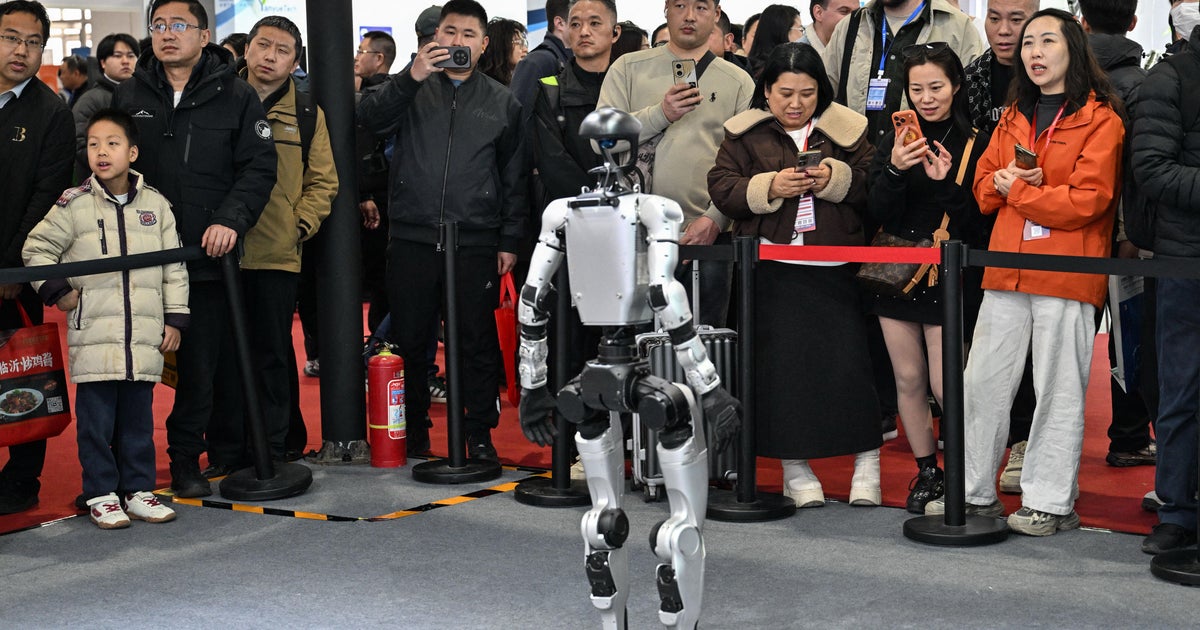
The incident in Macau occurs against the backdrop of China’s aggressive push to dominate the global robotics industry, particularly in the development of increasingly sophisticated humanoid robots. The Chinese government in Beijing has actively encouraged domestic firms to invest in and develop humanoid robotics technology, viewing leadership in this sector as strategically important for the nation’s technological future. Companies like Unitree, a Chinese startup whose humanoid model resembles the robot involved in the Macau incident, are at the forefront of this technological revolution. These modern robots have demonstrated remarkable capabilities that would have seemed like pure science fiction just a decade ago. They can perform intricately choreographed dances with precision timing, participate in competitive races against one another, and execute complex physical maneuvers including backflips that would challenge many human athletes. The technological progress has been nothing short of remarkable, with each new generation of robots displaying greater dexterity, balance, and apparent autonomy. However, despite these impressive demonstrations, truly autonomous robots remain relatively rare in everyday public settings. Most of the spectacular displays that generate headlines and viral videos are either carefully pre-programmed sequences or are being controlled in real-time by human operators using remote control systems. The gap between what robots can do in controlled demonstrations and how they function in unpredictable real-world environments with real people remains significant.
The Human Factor in Our Robotic Future
The Macau incident, while relatively minor in its ultimate consequences, illuminates a crucial challenge as society integrates increasingly sophisticated robotic technology into everyday life: the human psychological response to these machines. As robots become more humanoid in appearance and more complex in their movements, they enter what researchers call the “uncanny valley”—that uncomfortable space where something appears almost, but not quite, human enough to trigger instinctive unease in many people. The woman on her evening walk had no reason to expect an encounter with a robot, and her startle response was entirely natural and understandable. As these technologies become more common in public spaces—used for promotion, security, delivery, or entertainment—there’s a growing need for clear guidelines about how they should be deployed, how close they should come to people who haven’t consented to the interaction, and how operators can ensure they’re enhancing rather than disrupting public life. Education centers, businesses, and others eager to capitalize on the novelty and attention-grabbing nature of humanoid robots must balance their promotional interests with respect for public comfort and safety. The positive feedback that Mak’s education center received in other locations suggests that when properly managed, robotic technology can create engaging, positive experiences. But this incident demonstrates that without careful consideration of context, timing, and approach, the same technology can cause genuine distress. As we move forward into a future where humanoid robots will likely become increasingly common in our streets, shops, and public spaces, incidents like this one serve as valuable learning opportunities—reminders that technology, no matter how advanced, must always be deployed with human wellbeing and psychological comfort as primary considerations.