

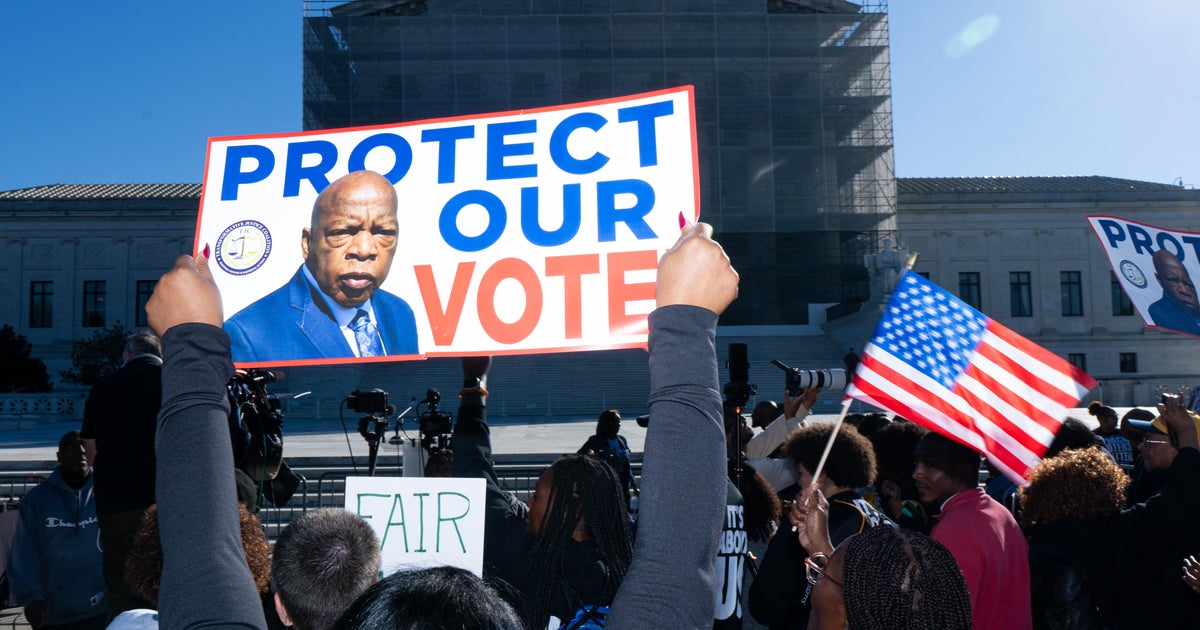

Supreme Court Strikes Down Louisiana’s Voting Map: A Major Blow to Voting Rights Protections
The Ruling That Changed Voting Rights Law
In a decision that will reverberate through American politics for years to come, the Supreme Court struck down Louisiana’s congressional map on Wednesday, marking one of the most significant challenges to voting rights protections in decades. The 6-3 ruling, written by Justice Samuel Alito, invalidated a map that included two majority-Black districts, finding that Louisiana lawmakers had relied too heavily on race when redrawing the state’s voting boundaries. This decision represents a major victory for Republicans and fundamentally changes how courts evaluate claims of racial discrimination in voting. The conservative majority found that compliance with Section 2 of the Voting Rights Act—a cornerstone provision designed to protect minority voters—could not justify the state’s consideration of race when drawing congressional district lines. “Because the Voting Rights Act did not require Louisiana to create an additional majority-minority district, no compelling interest justified the state’s use of race in creating SB8,” Justice Alito wrote, declaring the map an unconstitutional gerrymander that would violate voters’ constitutional rights if implemented.
Understanding the Legal Framework and Its Transformation
The Supreme Court’s decision does far more than redraw Louisiana’s political boundaries—it fundamentally alters the legal landscape that has protected minority voting rights for four decades. The conservative majority established a new, significantly higher bar that plaintiffs must clear to prove violations of the Voting Rights Act. Under this “updated” standard, as Justice Alito described it, Section 2 now imposes liability only when evidence supports a strong inference that a state intentionally drew districts to afford minority voters less opportunity specifically because of their race. This dramatic shift means that minority voters and voting rights organizations will now face a much steeper uphill battle when challenging redistricting plans they believe are racially discriminatory. The practical effect is that proving discrimination has become exponentially more difficult, requiring evidence of intentional racial motivation rather than demonstrating discriminatory outcomes. This transformation touches every aspect of how voting rights cases will be argued and decided moving forward, potentially affecting millions of voters across the country who have relied on Section 2 protections to ensure fair representation.
The Dissent: A Warning About Democracy’s Future
Justice Elena Kagan, joined by Justices Sonia Sotomayor and Ketanji Brown Jackson, issued a scathing dissent that she chose to read aloud from the bench—a rare step that signals the gravity of the disagreement. Kagan warned that the majority “eviscerates” Section 2 of the Voting Rights Act and declared the law “all but dead-letter” following this decision. Her dissent painted a stark picture of what this ruling means in practice: under the new test, states can systematically dilute minority citizens’ voting power without facing legal consequences. The requirement to prove intentional discriminatory motive, Kagan argued, is “well-nigh impossible” to meet, effectively eliminating the protections that the Voting Rights Act was designed to provide. She predicted that minority voters in Louisiana and across the nation will lose equal opportunity to elect their preferred candidates, leading to a sharp decline in minority representation in Congress. “I dissent because the Court betrays its duty to faithfully implement the great statute Congress wrote,” Kagan stated. “I dissent because the Court’s decision will set back the foundational right Congress granted of racial equality in electoral opportunity.” Her passionate words reflected the views of civil rights advocates who see this decision as turning back the clock on decades of progress.
The Louisiana Map Controversy and Political Implications
The battle over Louisiana’s congressional map began in 2022 when Republican state lawmakers adopted new House district lines following the 2020 Census. Their initial map contained five majority-White districts and just one majority-Black district, despite African-Americans comprising nearly one-third of Louisiana’s population. When Black voters successfully challenged this map as diluting their voting strength, a federal judge ordered the creation of a remedial map with a second majority-Black district. The state legislature complied in 2024, reconfiguring the 6th Congressional District—but Republicans openly acknowledged they also designed the map to protect powerful GOP incumbents, including Speaker Mike Johnson and Majority Leader Steve Scalise. Democrat Cleo Fields won election to represent the newly drawn 6th District in November 2024. However, a group of twelve self-described “non-African-American” voters then challenged this remedial map, arguing it constituted an unconstitutional racial gerrymander. A divided judicial panel agreed and invalidated the new district lines, finding that race played too large a role in their creation. This decision now comes just months before November midterm elections, with Louisiana candidates already filed and early voting beginning shortly. While the timing may prevent Louisiana Republicans from redrawing the map before this election cycle, the decision could encourage Republican-controlled legislatures in other states to attempt late redistricting efforts or to draw more aggressive maps in future redistricting cycles.
National Implications and Political Reactions
The ramifications of this Supreme Court decision extend far beyond Louisiana’s borders, potentially reshaping congressional representation nationwide. For Republicans, this ruling removes a significant constraint on redistricting efforts, as they will no longer need to craft majority-minority districts in many circumstances where they previously were required to do so under Section 2 of the Voting Rights Act. The decision joins previous Supreme Court rulings from 2013 and 2021 that have progressively weakened voting rights protections, forming what civil rights advocates describe as a systematic dismantling of the Voting Rights Act. States with later primary elections might now consider redrawing congressional districts, potentially reducing minority representation in Congress at a time when demographic changes have been increasing diversity in many regions. The White House, however, celebrated the decision, with spokesperson Abigail Jackson calling it a “complete and total victory” for voters and declaring that “the color of one’s skin should not dictate which congressional district you belong in.” In contrast, NAACP President Derrick Johnson condemned the ruling in stark terms: “Today’s decision is a devastating blow to what remains of the Voting Rights Act, and a license for corrupt politicians who want to rig the system by silencing entire communities. The Supreme Court betrayed Black voters, they betrayed America, and they betrayed our democracy.”
Looking Forward: The Future of Voting Rights in America
The divided reactions to this Supreme Court decision reflect the deep partisan divide over voting rights and representation in contemporary America. Louisiana Attorney General Liz Murrill, a Republican, praised the ruling for ending what she called the state’s “long-running nightmare of federal courts coercing the state to draw a racially discriminatory map,” declaring the decision “seismic” in reaffirming equal protection. Republican Representative Richard Hudson, who leads the National Republican Congressional Committee, argued that the decision ensures elections “should be decided by voters, not engineered through unconstitutional mandates.” Meanwhile, Democratic National Committee Chairman Ken Martin called it “a dark day for America” and “a gut punch,” warning that “the GOP-captured Supreme Court just effectively killed Section 2 of the Voting Rights Act, a major step back in the fight for racial justice and fair representation.” What remains unclear is whether Republican-controlled state legislatures will now rush to redraw congressional maps in states where they previously felt constrained by Voting Rights Act requirements. Some states, including Texas, California, North Carolina, Virginia, and Missouri, have already undertaken mid-decade redistricting for political reasons, demonstrating that such efforts are possible though unusual. Voting rights organizations now face the challenge of protecting minority representation with significantly weakened legal tools, while potentially needing to pursue legislative rather than judicial remedies to restore protections. This decision marks a pivotal moment in American democracy, one that will shape political representation and the balance of power for years to come, affecting not just Louisiana but communities across the nation where minority voters have relied on the Voting Rights Act to ensure their voices are heard in the political process.