
Major Drug Trafficking Leader Captured in California With $10 Million Bounty
High-Profile Arrest in San Diego
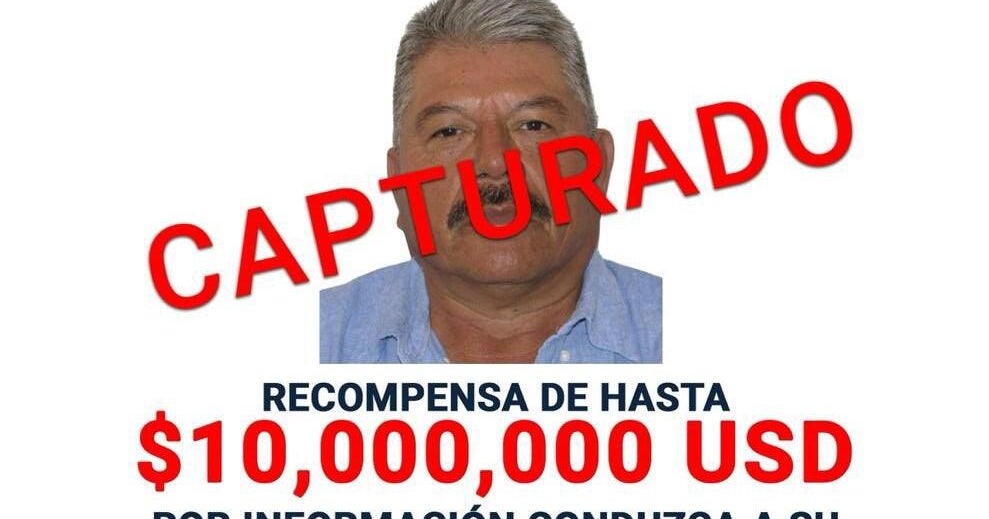
In a significant victory for international law enforcement, U.S. authorities have successfully apprehended one of the world’s most wanted drug traffickers in San Diego, California. Eugenio Molina-Lopez, a 61-year-old Guatemalan national who went by the street name “Don Dario,” had a staggering $10 million bounty on his head when he was taken into custody. The arrest was announced by Guatemala’s U.S. Embassy, though the exact timing of when law enforcement officials captured him wasn’t immediately disclosed. This capture represents another crucial step in the ongoing battle against international drug trafficking operations that have plagued Central America and fed the insatiable drug demand in the United States. The U.S. Attorney’s Office for the Southern District of California released an official statement about the arrest, which was then shared widely on social media by the American embassy in Guatemala City, highlighting the international cooperation that made this arrest possible.
The Criminal Empire of Los Huistas
Molina-Lopez wasn’t just any ordinary criminal—he’s accused of being the mastermind behind Los Huistas, a powerful and sophisticated drug trafficking organization that operates primarily in northwestern Guatemala near the Mexican border. This criminal enterprise has been described by U.S. authorities as the “dominant criminal structure” in the Guatemalan department of Huehuetenango, a strategic location that straddles the border between Guatemala and Mexico. The gang’s operations were far-reaching and highly organized, allegedly coordinating the transportation of massive quantities of U.S.-bound cocaine from South American production centers all the way to powerful Mexican drug cartels. According to the U.S. Treasury Department, Los Huistas didn’t limit their criminal activities to just cocaine—they also smuggled methamphetamine and heroin from their northern Guatemala base into the United States by working with some of the most dangerous criminal organizations in Mexico, including the notorious Sinaloa Cartel and the violent Jalisco New Generation Cartel. These partnerships created a deadly pipeline that funneled drugs across multiple international borders, contributing to addiction crises and violence in communities throughout the Americas.
Court Appearance and Serious Charges
When Molina-Lopez appeared before a federal judge on Friday, he entered a plea of not guilty to the serious charges against him. The alleged drug kingpin faces charges of conspiracy to import and distribute cocaine—federal offenses that carry potentially devastating consequences, including the possibility of spending the rest of his life behind bars. U.S. Attorney Adam Gordon didn’t mince words when discussing the significance of the case, stating: “Once again, the final chapter for a man alleged to be one of the world’s most notorious and prolific cocaine traffickers is here in the Southern District of California.” This statement reflects the region’s track record of prosecuting high-level international drug traffickers and sending a clear message to criminal organizations worldwide that American law enforcement has the reach and determination to bring them to justice, no matter where they try to hide. The case will now proceed through the federal court system, where prosecutors will present evidence of Molina-Lopez’s alleged role in directing one of the region’s most significant drug trafficking operations.
A Pattern of Successful Law Enforcement Operations
The capture of Molina-Lopez isn’t an isolated incident but rather part of a broader, sustained effort by U.S. and Central American authorities to dismantle major drug trafficking networks. Just over a year earlier, in March 2025, another top leader of Los Huistas was taken down through international cooperation. Aler Baldomero Samayoa, who went by the alias “Chicharra” (which means “Cicada” in English), was captured in Mexico and subsequently deported to Guatemala following joint efforts between Mexican, Guatemalan, and U.S. law enforcement agencies. Samayoa was considered one of Washington’s top 100 most-wanted fugitives and was described as the “top leader” of Los Huistas at the time of his arrest. These successive takedowns of high-ranking members of the same organization demonstrate the effectiveness of international law enforcement cooperation and the use of reward programs that encourage public participation. In fact, the U.S. Embassy noted that thanks to the State Department’s Rewards Program and assistance from the public, more than 75 transnational criminals and drug traffickers have been brought to justice. The timing of Molina-Lopez’s arrest announcement was also notable—it came just one day after Mexican authorities captured a top Jalisco cartel leader with a $5 million bounty who was found hiding in a ditch, showing that pressure on these criminal networks is intensifying across the region.
The Broader Context of Central American Drug Trafficking
To truly understand the significance of this arrest, it’s important to look at the bigger picture of how drugs flow from South America to consumers in the United States. Guatemala and other Central American countries have unfortunately become crucial waypoints in a massive drug trafficking network that generates billions of dollars for criminal organizations while fueling violence and instability throughout the region. International cartels work with local drug traffickers not only to move narcotics but also to launder the enormous profits generated by these illegal operations. This criminal ecosystem has devastating consequences for the people living in these countries, as drug money corrupts institutions, empowers violent gangs, and makes everyday life dangerous for ordinary citizens. According to U.S. officials, approximately 90 percent of all cocaine that eventually reaches American streets passes through Central America and Mexico on its journey from production sites in South America. The sophistication of these operations is staggering—traffickers use every mode of transportation imaginable, including trucks, aircraft, boats, and even submarines specially designed to evade detection by law enforcement. In March 2022, the United States took formal action against Los Huistas by imposing sanctions on the organization, officially recognizing it as a significant threat to regional security and American public health.
The Ongoing Fight and What Comes Next
The arrest of Eugenio Molina-Lopez represents an important victory, but it’s far from the end of the story in the fight against international drug trafficking. While removing high-level leaders from these organizations can disrupt their operations and temporarily reduce their effectiveness, the enormous profits generated by drug trafficking mean that new leaders often rise to fill the vacuum left by those who are captured or killed. The success of this case relied heavily on international cooperation between U.S., Guatemalan, and Mexican authorities—a model that will need to continue and strengthen if there’s any hope of making lasting progress against these criminal networks. The $10 million bounty that was on Molina-Lopez’s head, along with the State Department’s Rewards Program, demonstrates one approach that has proven effective: incentivizing people with information to come forward and assist law enforcement. As the case moves through the federal court system in California, prosecutors will work to prove that Molina-Lopez was indeed the mastermind behind Los Huistas’ extensive drug trafficking operations. If convicted, he’ll join dozens of other high-level traffickers who have faced justice in American courts. But perhaps more importantly, his arrest serves as a reminder that despite the enormous challenges posed by international drug trafficking, dedicated law enforcement professionals working across borders can still achieve meaningful results in protecting communities from the devastating effects of narcotics trafficking and the violence it brings.