

Deadly Confrontation in Fall River: Officers Survive Shooting with Modified Weapon
A Violent Encounter on a Cold Winter Night
In the early morning hours of a brutally cold Sunday in Fall River, Massachusetts, what began as a routine response to a 911 call ended in tragedy and near-disaster. A 40-year-old local man named Nigel Vaughn was fatally shot by police officers after allegedly opening fire on them with a modified semi-automatic handgun that had been converted to fire like a machine gun. Two officers were wounded in the exchange of gunfire, though thankfully both survived thanks to quick medical response and, in one case, protective equipment. The incident, which occurred just after midnight outside a residence in this Bristol County community, has once again highlighted the dangerous and unpredictable situations law enforcement officers face, even during what might appear to be standard calls for service. Bristol County District Attorney Thomas M. Quinn III, in his statement about the incident, emphasized that the officers were simply doing their jobs, trying to protect their community during the overnight hours when many people sleep safely in their beds, unaware of the dangers unfolding in their neighborhoods.
From Gas Station to Deadly Shooting in Minutes
What makes this incident particularly striking is how rapidly the situation deteriorated. Just minutes before the fatal shooting, Fall River police officers had encountered Vaughn at a nearby gas station on the same street where the shooting would occur. Officers had responded to reports of a possible physical altercation in progress and reckless driving in the gas station parking lot. When they arrived, they found Vaughn sitting in a dark-colored SUV along with two other individuals. After what was described as a brief interaction, officers told Vaughn to leave the private property, and he apparently complied. The officers had no legal basis to detain him further at that point, so Vaughn was free to go. However, within approximately fifteen minutes, those same officers would find themselves in a life-threatening confrontation with the same man. At around 12:13 a.m., the officers responded to a different 911 call, this one reporting an armed man sitting in a vehicle outside a home. When they arrived at the address, they discovered Vaughn once again sitting in his dark SUV, setting the stage for the violent encounter that would follow.
The Physical Struggle and Gunfire
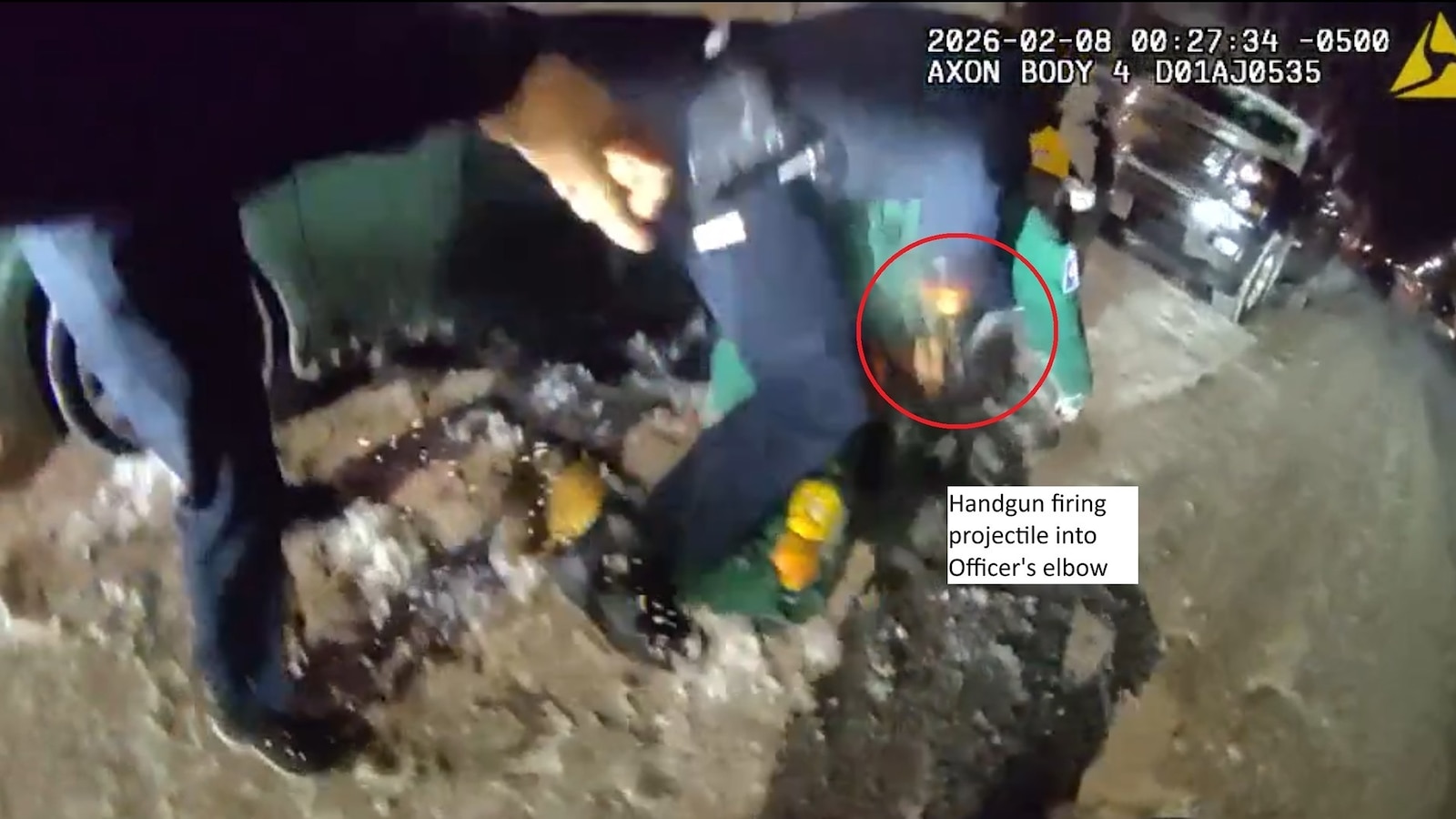
Given the nature of the 911 call—specifically that the suspect was reported to be armed—the responding officers made the decision to conduct a pat-down search of Vaughn for weapons. This is standard police procedure when there is reasonable suspicion that someone may be armed and dangerous, both for officer safety and public protection. However, as the officers began the pat-down, Vaughn suddenly began to violently resist their efforts. What started as a lawful investigative detention quickly escalated into a physical struggle between Vaughn and the three officers on scene. Body-worn camera footage, portions of which were later released by the Fall River Police Department, captured the chaotic moments of this struggle. During the physical altercation, while officers were attempting to gain control of the situation, Vaughn managed to produce a firearm. The situation went from dangerous to deadly in an instant. While on the ground during the struggle with officers, Vaughn began firing at the police officers. His shots struck one officer in the elbow and another in the abdomen. The officer shot in the abdomen was saved from potentially fatal injury by his bullet-resistant vest, a stark reminder of how essential this protective equipment is for law enforcement. The officers returned fire, striking Vaughn multiple times. He was transported to a local hospital, where he was later pronounced dead.
The Modified Weapon That Made the Difference
The firearm Vaughn used in the attack was a Glock handgun, a common semi-automatic pistol used by both civilians and law enforcement across the country. However, this particular weapon had been illegally modified with a device commonly known as a “switch” or “auto sear.” This small device, which can be purchased illegally or even manufactured using 3D printing technology, converts certain Glock pistols from semi-automatic firearms—which fire one round per trigger pull—into fully automatic weapons capable of firing multiple rounds with a single trigger pull, essentially functioning like a machine gun. According to the statement from authorities, this modification made Vaughn’s weapon “fully automatic, capable of firing multiple rounds with one trigger pull.” These devices have become an increasing concern for law enforcement agencies nationwide, as they’re relatively easy to obtain through illegal channels and can dramatically increase the lethality of what would otherwise be a standard handgun. The presence of this device in this incident may explain how Vaughn was able to strike two officers during what was likely a very brief exchange of gunfire during a chaotic, close-quarters struggle on the ground.
The Officers’ Injuries and Community Response
The two officers injured in the shooting suffered wounds that, while serious, were fortunately not life-threatening. One officer sustained a gunshot wound to his elbow, an injury that likely will require significant medical treatment and rehabilitation. The other officer was struck in the abdomen, but his bullet-resistant vest stopped the round from penetrating his body—a life-saving piece of equipment that demonstrated its critical value in the most dramatic way possible. A third officer who was present at the scene was not injured during the exchange of gunfire. All three officers have been praised for their courage and professionalism during an extraordinarily dangerous situation. Fall River Police Chief Kelly Furtado expressed the department’s gratitude that the officers were able to return home to their families, acknowledging that each day officers serve with dedication to protect their community, but incidents like this underscore the inherent risks of the profession. District Attorney Quinn noted that the suspect had a violent history, though specific details of that history were not immediately released. He emphasized that the officers were simply doing their jobs on a brutally cold night, and he credited divine intervention for sparing the lives of all the officers involved, saying, “Through the grace of God, all of the officers’ lives were spared.”
Investigation Continues as Community Reflects
As with all officer-involved shootings, particularly those that result in a fatality, this incident will be thoroughly investigated by multiple agencies to determine exactly what happened and whether the use of deadly force was justified. While the preliminary evidence, including body-camera footage, appears to support the officers’ actions as self-defense in response to being fired upon, the investigation will examine every aspect of the encounter, from the initial contact at the gas station through the final shots fired. Authorities have stated that a motive for Vaughn’s actions remains under investigation—why he violently resisted the pat-down search, why he was armed with an illegally modified weapon, and what led him to open fire on police officers. The incident has sent shockwaves through the Fall River community, a city of about 90,000 residents located in southeastern Massachusetts. For the officers involved, the physical wounds will heal with time, but the psychological impact of being involved in a deadly use-of-force incident—of being shot at and having to take a human life in self-defense—will likely require support and counseling. For the community, this incident serves as a sobering reminder of the split-second decisions law enforcement officers must make and the very real dangers they face during even routine-seeming calls for service. As the investigation continues, the focus will remain on supporting the injured officers in their recovery, understanding what happened that cold February night, and determining what lessons might be learned to help keep both officers and community members safer in the future.