



The FBI’s Jeffrey Epstein Investigation: What the Documents Reveal
Extensive Evidence of Abuse, But No Proof of a Wider Trafficking Network
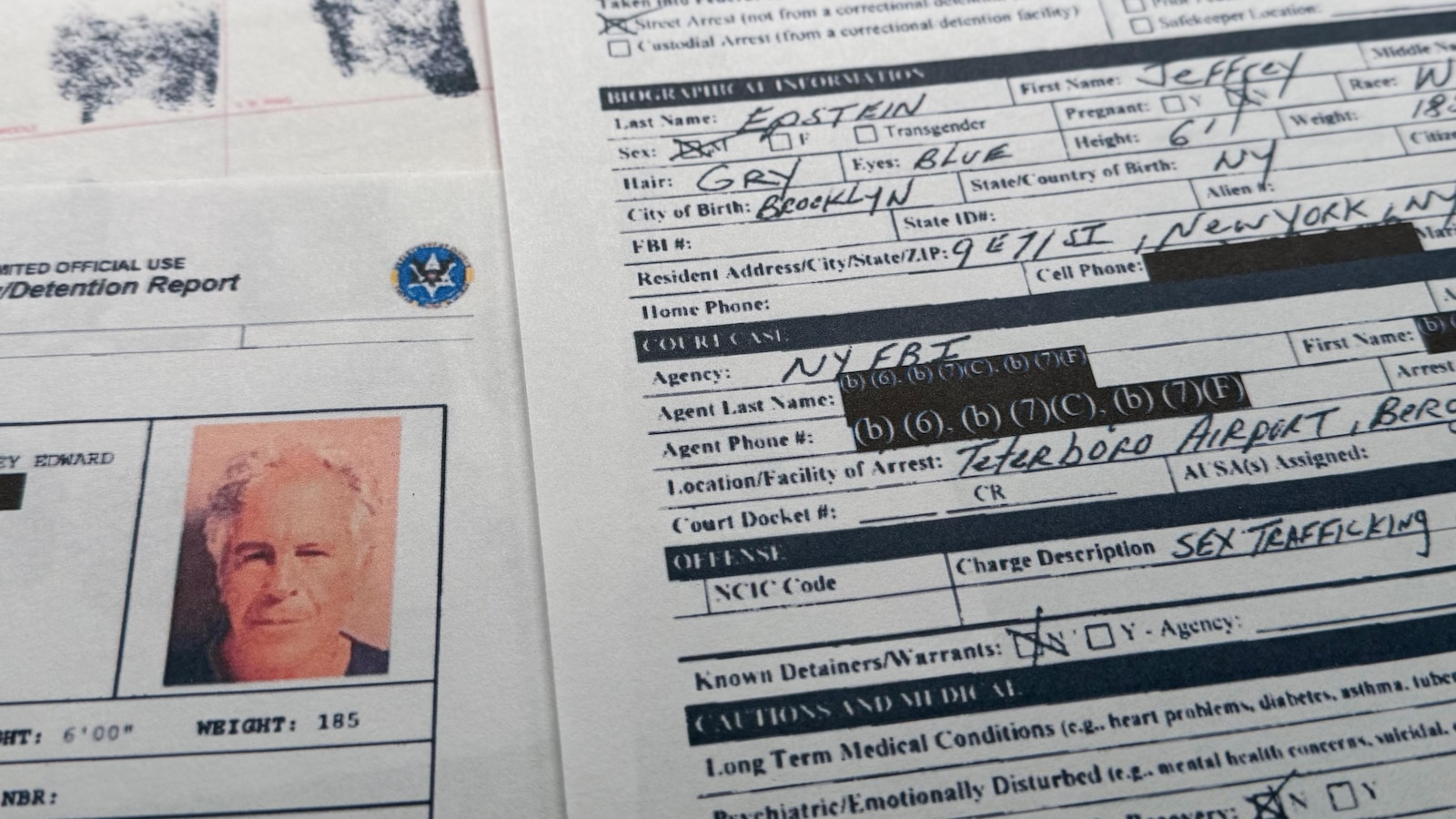
When Jeffrey Epstein was arrested in July 2019, public speculation swirled about the wealthy financier’s connections to powerful people and whether he ran an elaborate sex trafficking operation involving the world’s elite. However, a comprehensive review of internal Justice Department records by the Associated Press paints a more complicated picture. While the FBI found overwhelming evidence that Epstein sexually abused underage girls, investigators discovered little concrete proof that he operated a sex trafficking ring serving influential men. The thousands of pages of documents—released under the Epstein Files Transparency Act and now being reviewed by multiple news organizations—show that federal agents and prosecutors diligently pursued every lead, interviewed numerous witnesses, and examined vast amounts of financial and digital evidence. Yet despite this exhaustive investigation, authorities ultimately closed the case without charging anyone beyond Epstein himself and his longtime associate Ghislaine Maxwell, who is currently serving a 20-year prison sentence for her role in recruiting and abusing victims.
The investigation’s findings have surprised many who followed the sensational headlines surrounding Epstein’s crimes. Videos and photos seized from his properties in New York, Florida, and the U.S. Virgin Islands—while disturbing—didn’t show victims being abused and didn’t implicate other individuals in his crimes, according to a 2025 prosecutor’s memo. An examination of Epstein’s extensive financial records, including payments to entities connected to prominent figures in academia, finance, and international diplomacy, similarly found no connection to criminal activity. In an email sent last July, FBI agents summarized their findings: while “four or five” Epstein accusers claimed other men or women had sexually abused them, investigators determined there “was not enough evidence to federally charge these individuals.” This doesn’t mean Epstein acted entirely alone, but it does suggest that proving criminal conspiracy beyond a reasonable doubt proved impossible with the available evidence.
From Palm Beach to Federal Prosecution: A Timeline of Justice Delayed
The Epstein saga began nearly two decades ago in 2005, when concerned parents reported that their 14-year-old daughter had been molested at the millionaire’s Palm Beach, Florida mansion. What followed became one of the most controversial plea agreements in American legal history. Alexander Acosta, then serving as Miami’s U.S. attorney, negotiated a deal that allowed Epstein to plead guilty to state charges of soliciting prostitution from an underage girl—a charge that dramatically understated the severity of his crimes. Sentenced to just 18 months in jail with generous work-release privileges, Epstein walked free by mid-2009, having served barely a year behind bars. This sweetheart deal remained largely under the radar until 2018, when the Miami Herald published a groundbreaking series of investigative stories that exposed the injustice of the arrangement and gave voice to Epstein’s victims. The public outcry that followed prompted federal prosecutors to reopen the case and take a fresh look at the mountain of accusations against him.
Epstein’s arrest in July 2019 seemed to promise accountability at last, but one month later he was found dead in his Manhattan jail cell, an apparent suicide that sparked countless conspiracy theories. A year after his death, prosecutors charged Ghislaine Maxwell, Epstein’s confidant and alleged procurer of young victims. Convicted in 2021, Maxwell received a 20-year prison sentence for recruiting several victims and sometimes participating in the abuse herself. The prosecution memos, case summaries, and investigative documents now being made public reveal that even after Epstein’s death, FBI agents and federal prosecutors continued pursuing potential co-conspirators with determination. They examined even seemingly outlandish claims called into tip lines, following every thread that might lead to additional charges. However, many allegations simply couldn’t be verified with the kind of evidence needed to support criminal charges in federal court.
The Complicated Case of Virginia Roberts Giuffre
Among the most prominent voices in the Epstein case was Virginia Roberts Giuffre, who made explosive allegations in lawsuits and media interviews claiming that Epstein had arranged for her to have sexual encounters with numerous powerful men, including Britain’s Prince Andrew. FBI investigators interviewed Giuffre twice—once in 2011 and again in 2019—and their assessment of her claims reveals the challenges prosecutors faced in building cases beyond Epstein and Maxwell. According to the documents, investigators confirmed that Giuffre had indeed been sexually abused by Epstein, validating the core of her victimization. However, other aspects of her account proved problematic from a prosecution standpoint. Giuffre acknowledged that she had written a partly fictionalized memoir about her experiences with Epstein, one that contained descriptions of events that never actually occurred. Additionally, she had provided shifting accounts across different interviews with investigators, inconsistencies that would likely be exploited by defense attorneys in any criminal trial.
Perhaps most significantly, two other Epstein victims whom Giuffre claimed had also been “lent out” to powerful men told investigators they had no such experiences, according to a 2019 internal prosecution memo. These contradictions didn’t mean Giuffre was lying about everything—her abuse at Epstein’s hands was real—but they did make it extremely difficult to use her testimony to charge others with sex trafficking or related crimes. Federal prosecutors must prove guilt beyond a reasonable doubt, and inconsistent witness statements, acknowledged fictional elements, and contradicting accounts from other victims would create substantial obstacles in court. This illustrates a painful reality of sex crimes prosecution: victims who have suffered genuine trauma may have imperfect memories or may have reasons to embellish certain details, but these human complications can make it nearly impossible to secure convictions, especially against wealthy defendants with access to the best legal representation money can buy.
The Search for Evidence: What Wasn’t Found
When FBI agents executed search warrants at Epstein’s properties, they seized a staggering amount of material: electronic devices, CDs, hard copy photographs, and at least one videotape containing nude images of females. The sheer volume of potential evidence seemed promising for investigators hoping to identify and charge co-conspirators. However, the results of analyzing this material proved disappointing for those seeking a broader reckoning. In an email written last year for FBI officials, then-Assistant U.S. Attorney Maurene Comey (daughter of former FBI Director James Comey) summarized the findings: none of the videos or photos showed Epstein victims being sexually abused, none showed any males with any of the nude females, and none contained evidence implicating anyone other than Epstein and Maxwell themselves. Comey emphasized that had such evidence existed, the government “would have pursued any leads they generated,” but investigators simply “did not locate any such videos.”
Similarly, the exhaustive examination of Epstein’s bank records failed to uncover the financial paper trail of a sex trafficking operation. Investigators found payments to more than 25 women who appeared to be models, but no evidence that Epstein was engaged in prostituting women to other men. Prosecutors also considered whether to charge some of Epstein’s close associates, including personal assistants and business clients who may have had knowledge of his activities, but ultimately decided against prosecution due to insufficient evidence. This lack of hard evidence doesn’t necessarily mean that Epstein never shared victims with others or that no one else participated in abusing young women in his orbit. Rather, it demonstrates the high burden of proof required in criminal cases and the difficulty of building prosecutable cases when potential witnesses have credibility issues, physical evidence is lacking, and financial records don’t reveal clear criminal transactions.
The Myth of the “Client List”
Perhaps no aspect of the Epstein case has captured public imagination more than the supposed “client list”—a document that many believed would expose powerful men who sexually abused young women through Epstein’s network. In February 2025, Attorney General Pam Bondi told Fox News that Epstein’s never-before-seen “client list” was “sitting on my desk right now,” a statement that generated significant media attention and public anticipation. However, internal FBI communications tell a different story. On December 30, 2024, about three weeks before President Joe Biden left office, then-FBI Deputy Director Paul Abbate reached out through subordinates to inquire “whether our investigation to date indicates the ‘client list,’ often referred to in the media, does or does not exist.” The next day, an FBI official replied that the case agent had confirmed no such client list existed. Two days before Bondi’s Fox News appearance, an FBI supervisory special agent wrote explicitly: “While media coverage of the Jeffrey Epstein case references a ‘client list,’ investigators did not locate such a list during the course of the investigation.”
This revelation is likely to disappoint those who hoped for a comprehensive accounting of everyone in Epstein’s social and business circles who may have exploited young women. The absence of a client list doesn’t mean Epstein never introduced victims to other men or that no one else should face consequences—it simply means that no such convenient document existed cataloging these interactions. The mythology around the client list reflects a broader public desire for simple answers and clear accountability in a case that involves tremendous wealth, political connections, and institutional failures across multiple agencies and jurisdictions. The reality documented in these thousands of pages is more complex and frustrating: a pattern of abuse primarily perpetrated by one man and his closest associate, with insufficient evidence to charge the broader network of people who may have enabled, ignored, or benefited from his crimes. As journalists from the Associated Press, CBS, NBC, MSNBC, and CNBC continue reviewing the millions of pages of documents released under the Epstein Files Transparency Act, additional information may yet emerge. For now, however, the records show an investigation that, despite its thoroughness and the investigators’ evident commitment to pursuing justice, ultimately found the evidence to support only the charges we already knew about—a sobering reminder of how difficult it can be to hold the powerful accountable, even when their crimes hide in plain sight.