


The Hidden Crisis: How Drug Testing Is Criminalizing Pregnancy Across America
A Mother’s Nightmare Begins in the Hospital
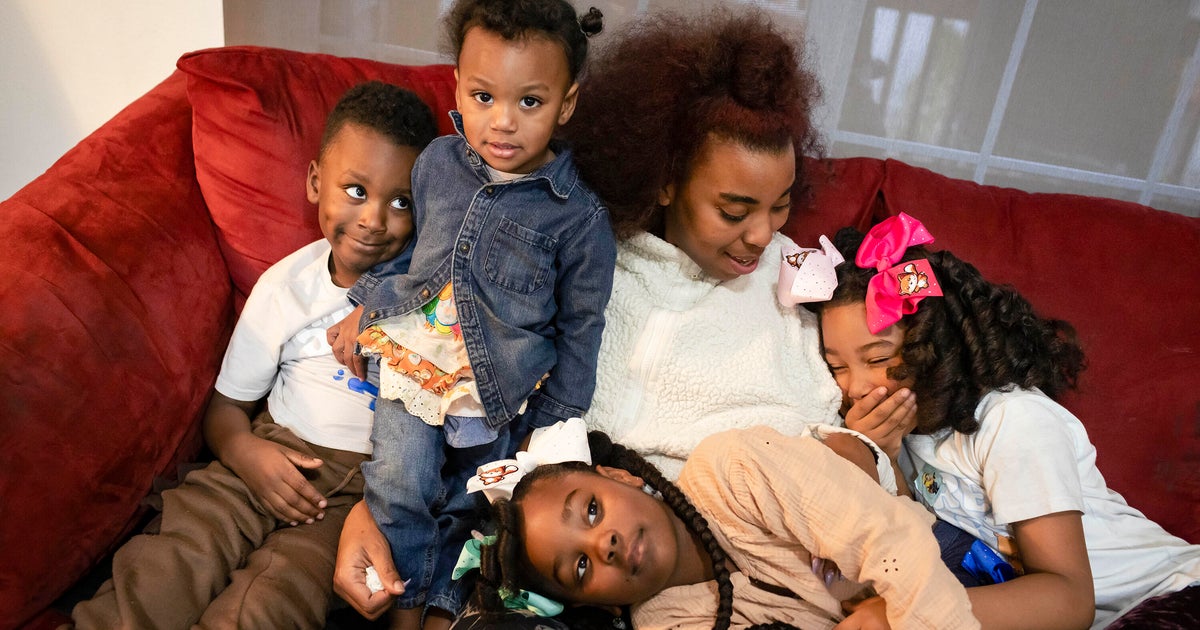
Ayanna Harris-Rashid’s life changed forever with a single phone call. Just days after giving birth to her third child in March 2021, she was nursing her newborn when police informed her she was wanted on felony child neglect charges. Her crime? Using legal CBD gummies and hemp-based ointment during pregnancy to manage pain and nausea. When hospital staff tested both mother and baby, they came back positive for marijuana—triggering an automatic report to South Carolina’s Department of Social Services, which then forwarded the information to police. Within hours, Harris-Rashid found herself saying goodbye to her family, whispering “I’m so sorry” to her days-old son before being handcuffed, strip-searched, and thrown into a cold, crowded jail cell. By the time she was released the next morning, her milk supply had dried up, ending her ability to breastfeed. The charge was eventually dropped, but the trauma remained. “They shook me bare. They made me feel very indecent and inhumane,” she recalled, asking the painful question that haunts thousands of women: “What justifies this?”
Harris-Rashid’s experience is far from isolated. A groundbreaking investigation by The Marshall Project has uncovered a staggering reality: in at least 70,000 cases across 21 states over six years, new parents were referred to law enforcement over allegations of substance use during pregnancy. This number represents the largest known documentation of pregnancy criminalization in America and significantly exceeds what reproductive rights organizations and academics previously understood about the scope of this issue. Even more troubling, these referrals are frequently based on flawed drug tests—sometimes triggered by prescribed medications, legal products, or hospital-administered drugs. The investigation reveals a massive surveillance apparatus tracking pregnant women through a pipeline connecting hospitals, child welfare agencies, and law enforcement, often with devastating consequences for families and virtually no benefit to children.
False Positives and Faulty Science
The foundation of this crisis rests on unreliable testing methods that are easy to misinterpret and frequently wrong. Hospital drug tests, typically starting with urine samples, cannot distinguish between illegal marijuana and legal CBD products, cannot determine how much of a substance was used or how frequently, and often produce false positives triggered by completely legal medications. In Oklahoma, armed sheriff’s deputies removed two children from their parents after the mother tested positive for methamphetamine—a false result caused by the acid reflux medication the hospital had given her during labor. In South Carolina, police interrogated a mother who tested positive for fentanyl from her epidural and marijuana. A Virginia couple was threatened with arrest and forced to surrender their newborn after the mother tested positive for methadone—the very medication her doctor had prescribed to treat her opioid addiction.
The case of “Maddie,” a South Carolina first-time mother, illustrates how the system punishes women for managing severe pregnancy symptoms. Suffering from extreme morning sickness that prevented her from keeping down even water, and finding that the commonly prescribed Zofran didn’t work, Maddie tried marijuana gummies on a family member’s suggestion. They stopped her vomiting and allowed her to nourish her developing baby. But when she gave birth, both she and her baby tested positive for THC. Despite the fact that small amounts of THC are legal under both South Carolina and federal law, and that her test results didn’t distinguish between illegal marijuana and legal CBD products or indicate quantity, the hospital reported her to authorities. She was barred from breastfeeding and from being alone with her newborn, then arrested on a felony charge carrying up to ten years in prison. “I have never in my life been in trouble,” she said, noting the devastating irony: “That would have been more detrimental to my daughter than me doing gummies pregnant.” The charge was eventually dismissed, but only after she hired an attorney.
A Patchwork of Policies Creating Inequality
The Marshall Project’s investigation reveals dramatic inconsistencies in how states handle these cases. Thirteen states automatically share all such reports with law enforcement, spanning both blue states like Minnesota and red states like Oklahoma, which refers cases to police in one out of every 24 births—the highest ratio in the analysis. Meanwhile, states like Michigan take a dramatically different approach, sending cases to police only in specific circumstances such as concerns for caseworker safety or allegations of serious physical harm. The result? Fewer than 1% of Michigan reports go to police, compared to Oklahoma’s systematic referral of every case. These automatic referral policies far exceed federal requirements, which call for states to refer families to services and ensure plans to care for substance-exposed newborns—but include no requirement for criminal justice involvement whatsoever.
Data from 15 states shows that more than half of cases referred to law enforcement—approximately 22,000—were ultimately found not to involve child abuse or neglect. Yet police sometimes launched criminal investigations that continued long after child welfare authorities declined to take action. In Georgia alone, over 3,000 reports from 2018 through 2024 involved positive tests for prescribed medications. State child welfare workers declined to open investigations in these instances, yet still referred them to law enforcement. In Idaho, more than 1,000 mothers were accused of child abuse and referred to police for marijuana use during pregnancy, including cases involving topical CBD oils and creams. One woman had eaten a brownie from a relative’s kitchen in Oregon—where marijuana is legal—not knowing it contained cannabis. Another had taken prescribed medical marijuana in Washington state because she preferred it to medications with difficult side effects.
The Trauma of Police Presence in Delivery Rooms
Even when criminal charges are never filed, the presence of law enforcement during one of life’s most vulnerable moments inflicts lasting trauma. In Idaho, which refers all reports of illegal drug use during pregnancy to police, child welfare workers coordinate with officers to conduct investigations in hospital rooms. Surrounded by uniformed officers and state workers with the power to take their newborns, many women feel they have no choice but to answer questions despite their constitutional right to remain silent. Attorneys and healthcare providers report that some women are questioned while still under the influence of medications administered during childbirth. Public defender Brigette Borup says many of her clients have no recollection of these encounters: “When they get told, ‘Well, we’re going to remove your baby,’ it’s just—nothing past that point gets absorbed.”
Defense attorneys describe these interactions as potential violations of due process rights. Officers typically don’t provide Miranda warnings explaining the right to remain silent or disclose that admitting to drug use could lead to arrest. Many women don’t realize their answers could be used against them. As attorney Bob Eldredge explained: “You’ve got your weapon, your uniform, you look like Batman, the mother is feeling guilty in bed, anyway—you get a confession out of her. They treat law enforcement officers like that’s their pastor, preacher, bishop coming in, and they come clean.” The emotional toll on women whose children are removed makes it difficult to mount effective legal defenses. “You have a hard time not breaking down and weeping in front of those women,” Eldredge said, choking up. “It’s so cruel what we’re doing.”
Long-Term Consequences for Women, Families, and Rights
The implications of these referrals extend far beyond individual cases. Decades of research demonstrates that punitive approaches are ineffective at reducing substance use and lead to poorer health outcomes for women, newborns, and families. Recognizing this evidence, Illinois legislators ended the requirement that child welfare authorities notify law enforcement in 2024. Yet several states that have established alternative responses designed to offer services and steer families away from abuse investigations continue to file automatic police referrals, undermining years of progress. Experts are shocked by the scope of law enforcement involvement. “I’m flabbergasted,” said Professor Deborah Cohen, who studies treatment of pregnant women with substance use disorders. “I do not see how that’s helpful.”
The referrals also create lasting consequences that many women never know about. Michelle Hansford, a peer support advocate at a Texas addiction treatment program, discovered that one of her patients was reported to both child welfare and police due to a positive test caused by fentanyl in her epidural. While the child welfare referral troubled her, she had no idea police also received the report. “That would worry me,” she said, noting that if her client had a later law enforcement encounter, “they’re automatically going to be biased against her.” The broader implications for reproductive rights are equally concerning. Anti-abortion activists have stated their intention to bring a case to the Supreme Court establishing constitutional protections for fetuses. Criminal cases against women for drug use during pregnancy have already helped establish fetal personhood legal precedents in multiple states. As law professor Mary Ziegler noted, “The stockpiling of information like that is concerning, even if no one is acting on it in the near term.” The policies, she emphasized, don’t actually help babies: “It’s literally about punishing people who are pregnant.”
A Constitutional Question and a Path Forward
The broader legality of these referrals remains an open question. In 2001, the Supreme Court ruled that drug testing pregnant patients without consent for purposes of sharing results with law enforcement violated privacy rights. While that decision specifically addressed a South Carolina public hospital and didn’t mention child welfare agencies, some attorneys argue the reasoning should apply to those agencies as well. “Essentially, child welfare has become the pass-through,” explained Dana Sussman of Pregnancy Justice. “The child welfare agency is acting as an agent of the police. There’s no distinction between the two.” The organization had previously counted more than 1,800 pregnancy-related arrests and prosecutions from 2006 through 2024—making the new findings of 70,000 law enforcement referrals shocking even to those monitoring the issue most closely.
The crisis has intensified following the Supreme Court’s 2022 Dobbs decision overturning Roe v. Wade, with prosecutions of pregnant women rising significantly. In anti-abortion states like South Carolina and Oklahoma, women face particular vulnerability, with decisions about criminal prosecution often coming down to the discretion of individual officers or prosecutors. At a time of increasing pregnancy surveillance, civil rights attorneys warn that automatic referrals dramatically increase the risk that more people will face criminal investigation and charges. What happened to Ayanna Harris-Rashid—arrested, humiliated, and separated from her newborn for using legal products—represents not an aberration but a systemic failure affecting tens of thousands of American families. The charge against her was dropped, but she lost the ability to breastfeed her son and carries the trauma of being treated as a criminal during one of life’s most precious moments. “This is a person, a woman, a mother, an actual individual,” she said. Until policies change to prioritize health over punishment and services over surveillance, that fundamental question—”What justifies this?”—will continue to haunt a nation that claims to value both mothers and children.