


The Heart Behind Bad Bunny’s Historic Super Bowl Halftime Show
Everyday Heroes Take Center Stage
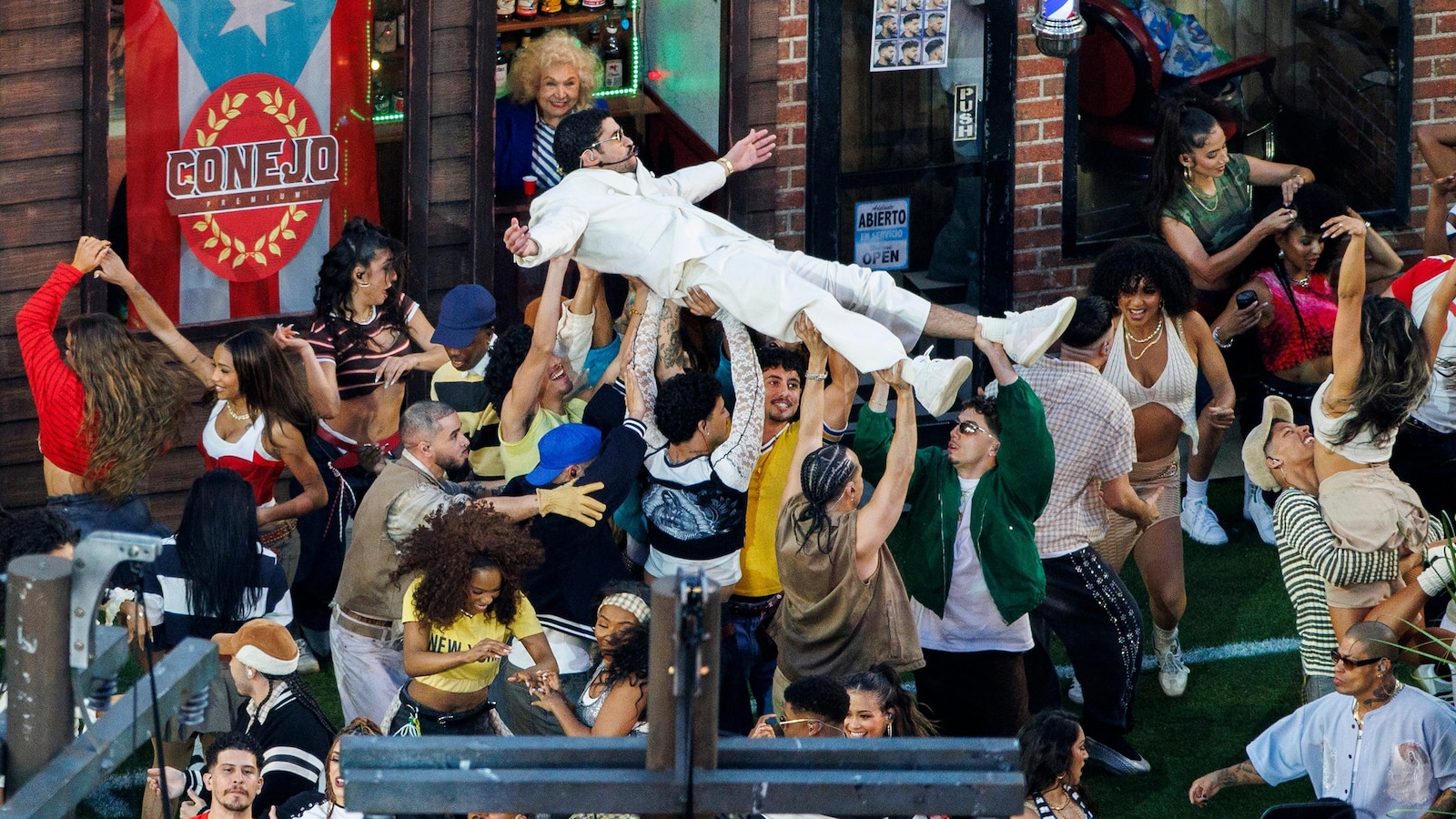
Bad Bunny’s Super Bowl LX halftime show wasn’t just another spectacle of celebrity glamour and pyrotechnics—it was a love letter to Latino culture, written by the community itself. While superstars like Lady Gaga and Ricky Martin shared the spotlight, the real magic came from the everyday people who brought authentic representation to one of the world’s biggest stages. Small business owners, community pillars, and hundreds of dedicated performers from across the country came together to create something truly special on Sunday night. These weren’t professional backup dancers or hired entertainers; they were real people with real stories, each adding their own thread to the rich tapestry of Latino culture that Bad Bunny wanted the world to see. In the days following the performance, many of these participants have come forward to share their experiences, revealing just how meaningful and transformative this opportunity was for them and their communities.
Victor Villa, owner of Villa’s Tacos in Los Angeles, was among those who experienced this once-in-a-lifetime moment. During the show, viewers saw him standing behind a grill emblazoned with his taqueria’s name in blue lettering, greeting Bad Bunny as cameras captured the interaction. Speaking with “Good Morning America” on Tuesday, Villa struggled to contain his gratitude for the opportunity. “I was extremely grateful and thankful to be able to represent my culture, my family, my city,” he said, his words carrying the weight of someone who understands what representation truly means. For Villa, this wasn’t just about promoting his business or getting his fifteen minutes of fame—it was about standing as a symbol for countless small business owners in Latino communities across America who work tirelessly to preserve their culinary traditions and serve their neighborhoods. His presence on that stage represented every taco truck, every family restaurant, and every entrepreneur who has built something meaningful from the ground up.
Unity and Love as the Ultimate Message
What struck Villa most profoundly about the experience was the sense of unity that Bad Bunny fostered among all the performers and participants. “He brought us all together, and he showed what we could accomplish if we just work as a group, as a collective, and that love is the most powerful force,” Villa reflected, speaking about the Puerto Rican superstar with genuine admiration. This sentiment echoed throughout the accounts of others who participated in the show. Bad Bunny didn’t just hire people to fill roles in his performance; he created a community of collaborators, each valued for what they brought to the table. In an era often marked by division and discord, the halftime show became a powerful statement about what can be achieved when people come together with shared purpose and mutual respect. The performance demonstrated that celebration of culture doesn’t require diminishing others—instead, it invites everyone to appreciate the beauty and richness that diversity brings to the American experience.
Another unforgettable moment from the show featured Maria Antonia Cay, affectionately known as Toñita, who owns the Caribbean Social Club in Brooklyn. This cultural institution has been a fixture in New York City for half a century, serving as a gathering place where Puerto Rican culture thrives and community bonds are strengthened. Bad Bunny himself has visited the bar, making Toñita’s inclusion in the show particularly meaningful. During the performance, Bad Bunny approached Cay and took a shot from her right in the middle of a song, knocking it back without missing a beat. The gesture was spontaneous yet deeply symbolic—a nod to the establishments that keep cultural traditions alive in neighborhoods far from the island, the places where immigrants and their descendants gather to remember, celebrate, and pass their heritage to the next generation. Toñita’s presence reminded viewers that culture isn’t just performed on stages; it’s lived daily in community spaces that serve as anchors for identity and belonging.
Viral Moments That Captured Hearts
The halftime show created several moments that immediately captured the internet’s imagination, none more heartwarming than the couple who exchanged vows onstage during the performance. This wasn’t a staged representation of a wedding—it was an actual ceremony, complete with a brief but joyful reception that included dancing and a special performance by Lady Gaga. The pop superstar sang a salsa version of her hit “Die With a Smile,” transforming the song into something that fit perfectly within the celebration’s Latin flavor. The wedding moment went viral across social media platforms, with millions sharing clips and expressing their emotions about witnessing such a personal, beautiful ceremony on one of the world’s biggest stages. It represented the idea that Latino culture is fundamentally about family, celebration, and marking life’s most important moments together. By including this real couple in his show, Bad Bunny reinforced his message that culture isn’t abstract—it’s lived through our relationships, commitments, and the joy we share with those we love.
Perhaps the most creative and unusual element of the show was what appeared to be tall bushes meant to evoke Puerto Rico’s grasslands and sugar cane fields. As show producers later revealed to Variety, these weren’t actually bushes at all but rather approximately 380 people recruited to stand around the stage wearing grass costumes. This unconventional approach served a practical purpose—making the setup more efficient—but it also created opportunities for hundreds more people to be part of this historic moment. Humberto Martinez was one of these “grass bunnies,” as they affectionately called themselves, and he described the experience as “so much fun” when speaking with “Good Morning America.” Martinez even took home part of his costume as a souvenir, joking, “I definitely was not about to do all of that and not bring some type of, you know, souvenir. I need proof that I was Benito’s ‘grass bunny.'” His lighthearted comments captured the spirit of joy and camaraderie that characterized the entire production—people weren’t just working a gig; they were creating memories and being part of something meaningful.
A Performance Rooted in Heritage and Pride
Throughout the halftime show, Bad Bunny showcased his Puerto Rican heritage with unmistakable pride, performing a collection of his hit songs, many from his latest album “Debí Tirar Más Fotos,” which had just earned him the Album of the Year award at the Grammys. Every element of the production—from the music to the visual representations to the people he chose to feature—told a story about where he comes from and the culture that shaped him. The performance built to a powerful conclusion when Bad Bunny said “God bless America” before listing off the nations that make up the Americas, expanding the definition of “America” beyond just the United States. He capped his performance with a shoutout to “my homeland,” Puerto Rico, before adding “Seguimo aquí”—Spanish for “we’re still here”—and spiking a football emblazoned with the words “Together we are America.”
This closing statement carried particular weight given ongoing conversations about Puerto Rico’s political status, the struggles the island has faced following natural disasters, and the sometimes-invisible presence of Puerto Ricans in broader American culture despite their U.S. citizenship. Bad Bunny’s message was clear: Puerto Ricans and all Latino communities are integral parts of America’s fabric, and their cultures deserve celebration on the biggest stages. By filling his performance with real people from the community rather than just professional performers, he demonstrated that Latino culture isn’t something exotic or foreign—it’s woven into the everyday life of America, from the taquerias feeding neighborhoods to the bars preserving traditions to the small business owners building dreams. The halftime show ultimately became more than entertainment; it was a statement of presence, belonging, and pride that resonated deeply with Latino audiences while inviting all viewers to appreciate the richness that cultural diversity brings to the collective American experience. For everyone involved, from the stars to the grass-costumed performers, it was a reminder that when we celebrate each other’s heritage, we all win.