

Understanding Iran’s Power Structure Amid Ongoing Conflict
Trump’s Claims of Iranian Chaos Don’t Tell the Whole Story
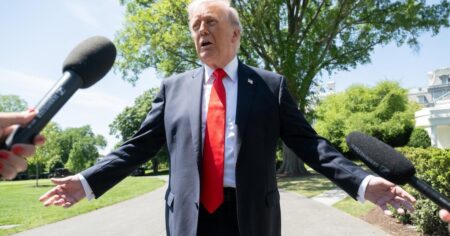
More than two months after the United States and Israel launched strikes against Iran on February 28, President Trump has publicly blamed “infighting and confusion” within Iran’s government for difficulties in reaching a peace agreement. His assertions paint a picture of a regime in disarray, with leaders who can’t agree on basic decisions and a power structure crumbling from within. “Nobody knows who is in charge, including them,” Trump declared in a late April social media post, suggesting that Iran’s theocratic government is “seriously fractured” and in a “state of collapse.” However, experts who study Iranian politics tell a different story—one where power structures are indeed shifting, but not in ways that indicate the chaos Trump describes. Instead, analysts suggest that the President’s rhetoric might serve a different purpose: deflecting attention from challenges the White House itself faces in articulating clear policy objectives and achieving its diplomatic goals. Understanding what’s actually happening inside Iran requires looking beyond the soundbites to examine how authority truly functions in the Islamic Republic, especially during this unprecedented crisis that has shocked global markets and threatened regional stability for weeks.
The Leadership Transition After Khamenei’s Death
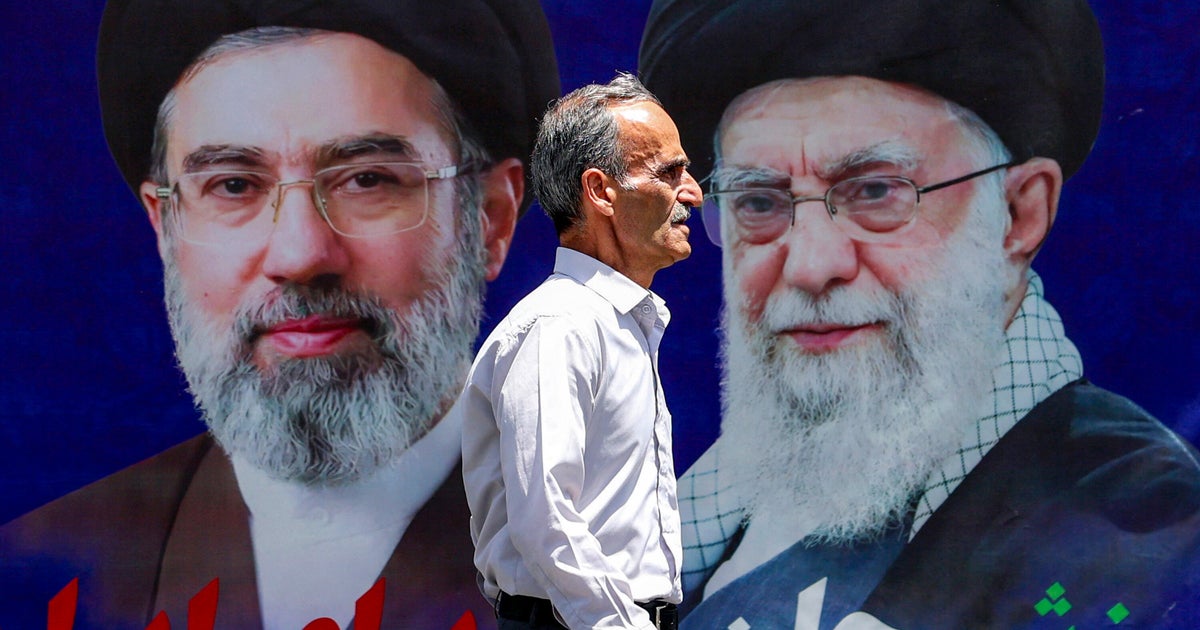
The war began with a dramatic event that fundamentally changed Iran’s political landscape: the killing of Supreme Leader Ayatollah Ali Khamenei in the initial wave of strikes. For decades, ultimate political, military, and religious authority in Iran has rested with this single figure, making his death a watershed moment for the nation. Iran’s system quickly responded by naming his son, Ayatollah Mojtaba Khamenei, as the new supreme leader, maintaining the formal continuity of the regime’s highest office. However, U.S. officials claim the younger Khamenei was seriously wounded—possibly incapacitated—in the same strike that killed his father, though there has been no independent confirmation of his condition. What is certain is that the new supreme leader has not been seen or heard from directly since being announced, creating an unusual situation for a position that traditionally commands visible authority. This invisibility initially fueled perceptions of a power vacuum at the top of Iran’s government, lending some credibility to Trump’s claims of confusion and disorder. But experts caution against jumping to conclusions based solely on the new leader’s absence from public view, pointing out that Iran’s power structure has always been more complex than it appears from the outside, with multiple centers of authority that could quickly stabilize the system even without a visible supreme leader at the helm.
The Rising Influence of the Revolutionary Guard
While attention has focused on the supreme leader’s office, another institution has quietly—or perhaps not so quietly—increased its grip on power in Iran: the Islamic Revolutionary Guard Corps. The IRGC is far more than just a military force; it’s a political and economic powerhouse that has long answered directly and exclusively to the supreme leader. The organization manages Iran’s external military operations, maintains relationships with proxy forces throughout the Middle East, and helps enforce domestic security by suppressing dissent within Iran’s borders. Recent reporting suggests that in the current crisis, the IRGC has essentially stepped into any leadership vacuum, with the new supreme leader’s role becoming “largely to legitimize decisions made by his generals rather than issue directives himself.” Power now appears concentrated in a wartime leadership structure consisting of the Supreme National Security Council, the supreme leader’s office, and the IRGC, with the military force dominating both strategic decisions and key political choices. Sanam Vakil, director of the Middle East and North Africa program at London’s Chatham House, describes this as part of a longer transition that has been building for decades, as Iran’s ruling clerics have gradually seen their 47-year grip on power loosen while the IRGC has expanded its influence through business acquisitions and by placing former members in political positions. Aaron David Miller, a Middle East expert at the Carnegie Endowment for International Peace, characterized this shift as Iran moving “from divine power to hard power,” with the regime now “tethered” to the Revolutionary Guard in ways that fundamentally change how decisions are made.
Competing Voices Within the Regime
Despite the IRGC’s growing dominance, Iran’s government does contain different factions with competing viewpoints about how to handle the current crisis. President Masoud Pezeshkian, whose office holds less power than the title suggests—more like a vice president than the American presidency—is considered a moderate who, along with other political figures, likely favors returning to negotiations out of fear about the consequences of full-scale war with the United States. The IRGC, by contrast, has projected an image of strength and defiance, with Major General Mohsen Reza’i warning in March that “if you attack the infrastructure of the Islamic Republic of Iran, our response will no longer be an eye for an eye, but rather a head for an eye.” Rumors have circulated about splits between IRGC commander Brigadier General Ahmed Vahidi and Mohammed-Bagher Ghalibaf, the parliamentary speaker who led Iran’s negotiating team during the only round of direct talks with U.S. officials since the war began—talks that ended in early April without converting the ceasefire into a broader peace deal. Foreign Minister Abbas Araghchi recently posted on social media that “there’s no military solution to a political crisis,” which some interpreted as criticism directed at both the United States and the IRGC’s hardline stance. These differences have become more visible during the war, with ultraconservative voices criticizing negotiations while moderates push for diplomatic solutions, creating an impression of division that Trump has seized upon in his public statements about Iranian disarray.
The Reality: Tactical Disagreements, Not Strategic Chaos
However, experts who study Iran closely say these differences shouldn’t be mistaken for the kind of paralyzing confusion Trump describes. Vakil told CBS News that the regime is indeed factionalized “on tactics, particularly with regard to the negotiations,” but these tactical disagreements pose little threat to the regime’s overall stability or decision-making capacity. Political figures like Pezeshkian and Araghchi have limited influence in Iran’s actual power structure, meaning their public statements don’t necessarily reflect or determine policy. There have been some thinly veiled jabs between moderates and ultraconservatives over issues like making concessions to the United States, with an IRGC-linked news agency briefly publishing (then deleting) an editorial mocking ultraconservative expectations for negotiations, while ultraconservative cleric Mahmoud Navabian criticized even holding talks with the U.S., noting that Iran’s oil prices have doubled since before the war. But these ultraconservatives represent a small minority—Iran’s parliament recently voted overwhelmingly to support a statement backing the negotiating team. Vakil draws a comparison to what she sees in Washington, where Defense Secretary Pete Hegseth focuses on military campaign success while Treasury Secretary Scott Bessent concentrates on economic interests, representing different institutional priorities that don’t indicate fundamental chaos. “To me, this is all very normal,” she said of Iran’s internal debates, adding that critically, “all of the different groups and individuals are aligned in the preservation of the regime and its security and stability”—a unifying objective that provides coherence despite tactical disagreements.
Why Trump May Have Reasons to Exaggerate Iranian Dysfunction
The evolution of power structures in Tehran doesn’t necessarily indicate the fragility Trump claims to see, and experts suggest the White House may have strategic reasons for portraying Iran as more chaotic than it actually is. Mona Yacoubian, Director of the Middle East Program at the Center for Strategic and International Studies, noted that “while the Trump administration may have initially hoped for a ‘Venezuela option,’ featuring” a more pliable leader stepping into power, “no such option existed” in Iran. Instead, she observed, “we have seen that initial decapitation strikes have led to an IRGC-dominated regime in Iran that has adopted a harder-line posture,” with the supreme leader no longer appearing to have the final word and decisions instead being made by a collective group of Revolutionary Guard leaders. This outcome differs significantly from what the administration likely hoped to achieve with its initial strikes. Vakil suggests that Trump has probably “exaggerated or misrepresented the divisions” within Iran “as an excuse” for a negotiating process that “hasn’t been as easy or quick to deliver on Washington’s side than perhaps Trump has wanted.” Finding a scapegoat in Iranian dysfunction provides a convenient explanation for diplomatic difficulties that might actually stem from other sources. “It’s easy to blame it on them,” Vakil said, adding that she believes Iran’s rulers “have very clear red lines, and it’s much more clear in terms of what they’re trying to achieve”—specifically regime survival and permanent sanctions relief—”whereas the U.S. has been a bit less aligned and less clear” about its own objectives. This analysis suggests that rather than Iranian chaos preventing progress, the real obstacle might be uncertainty and competing priorities within the Trump administration itself about what it actually wants to achieve and what it’s willing to concede to get there.