


The State of America’s Economy: A Deep Dive into President Trump’s 2026 Address
Economic Optimism Meets Everyday Reality
During his 2026 State of the Union address on Tuesday evening, President Trump painted a picture of an American economy firing on all cylinders. Standing before Congress and the nation, he declared that “inflation is plummeting, incomes are rising fast, the roaring economy is roaring like never before.” The president used the platform to highlight what he considers significant achievements during his first year back in the White House, particularly focusing on economic indicators that matter most to everyday Americans. The economy has indeed become a topic of urgent concern for millions across the country, who find themselves navigating a complex landscape of rising costs, from grocery bills to medical expenses. While the president’s message was one of confidence and progress, it stands in contrast to the lived experiences of many households still struggling to make ends meet despite what government statistics suggest is a healthy economy.
By traditional economic measurements, the United States appears to be in reasonably good shape. Unemployment sits at a modest 4.3%, meaning most Americans who want jobs can find them. Inflation, which had surged to painful levels in previous years, has been cooling down considerably. The nation’s Gross Domestic Product continues to expand, demonstrating overall economic growth and resilience. Perhaps most surprisingly, the economy has largely weathered the storm of tariffs that many economists had predicted could trigger a recession. Consumer confidence has shown signs of improvement recently, buoyed by a notable burst in job creation during January. These positive indicators suggest an economy that, at least on paper, is performing well and heading in the right direction. However, these broad statistics tell only part of the story and don’t fully capture the financial pressures that ordinary families continue to face in their daily lives.
The Stubborn Reality of Rising Food Costs
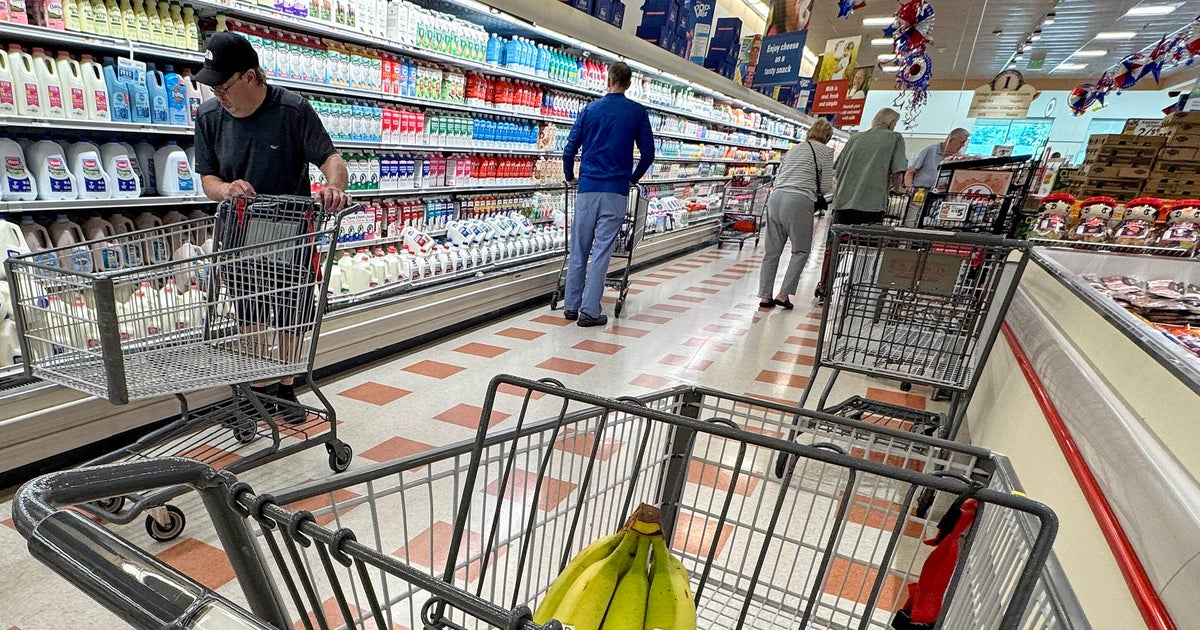
The disconnect between economic statistics and household budgets becomes most apparent at the grocery store checkout line. Food prices have remained a persistent source of frustration for American consumers ever since inflation reached a four-decade high back in 2022. This issue plagued former President Biden’s administration and became a rallying point for Trump during his campaign, when he promised to end what he called the “inflation nightmare.” According to polling conducted by the Pew Research Center in January, Americans identified the cost of food as one of their top three economic concerns, alongside housing and health care. While the Trump administration can point to a slower rate of food price increases compared to the Biden years—when pandemic-related supply chain disruptions sent costs soaring—the situation remains troubling for families trying to plan their budgets.
The challenge with food inflation is that consumers don’t experience it as a rate of change but as actual prices on store shelves. Economists have long understood this psychological reality: even if prices are rising more slowly than before, they’re still rising, and families remember what they used to pay. Some staple items have seen particularly dramatic increases that hit household budgets hard. Ground beef prices have jumped an eye-watering 17.2% compared to a year ago, making a basic ingredient for family meals significantly more expensive. Coffee, a morning necessity for millions of Americans, has surged 18.3%, turning a daily routine into a budget consideration. The Trump administration has attempted to address these concerns through targeted policy measures, including exempting beef, coffee, and bananas from tariffs. The president also announced increased imports of beef from Argentina as a strategy to ease domestic prices. However, experts have expressed skepticism about these measures’ effectiveness, noting that Argentine beef represents only 0.6% of the overall U.S. beef supply—a drop in the bucket that’s unlikely to significantly impact what consumers pay at the meat counter.
The American Dream of Homeownership Slips Further Away
If food prices represent a daily frustration, housing costs embody a fundamental challenge to the American Dream itself. More than eight out of every ten Americans believe it’s harder to buy a home today than it was for previous generations, according to a CBS News poll conducted in early February. This perception reflects a harsh reality that has locked millions out of homeownership and forced others to spend an increasingly large portion of their income on rent or mortgages. Pew Research found that 62% of Americans report feeling concerned about housing costs, making it one of the top economic anxieties alongside food and health care. The problem has become so severe that it affects people across different income levels and geographic regions, from first-time buyers hoping to get their foot in the door to families looking to upgrade or downsize.
The Trump administration has proposed several initiatives to address the housing affordability crisis. One measure would ban institutional investors from purchasing single-family homes, addressing concerns that large corporations buying up properties have driven prices beyond the reach of individual families. Additionally, the president has directed the federal government to purchase $200 billion in mortgage securities, a financial maneuver designed to help lower the cost of home loans for borrowers. While experts acknowledge that these ideas might provide some relief around the margins, they’re skeptical that such measures alone can solve the fundamental problem: there simply aren’t enough affordable homes. The roots of this shortage go back to the Great Recession of 2008-2009, when homebuilding virtually collapsed. Construction never fully recovered to meet the growing demand from an expanding population and changing demographics. Goldman Sachs analysts estimate that the United States would need to build between 3.5 and 4 million additional homes beyond the normal pace of construction to significantly reduce the housing shortage and bring prices back to reasonable levels—a massive undertaking that would require years of sustained effort and coordinated policy across multiple levels of government.
Health Care Costs: The Silent Budget Killer
While food and housing grab headlines, health care spending has emerged as Americans’ number one financial worry according to recent polling by KFF, a respected health policy research organization. This anxiety intensified after Congress failed to extend certain Affordable Care Act subsidies, triggering premium spikes that hit millions of families hard. Workers who receive health insurance through their employers aren’t immune to these pressures either—they’re facing premium increases of approximately 6% to 7% in 2026, more than double the current inflation rate. To put this in perspective, the cost of private health insurance has roughly doubled since 2008, far outpacing wage growth for most workers. This means that health care is consuming an ever-larger share of family budgets, leaving less money for other necessities and making it harder for people to save for emergencies or retirement.
The situation became even more dire for the millions of Americans who rely on Affordable Care Act marketplaces for their insurance coverage. When Congress allowed enhanced premium subsidies to expire on December 31st, some consumers saw their costs spike so dramatically that they told CBS News they planned to go without coverage entirely because they simply couldn’t afford the new premiums. Going uninsured is a risky gamble that can lead to financial catastrophe if serious illness or injury strikes. The Trump administration has attempted to address prescription drug costs through the TrumpRx website, which the president described as “one of the most transformative health care initiatives of all time.” The site lists lower direct-to-consumer prescription prices, potentially offering savings to some patients. However, experts point out significant limitations: the site is designed for consumers who pay out of pocket, meaning it doesn’t help people with insurance, and purchases made through the site don’t count toward meeting a consumer’s health plan deductible. This limits its usefulness for the majority of Americans who have insurance coverage and are trying to manage their overall health care spending.
The Bigger Picture: Tax Cuts and Their Hidden Costs
Looking beyond these specific challenges, some policy analysts argue that recent legislative actions have actually worsened the financial situation for many Americans, even as they benefited others. Vanessa Williamson, a senior fellow at the nonpartisan Urban-Brookings Tax Policy Center, noted that Republicans’ “big, beautiful bill” act paid for tax cuts by significantly trimming spending on Medicaid and other social programs that many lower and middle-income Americans depend on. These cuts don’t appear as line items on household budgets, but they represent reduced support that forces families to shoulder more costs themselves. Combined with Congress’s refusal to extend the Affordable Care Act credits—which directly caused health insurance premiums to double for millions of Americans—and reductions in affordable energy programs, Williamson argues that “Americans were really hit in their wallets over the last year.” This broader view suggests that while some economic indicators look positive and certain Americans may have benefited from tax cuts, many households have experienced a net loss in their financial position.
The challenge President Trump faces is bridging the gap between statistical economic success and the lived experience of American families. Conventional economic metrics suggest strength and resilience, but these aggregate numbers can mask significant variation in how different groups experience the economy. Some Americans—particularly those with investments, higher incomes, or in growing industries—may indeed feel that the economy is “roaring like never before.” But millions of others, struggling with grocery bills that seem to climb every week, housing costs that put homeownership out of reach, and health insurance premiums that consume an ever-larger share of their paychecks, experience a very different reality. This disconnect between economic statistics and household budgets represents perhaps the most significant challenge for policymakers: how to create an economy that doesn’t just look good on paper but actually delivers rising living standards and financial security for the broad majority of Americans. Until that gap narrows, the president’s optimistic economic message will likely continue to fall flat with a substantial portion of the population who remain anxious about their financial futures despite what the official numbers say.