
Trump Announces Major Military Operations Against Iran
A Direct Address to the American People
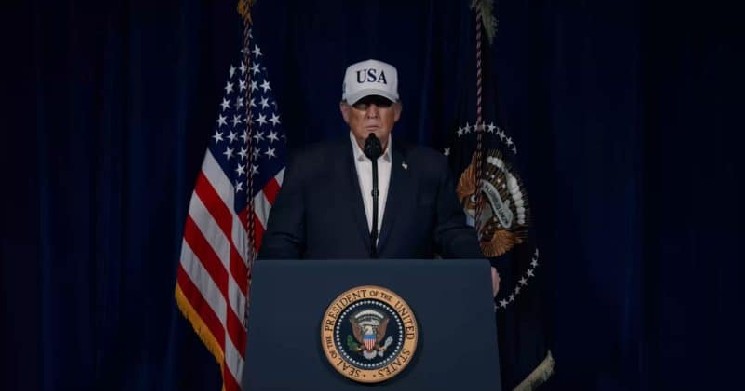
In a significant video address delivered on Saturday, President Donald Trump announced that United States military forces have launched what he describes as extensive combat operations against Iran. Speaking directly to the nation, the President characterized these actions as essential defensive measures designed to eliminate what his administration considers imminent threats to American security. Trump’s announcement marked a dramatic escalation in tensions between Washington and Tehran, framing the military campaign as a necessary response to decades of Iranian activities that he believes have undermined regional stability and threatened core American interests. The President’s tone was firm and uncompromising as he outlined the scope and objectives of what appears to be one of the most significant military operations in the Middle East in recent years.
The announcement itself represents a pivotal moment in U.S.-Iran relations, which have been marked by cycles of tension and conflict for more than four decades. Trump made clear that this operation was not a limited strike but rather what he termed a “massive and ongoing operation” intended to fundamentally alter Iran’s military capabilities. In his words, the mission is designed to prevent what he called “this very wicked, radical dictatorship” from continuing to pose threats to America and allied nations. The President’s language was particularly forceful when describing the intended outcomes, stating plainly that American forces would “destroy their missiles and raise their missile industry to the ground” while promising to “annihilate their navy.” This rhetoric signals an administration committed to a comprehensive degradation of Iranian military power rather than surgical or symbolic strikes.
The Strategic Targets and Military Objectives
According to Trump’s statement, the current military operation encompasses multiple categories of targets across Iran’s military infrastructure. The primary focus appears to be on Iran’s missile production capabilities, which have long been a source of concern for American defense planners and regional allies alike. These facilities represent years of Iranian investment in developing both conventional ballistic missiles and the technology that could potentially be adapted for nuclear weapons delivery. By targeting the missile production sites, the administration aims to set back Iran’s ability to threaten neighboring countries and U.S. forces stationed throughout the Middle East.
Beyond the missile facilities, Trump indicated that Iranian naval assets are also being targeted for destruction. Iran’s navy, particularly its Revolutionary Guard naval forces, has been involved in numerous incidents in the Persian Gulf and surrounding waters, including harassment of commercial shipping and confrontations with U.S. naval vessels. The Iranian navy has also developed asymmetric warfare capabilities, including small fast-attack boats and mines, which could potentially threaten the vital Strait of Hormuz through which a significant portion of the world’s oil supply passes. Additionally, the President mentioned networks supporting armed groups across the Middle East—a reference to Iran’s extensive system of proxy forces and allied militias in countries including Iraq, Syria, Lebanon, and Yemen. These groups have been a key component of Iran’s regional strategy, allowing Tehran to project power and influence while maintaining a degree of plausible deniability.
The operation also appears to be connected to preventing Iran from developing nuclear weapons, a concern that has driven much of American policy toward Iran for the past two decades. Trump specifically referenced the regime’s “refusal to abandon enrichment efforts,” highlighting the administration’s view that diplomatic approaches have proven insufficient. This nuclear dimension adds particular significance to the military campaign, as it suggests an attempt to achieve through force what negotiations have failed to accomplish—ensuring that Iran cannot develop atomic weapons that could fundamentally alter the regional balance of power.
The Historical Context and Failed Diplomacy
To understand the current situation, it’s important to look at the events of the past year that led to this point. In June 2025, the United States conducted an operation called “Midnight Hammer,” which involved American B-2 stealth bombers and submarine-launched missiles striking three major uranium enrichment facilities in Iran—Fordow, Natanz, and Isfahan. These facilities had been central to Iran’s nuclear program, with some buried deep underground to protect them from conventional attack. The use of B-2 bombers, capable of carrying massive bunker-busting munitions, indicated the seriousness of the American commitment to destroying these hardened targets.
Following those strikes, the Trump administration apparently attempted to pursue diplomatic solutions, engaging in indirect discussions with Iranian representatives in neutral locations including Oman and Switzerland earlier this year. These indirect talks—necessary because the United States and Iran do not maintain formal diplomatic relations—were presumably intended to establish some framework for preventing further military conflict while addressing American concerns about Iran’s nuclear ambitions and regional activities. However, according to the President’s announcement, these diplomatic efforts “failed to produce an agreement.” The breakdown of these talks appears to have been a critical factor in the decision to proceed with the current, more extensive military operation.
The failure of diplomacy represents a significant moment, as it suggests that both sides were unable or unwilling to find common ground despite the escalation that had already occurred with the Midnight Hammer strikes. For the Trump administration, this diplomatic impasse appears to have reinforced the view that only continued military pressure could achieve American objectives. The progression from the June strikes to renewed diplomacy and then to this larger campaign illustrates a deliberate decision-making process rather than an impulsive reaction.
Military Preparations and Direct Appeals
The Pentagon had clearly been preparing for a significant operation for some time. According to tracking of military deployments through late February, the United States positioned two aircraft carrier strike groups and more than a dozen warships in the region. This substantial naval presence not only provides the platforms for conducting strikes—carriers can launch dozens of fighter-bombers while destroyers and submarines can fire cruise missiles—but also sends a powerful signal of American commitment. The concentration of such significant military assets in the region would have been noticed by Iranian military planners and likely informed their own defensive preparations.
In a particularly striking element of his address, President Trump spoke directly to Iranian security forces, essentially attempting to undermine the regime’s military cohesion. He offered immunity to Iranian military personnel who choose to surrender rather than fight, while simultaneously warning of “fatal consequences for resistance.” This appeal to enemy forces to abandon their posts is an unusual element in presidential war announcements, reflecting perhaps an assessment that Iranian military morale might be fragile or that significant portions of Iran’s armed forces might be unwilling to fight for the current government. Whether such appeals have any practical effect remains to be seen, but they represent an attempt to achieve military objectives with minimal American casualties by encouraging the collapse of enemy resistance.
Even more remarkably, Trump addressed Iranian civilians directly, urging them to “remain indoors” during the military operations while suggesting that they could “assume control of their government” once the fighting concludes. “When we are finished, take over your government, it will be yours to take. This will be probably your only chance for generations,” the President stated. This extraordinary statement appears to be an explicit call for regime change, suggesting that the American objective extends beyond merely degrading Iranian military capabilities to actually facilitating the overthrow of the Islamic Republic. Such rhetoric dramatically escalates the stakes of the conflict and signals that the administration’s goals are transformational rather than limited.
Regional Developments and Global Reactions
The President’s announcement came in the context of other significant military developments in the region. Reports emerged that Israel had conducted its own strike on Iran, with explosions reported in Tehran and emergency alerts being triggered across the Iranian capital. While Trump’s statement did not explicitly mention Israeli actions, the apparent coordination or coincidence of American and Israeli operations suggests a degree of strategic alignment between the two nations. Israel has long identified Iran’s nuclear program and regional influence as existential threats and has conducted its own campaign of strikes and covert operations against Iranian interests for years.
The immediate global reaction to these dramatic developments was swift and visible in financial markets. The news caused significant volatility, with Bitcoin—often seen as a barometer of geopolitical risk and investor anxiety—dropping approximately 4% from roughly $65,500 to $63,000 in a short period. This market movement reflects broader investor concerns about the potential economic consequences of a major military conflict in the Middle East. The region’s importance to global energy supplies means that significant conflict there can affect oil prices, shipping routes, and broader economic confidence. Traditional safe-haven assets likely saw movements as well, as investors repositioned their portfolios in response to suddenly elevated geopolitical risk. The coming days will reveal whether this represents the beginning of a sustained period of market disruption or a temporary shock that markets quickly absorb and move past.