



Artemis II Crew Honors Commander’s Late Wife with Lunar Crater Naming
A Touching Tribute Among the Stars
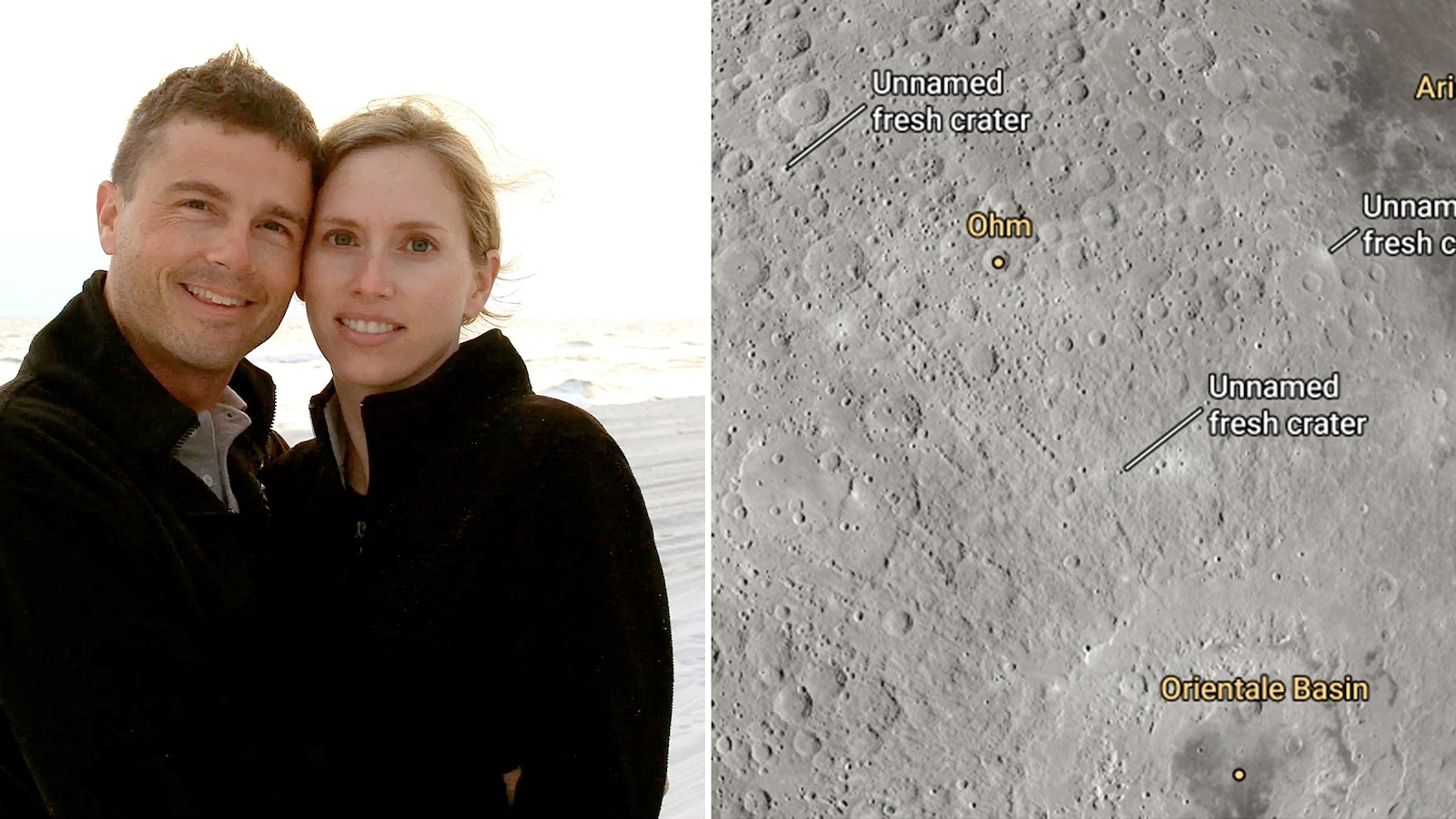
In a deeply moving gesture that reminds us that even among the vastness of space, humanity’s most profound connections remain, the Artemis II crew has chosen to honor the memory of their commander’s late wife in an extraordinary way. On Monday, the four astronauts aboard the historic lunar mission proposed naming a newly observed crater on the moon after Carroll Taylor Wiseman, the beloved wife of mission commander Reid Wiseman, who passed away in 2020. This heartfelt moment, captured and shared by NASA through an Instagram reel, showed the tight-knit crew making the emotional announcement before gathering around their commander in a supportive embrace. The gesture speaks volumes about the bonds formed between astronauts and the extended family they create within the space program—a family that shares not just triumphs but also griefs, carrying the memories of loved ones to places humans have rarely ventured.
The announcement came during a routine observation of the lunar surface when the crew identified two small, previously unnamed craters on the heavily cratered moonscape. After communicating with mission control on Earth, they made their heartfelt proposal to designate one of these craters “Carroll” in honor of Commander Wiseman’s late wife. Mission specialist Jeremy Hansen, a Canadian astronaut, served as the spokesperson for the group during this tender moment. His words captured the essence of the astronaut community’s closeness: “A number of years ago, we started this journey, and our close-knit astronaut family lost a loved one. Her name was Carroll, the spouse of Reid, the mother of Katey and Ellie.” Hansen then referred to the newly observed crater, noting its position as “a bright spot on the moon,” making the symbolic connection all the more poignant as he expressed the crew’s desire to name it after Carroll.
An Emotional Moment in Space
The video footage shared by NASA reveals the raw emotion of the moment. Commander Reid Wiseman can be seen wiping away tears as Hansen speaks on behalf of the crew, his grief and gratitude visible even through the confines of a spacesuit and the limitations of space travel video. The crater they chose sits on the boundary between the near side and far side of the moon—a fitting location that symbolizes Carroll’s connection to both the visible world we know and the mysteries that lie beyond. Following Hansen’s announcement, the four crew members—Wiseman, Hansen, pilot Victor Glover, and mission specialist Christina Koch—came together in a group embrace, a powerful image of solidarity and support that transcended the technical nature of their mission. This moment reminded viewers on Earth that astronauts, despite their extraordinary circumstances and groundbreaking achievements, remain fundamentally human, carrying with them the loves, losses, and memories that define us all.
Remembering Carroll Taylor Wiseman
Carroll Taylor Wiseman dedicated her life to caring for others, a calling that defined her professional career and personal character. According to her obituary, she worked as a pediatric nurse practitioner and school nurse, touching countless young lives through her compassionate care. Reid Wiseman’s official NASA biography remembers her as someone who “dedicated her life to helping others as a newborn intensive care unit Registered Nurse,” working with the most vulnerable patients during their earliest and most critical days of life. This commitment to service and caring for others resonates strongly with the exploratory and humanitarian missions that NASA represents, making the connection between her life’s work and this celestial tribute all the more meaningful.
The Wisemans built a family together, raising two daughters, Ellie and Katherine, who now carry forward their mother’s memory alongside their father’s historic achievements. In his NASA biography, Reid Wiseman has spoken candidly about the challenges and rewards of single parenthood following Carroll’s death. He described being a single parent as one of the “greatest” challenges of his life while simultaneously calling it “the most rewarding phase of his life.” This honest acknowledgment of both the difficulties and joys of raising his daughters alone has endeared him to many who face similar circumstances, showing that even those who reach for the stars must navigate the very human challenges of loss and parenting. Just before the Artemis II mission, Wiseman shared a selfie with Ellie and Katherine on Instagram, writing in the caption, “I love these two ladies, and I’m boarding that rocket a very proud father.” The post captured a father’s pride and love, grounding the extraordinary nature of his mission in the most ordinary and precious of human relationships—that between a parent and their children.
The Tradition of Lunar Naming
The naming of lunar features carries with it a rich history and established protocols that blend scientific tradition with human storytelling. According to NASA, lunar craters are typically named after engineers, explorers, or scientists who have been deceased for at least three years or more. However, the tradition also allows for a more personal touch: some names are chosen by astronauts during the course of lunar exploration, allowing those who directly experience and observe these distant landscapes to participate in the permanent record of human discovery. This tradition dates back to the Apollo missions and continues with Artemis, maintaining a connection between the technical and the personal, between mapping celestial bodies and honoring human achievement and memory.
Following the completion of the Artemis II mission, the crew’s proposed names, including “Carroll” for the crater honoring Carroll Taylor Wiseman, will be submitted to the International Astronomical Union (IAU), the internationally recognized authority responsible for governing the naming of celestial bodies and their surface features. The IAU’s approval process ensures consistency and appropriateness in astronomical nomenclature while respecting the suggestions of those who have ventured into space. If approved, the name Carroll will join thousands of other crater names on the lunar surface, each telling a story of human achievement, exploration, or, as in this case, love and remembrance. The crater will become a permanent memorial, visible from Earth with proper equipment, a bright spot on the moon that future generations can observe and remember—not just as a geographical feature, but as a testament to a life lived in service to others.
A Historic Mission with Heart
The emotional crater naming took place on the seventh day of what will be a ten-day historic mission that has already broken records and captured global imagination. The Artemis II crew completed their lunar fly-by on Monday, achieving a remarkable milestone by traveling farther from Earth than any other humans in history. This achievement surpasses even the Apollo-era records, pushing the boundaries of human exploration while paving the way for future missions that will eventually return humans to the lunar surface. The four astronauts—representing not just American space exploration but international cooperation through Hansen’s Canadian participation—are scheduled to return to Earth on Friday, bringing with them not just scientific data and engineering validation, but also this deeply human story of love, loss, and remembrance.
The Artemis program represents NASA’s ambitious return to lunar exploration, with Artemis II serving as a crucial crewed test flight around the moon before Artemis III attempts the first lunar landing since 1972. But beyond the technical objectives and scientific goals, moments like the Carroll crater naming remind us why space exploration matters on a human level. The gesture demonstrates that exploration isn’t just about charts, data, and achievements—it’s about carrying forward the memory of those who supported and inspired us, about honoring the sacrifices made by families who share their loved ones with dangerous and demanding missions, and about creating meaning in the vast emptiness of space. As Commander Wiseman and his crew circle the moon, they carry with them not just the hopes of humanity’s future in space, but also the memories of those who helped make that future possible. Carroll Taylor Wiseman’s name, proposed to grace a crater on the lunar surface, will serve as a permanent reminder that behind every great achievement stands a community of support, love, and shared human experience that makes the impossible possible.