



The Rise of Crypto-Backed Mortgages: A New Path to Homeownership
Housing Affordability Pressures Drive Crypto Mortgage Innovation
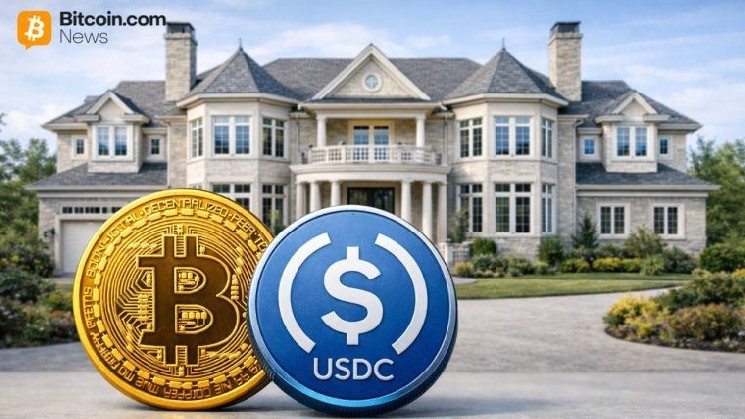
The dream of homeownership has become increasingly out of reach for millions of Americans, pushing financial innovators to explore new solutions that challenge traditional lending models. In a groundbreaking development, Coinbase has partnered with Better Home & Finance Holding Company to introduce crypto-backed mortgages supported by Fannie Mae, allowing prospective homebuyers to use their bitcoin or USDC holdings instead of traditional cash for down payments. This innovative approach represents a significant shift in how lenders evaluate wealth and determine borrower eligibility, potentially opening doors for a new generation of homebuyers who have built their wealth through digital assets rather than conventional savings accounts.
The housing affordability crisis has reached alarming levels across the United States. According to the NAHB/Wells Fargo Cost of Housing Index released in March 2026, the typical American family earning the national median income of $104,200 needed to allocate 34% of their income just to cover the total mortgage payment on a median-priced new home during the fourth quarter of 2025. The situation becomes even more dire for lower-income households earning 50% of the median income, where housing costs consumed a staggering 67% of their earnings—a level that the Department of Housing and Urban Development classifies as a severe cost burden. These sobering statistics illustrate why innovative financing solutions are desperately needed to help Americans access homeownership, which has long been considered a cornerstone of financial stability and wealth building.
Crypto Assets Challenge Traditional Mortgage Barriers
For decades, the mortgage lending industry has operated under a relatively rigid framework that prioritizes traditional markers of financial stability: steady employment history, strong credit scores, and substantial liquid savings sitting in conventional bank accounts. This model, while time-tested, has increasingly left behind individuals who have built their wealth through alternative means, particularly those who invested early in cryptocurrencies and digital assets. The traditional system simply wasn’t designed to recognize or accommodate the unique financial profiles of crypto holders, many of whom possess significant wealth but may not fit the conventional borrower template that banks and mortgage lenders have relied upon for generations.
Coinbase’s new mortgage offering fundamentally challenges these barriers by recognizing cryptocurrency as legitimate collateral. As the company explained, “Prospective homeowners will soon be able to use bitcoin or $USDC in their Coinbase accounts to fund their cash down payments.” This isn’t just a minor tweak to existing systems—it’s a complete reimagining of what constitutes acceptable wealth for homeownership purposes. The structure is carefully designed with specific collateral requirements that account for the different risk profiles of various digital assets. For bitcoin-backed loans, borrowers need to pledge at least 250% of the fiat down payment value due to bitcoin’s well-known price volatility. This means that to secure a $100,000 down payment loan, a borrower would need to commit $250,000 worth of bitcoin as collateral. Meanwhile, USDC-backed loans require 125% collateral, reflecting the stablecoin’s peg to the US dollar, meaning $125,000 in USDC could unlock that same $100,000 down payment.
These collateral ratios aren’t arbitrary—they’re carefully calculated to protect both lenders and borrowers from the unique risks associated with cryptocurrency volatility. By requiring substantial overcollateralization, especially for volatile assets like bitcoin, lenders create a buffer that can absorb price fluctuations without immediately triggering liquidation events. This structure acknowledges the reality of crypto markets while still making homeownership accessible to those who hold these digital assets. It’s a balanced approach that brings innovation to mortgage lending while maintaining the prudent risk management practices that keep the housing finance system stable.
Converting Digital Holdings into Real-World Homeownership
One of the most significant pain points for cryptocurrency holders has been the difficult choice between maintaining their digital asset positions and accessing the capital needed for major life purchases like homes. Selling crypto to generate a traditional down payment forces investors to crystallize their positions, potentially missing out on future price appreciation that could dwarf the value of the home itself. Beyond the opportunity cost, liquidating crypto holdings triggers immediate tax liabilities, as cryptocurrency sales are taxed as capital gains in the United States. For someone who purchased bitcoin years ago at much lower prices, selling to fund a down payment could result in a substantial tax bill that significantly reduces the actual capital available for homeownership.
Crypto-backed mortgage structures elegantly sidestep these painful tradeoffs by allowing borrowers to use their digital assets as collateral rather than liquidating them. This means a bitcoin holder who believes in the long-term appreciation potential of their investment doesn’t have to choose between homeownership and maintaining their cryptocurrency position. Instead, they can leverage their crypto wealth to secure financing while retaining exposure to potential future gains. If bitcoin continues to appreciate, the borrower benefits from both homeownership and the increasing value of their collateral. This dual benefit is something traditional mortgage structures simply cannot offer, representing a genuine innovation in how assets can be deployed to support life goals without forcing wholesale portfolio liquidation.
The psychological and financial benefits of this approach extend beyond simple asset preservation. For many crypto investors, their digital holdings represent their primary store of wealth—perhaps accumulated through early adoption, savvy trading, or simply believing in blockchain technology when others were skeptical. Forcing these individuals to liquidate their positions to participate in the traditional housing market essentially penalizes them for choosing an alternative wealth accumulation strategy. Crypto-backed mortgages validate these choices, acknowledging that wealth built through digital assets is just as legitimate as wealth accumulated through traditional means. This validation matters not just symbolically but practically, as it allows a new demographic of potential homebuyers to enter the market without abandoning the investment thesis that built their wealth in the first place.
Government Backing Brings Legitimacy and Stability
Perhaps the most remarkable aspect of this crypto mortgage innovation is its integration with established, government-supported housing finance infrastructure. Coinbase emphasized this point, stating: “This is a major step forward for crypto’s real-world utility, with this new offering providing the unique benefit of added stability and government backing.” The involvement of Fannie Mae, a government-sponsored enterprise that plays a crucial role in the American mortgage market, represents a significant endorsement of cryptocurrency as legitimate collateral within the regulated financial system. This isn’t a fringe product operating in regulatory gray areas—it’s a mortgage product that fits within the existing framework that has supported American homeownership for decades.
The government backing provided through Fannie Mae’s involvement offers several critical advantages. First, it provides borrowers with confidence that they’re participating in a legitimate, regulated financial product rather than an experimental venture that might face regulatory challenges down the road. Second, it potentially offers lenders access to the secondary mortgage market, where loans can be packaged and sold, thereby freeing up capital to make additional loans. This liquidity is essential for scaling any mortgage product beyond a niche offering to something that can meaningfully impact housing affordability. Third, Fannie Mae’s involvement suggests that regulators are increasingly comfortable with cryptocurrency’s role in mainstream finance, which could pave the way for additional innovations that bridge traditional and digital finance.
Coinbase noted that this development represents “a first-of-its-kind mortgage product, offered by Better and powered by Coinbase, expands access to homeownership.” The significance of being “first-of-its-kind” cannot be overstated. Every major financial innovation faces skepticism initially, from credit cards to online banking to mobile payment systems. By successfully launching a crypto-backed mortgage with government support, Coinbase and Better are establishing proof of concept that could inspire similar products from other financial institutions. As more lenders observe the performance of these initial crypto-backed mortgages and see that they can be underwritten prudently and perform reliably, the model may spread throughout the industry, normalizing cryptocurrency as acceptable collateral for various types of lending.
Understanding the Risks and Considerations
While crypto-backed mortgages offer exciting possibilities, they also introduce unique risks that both borrowers and the broader financial system must carefully consider. The most obvious risk stems from cryptocurrency’s notorious price volatility. Unlike a traditional mortgage where the down payment is made in stable dollars, a crypto-backed mortgage ties the borrower’s position to the unpredictable movements of digital asset markets. If the value of the collateral drops significantly—as bitcoin and other cryptocurrencies have done periodically throughout their history—borrowers could face margin calls requiring them to pledge additional collateral or risk having their crypto holdings liquidated to maintain the required collateral ratios.
This volatility risk is particularly acute for bitcoin-backed loans, which is precisely why lenders require 250% collateralization. Even with this substantial buffer, a severe market downturn could push collateral values below the required thresholds. Borrowers need to enter these arrangements with clear understanding of worst-case scenarios and have plans for maintaining their collateral requirements during market stress. This might mean keeping additional crypto reserves that can be pledged if needed, or being prepared to convert other assets to cryptocurrency to meet margin requirements. These considerations add complexity beyond traditional mortgages, where once the down payment is made, its value is locked in and doesn’t fluctuate with market conditions.
Regulatory uncertainty presents another significant consideration. While Fannie Mae’s involvement provides substantial legitimacy, the regulatory landscape surrounding cryptocurrency continues to evolve rapidly. Changes in how digital assets are classified, taxed, or regulated could impact the viability and attractiveness of crypto-backed mortgage products. Additionally, tax implications remain complex—while using crypto as collateral avoids the immediate capital gains taxes triggered by liquidation, borrowers still need to understand how their arrangement might be treated by tax authorities and plan accordingly. These regulatory and tax considerations underscore the importance of working with financial and legal advisors who understand both traditional mortgage products and cryptocurrency when considering these innovative lending options.
The Future of Homeownership and Digital Finance
The introduction of crypto-backed mortgages represents more than just a novel financial product—it signals a fundamental shift in how financial institutions evaluate wealth and creditworthiness. Traditional credit evaluation has long relied on relatively narrow metrics: income stability, credit history, and liquid assets held in conventional financial accounts. This model made sense in an era when these factors genuinely captured most individuals’ financial situations. However, as wealth accumulation diversifies across digital assets, cryptocurrency holdings, equity compensation, and alternative investments, the traditional model increasingly fails to capture the full financial picture of many prospective borrowers, particularly younger generations who have built wealth through non-traditional means.
By accepting cryptocurrency as collateral, lenders are acknowledging that wealth exists in many forms beyond traditional bank deposits and investment accounts. This recognition could cascade into broader changes in how financial services evaluate eligibility across various products, from personal loans to business financing. We may be witnessing the early stages of a transition toward more holistic wealth assessment that considers the total value of an individual’s portfolio, regardless of whether assets are held as stocks, bonds, real estate, or digital currencies. This evolution could democratize access to financial services, allowing individuals who have built wealth through alternative pathways to access the same opportunities as those who followed conventional financial trajectories.
The success of crypto-backed mortgages could also accelerate cryptocurrency’s integration into everyday financial life. As Coinbase aims to “extend crypto utility into real-world finance and capture new lending revenue streams,” other financial institutions will likely follow if the model proves successful. We might see cryptocurrency accepted as collateral for auto loans, used for rental deposits, or integrated into retirement planning in ways that are currently difficult to imagine. Each successful use case for cryptocurrency in mainstream finance validates the technology and builds institutional knowledge about how to manage digital assets within traditional financial frameworks. Over time, the distinction between “crypto finance” and “traditional finance” may blur as digital assets become simply another asset class that sophisticated financial systems can accommodate seamlessly.
For prospective homebuyers, especially those who have accumulated wealth through cryptocurrency investments, these developments offer genuine hope in an affordability landscape that has seemed increasingly impossible to navigate. The ability to leverage digital assets for down payments without liquidating positions may expand the buyer pool significantly, potentially influencing housing demand patterns in ways that could reshape real estate markets. As more buyers enter the market using cryptocurrency wealth, we may see adjustments in how sellers, real estate agents, and other market participants think about buyer qualification and transaction structures. The long-term implications are difficult to predict fully, but clearly, we are witnessing an important evolution in how Americans access homeownership—one that recognizes the changing nature of wealth in the digital age and adapts financial infrastructure accordingly. For the first time, holding bitcoin or other cryptocurrencies isn’t just about speculative investment or belief in blockchain technology—it’s a practical pathway to achieving the traditional American dream of homeownership.