

A Tense Exchange: House Leader Defends Federal Immigration Enforcement Amid Minneapolis Crisis
The Personal Perspective of a Shooting Survivor
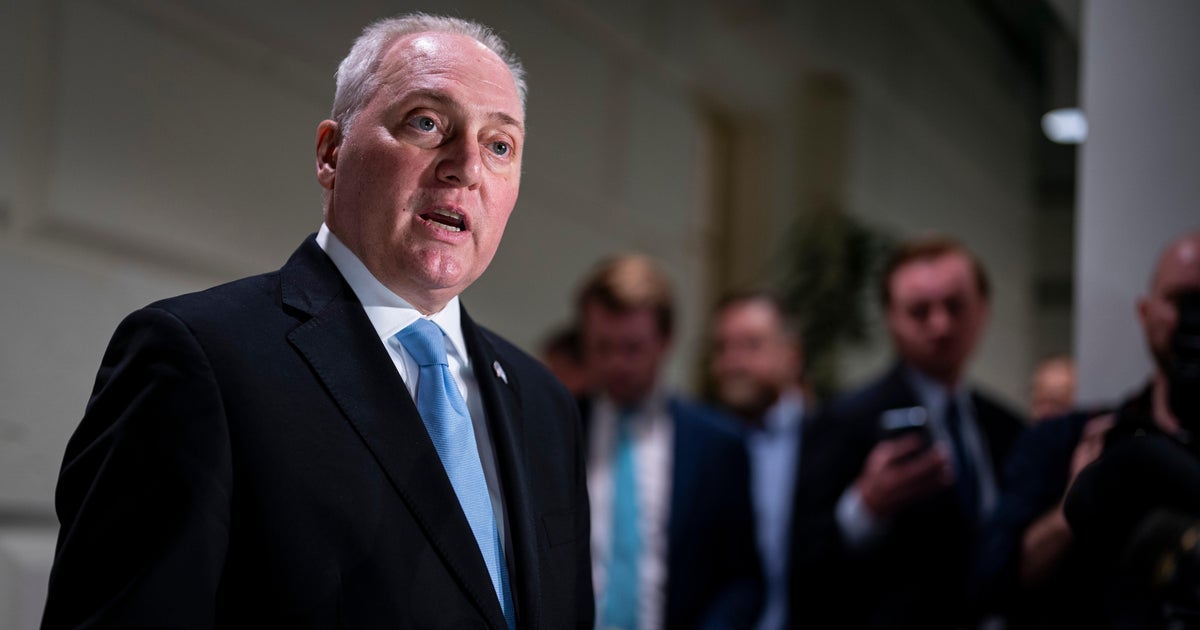
House Majority Leader Steve Scalise sat down with CBS’s Margaret Brennan for what became a heated discussion about federal immigration enforcement, coming at a particularly sensitive moment following a controversial shooting in Minneapolis. Scalise, who himself survived a politically motivated shooting attack years ago, brought a unique perspective to questions about political violence and public safety. Brennan opened by acknowledging his personal experience with violence, asking if he would join fellow Louisiana Senator Bill Cassidy in calling for a joint investigation into the Minneapolis incident. Instead of directly answering, Scalise pivoted to defending Immigration and Customs Enforcement (ICE), placing blame squarely on what he called “failed local leadership” in Minneapolis. He drew attention to the city’s history of civil unrest and suggested that Minneapolis faces unique challenges not seen in other cities where ICE operates. This framing set the tone for an interview where both participants struggled to find common ground on how federal immigration enforcement should be conducted.
Defunding Police or Federal Overreach? The Numbers Tell a Complex Story
The conversation quickly turned to the specifics of what’s happening on the ground in Minneapolis. Brennan pointed out that the federal presence there—nearly 3,000 agents—far exceeds what’s deployed in other cities, including New Orleans. Scalise countered by bringing up Minneapolis’s decision to “defund the police,” arguing this left local law enforcement stretched thin and unable to support ICE operations. However, Brennan challenged this narrative with hard data from Minnesota’s crime database: shooting victims down 76%, homicides down 67%, burglary down 39%, and various other crimes also declining. This exchange highlighted a fundamental disagreement about the situation’s reality. Scalise attributed falling crime rates to ICE’s aggressive enforcement, claiming the arrest of thousands of violent criminals made communities safer. Brennan suggested the local police chief was actually struggling to manage the situation created by the massive federal presence. The back-and-forth revealed how the same set of circumstances can be interpreted entirely differently depending on one’s political perspective and priorities.
Public Opinion Shifts Against Enforcement Methods
Perhaps the most striking moment came when Brennan introduced recent polling data showing that public sentiment may be turning against the administration’s approach. More than half of Americans, according to CBS polling, now say ICE is making communities less safe, and nearly two-thirds dislike the President’s deportation program implementation. This put Scalise in the position of defending policies that appear to be losing popular support, despite immigration enforcement being a winning campaign issue. His response was to reframe the question: he suggested that if you asked Americans whether they want violent criminals who are here illegally in their communities, they would overwhelmingly say no. This rhetorical strategy—shifting from “how” enforcement is conducted to “whether” it should happen at all—appeared throughout the interview. Scalise emphasized that ICE has arrested 416,000 people with criminal records, repeatedly returning to this number as justification for the program. Yet Brennan persisted in asking about the methods, the specific cases of individuals without violent records, and children caught up in enforcement actions. The tension reflected a broader national conversation about whether the ends justify the means.
Constitutional Questions About Rights and Federal Power
The interview touched on several constitutional concerns that have emerged from the current enforcement approach. When discussing protests, Scalise supported Louisiana’s concealed carry laws but noted that carrying weapons while committing another crime—like interfering with law enforcement—is illegal. Brennan raised DHS Secretary Noem’s comment questioning whether peaceful protesters show up with guns, probing whether Americans retain their Second Amendment rights while protesting. This led to discussion of unlawful assemblies and projectiles being thrown at ICE agents, with Scalise calling for leaders to “tone down” rhetoric. Yet perhaps more concerning to civil libertarians was Brennan’s question about ICE entering homes without judicial warrants and Attorney General Bondi’s letter demanding access to food assistance programs and voter registration logs from Minnesota. Scalise hadn’t read the letter but defended investigating potential fraud in state programs. When pressed about voter registration logs specifically, he pivoted to supporting the SAVE Act and national voter ID standards, despite Brennan’s reminder that non-citizens cannot legally vote. These exchanges raised questions about federal overreach and state sovereignty that transcend the immigration debate itself.
Examining Individual Cases Versus Aggregate Statistics
One of the interview’s most contentious threads involved specific cases versus overall statistics. Brennan brought up several troubling incidents: ICE shooting unarmed Renee Good and labeling her a domestic terrorist, an FBI agent resigning after being ordered not to investigate, and five-year-old Liam Ramos being detained by masked men. Scalise’s response to each was to return to the bigger picture—416,000 criminals arrested, the lowest murder rate since 1900, and the “worst of the worst” website showing dangerous individuals removed from communities. When Brennan noted that 47% of ICE detainees have criminal charges or convictions (meaning 53% don’t), and that Liam’s father had no violent criminal record, Scalise maintained the father was here illegally and “abandoned his child,” though the family disputes this account. The family also contests the administration’s retroactive challenge to their asylum application filed through what Scalise called Joe Biden’s system. This exchange illustrated a fundamental disagreement about how to evaluate enforcement: Should we judge it by the worst criminals caught, or by how the innocent are treated? Scalise clearly believes the former standard is appropriate; Brennan kept returning to the latter. Neither convinced the other, but their debate reflected questions millions of Americans are asking.
Local Leadership, Federal Responsibility, and Where Accountability Lies
As the interview concluded, both participants seemed frustrated. Scalise repeatedly emphasized that Minneapolis has “failed leadership” that created conditions for chaos, pointing to past instances of civil unrest and defunding decisions. He suggested local officials, including Governor Walz (who he noted called federal agents “Gestapo”), were encouraging people to break the law by interfering with law enforcement. Brennan countered that American citizens are legitimately concerned about other American citizens being shot by taxpayer-funded federal agents, which is why she was asking hard questions. Scalise’s final position was that “we don’t have that chaos in other cities” and that Minneapolis’s problems stem from its own leadership failures. The interview ended without resolution, much like the national debate it reflected. What emerged clearly was that this issue involves competing values that are difficult to reconcile: border security versus civil liberties, federal law enforcement versus local autonomy, aggregate crime statistics versus individual cases of potential injustice, and political campaign promises versus the messy reality of implementation. Scalise’s perspective—that enforcing immigration law is simply what the president was elected to do—clashed with Brennan’s concerns about methods, oversight, and constitutional principles. This conversation, uncomfortable as it was, represented the kind of dialogue Americans need to have about what kind of country we want to be and what we’re willing to accept in pursuit of security.