


Iran Defies U.S.-Israeli Strikes with Massive Public Rally
Leadership Shows Strength Amid Ongoing Bombardment
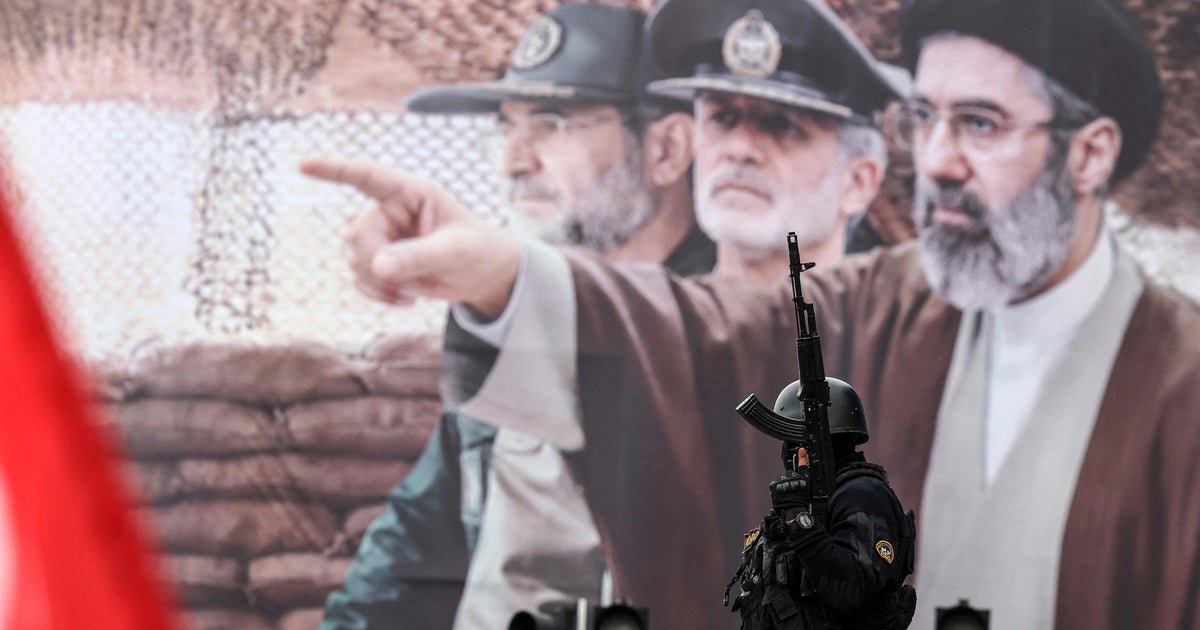
In a powerful display of resilience and defiance, Iran’s top government officials joined thousands of citizens marching through the streets of Tehran on Friday, even as U.S. and Israeli airstrikes continued to rain down on the Iranian capital. The massive public gathering took place against the backdrop of explosions and rising plumes of smoke visible from the rally, captured in dramatic videos shared across social media. President Masoud Pezeshkian and Foreign Minister Abbas Araghchi were among the senior leadership figures who deliberately positioned themselves in the open, walking shoulder-to-shoulder with ordinary Iranians waving flags and chanting slogans. The timing of this public show of unity was particularly significant, as it coincided with “Quds Day,” an annual demonstration of solidarity with Palestinians held on the final Friday of Ramadan. However, the prominent presence of Iran’s top officials transformed what is typically a symbolic religious observance into an unmistakable political message directed at Washington and Tel Aviv: despite weeks of sustained military strikes, the Islamic Republic remains standing, its leadership intact, and its people united.
The Symbolism of Quds Day Takes on New Meaning
Quds Day, which translates to “Jerusalem Day,” has been observed in Iran since 1979 as a day dedicated to expressing support for Palestinian causes and opposing Israeli control of Jerusalem. Established by Ayatollah Ruhollah Khomeini, the founder of the Islamic Republic, it traditionally features rallies and demonstrations across Iranian cities where participants voice their solidarity with Palestinians and criticize Israeli policies. This year’s observance, however, carried far greater weight than in previous years. With Iran under active military assault from both the United States and Israel, the decision by millions of Iranians to pour into the streets represented more than religious observance or political theater—it became a testament to the regime’s continued grip on power and the population’s willingness to stand with their government during a time of national crisis. The crowds that gathered weren’t just marking a religious holiday; they were sending a defiant message to the world that Iran would not be intimidated or broken by external pressure, regardless of how intense the military campaign against them became.
Foreign Minister’s Defiant Message from the Streets
Foreign Minister Abbas Araghchi, speaking directly to cameras while surrounded by cheering supporters and waving Iranian flags, delivered a passionate address that captured the mood of defiance permeating the demonstration. “Today is Quds Day in Iran, and despite the brutal attacks carried out today by the Zionist regime and the United States, we are witnessing a massive turnout—millions of people—not just in Tehran, but across all cities,” Araghchi proclaimed, his voice rising above the crowd noise. His appearance in such an exposed, public setting was particularly noteworthy given the active military strikes occurring in the vicinity. By choosing to address the nation from the streets rather than from the safety of a fortified government building, Iran’s top diplomat was making a calculated statement about the government’s confidence and determination. He continued, emphasizing that the large turnout “demonstrates the firm resolve of the Iranian people in support of the Islamic Republic, the cause of Jerusalem, Palestine, and all the principles we have upheld over the years.” Araghchi’s words were carefully chosen to link Iran’s current predicament with its long-standing ideological commitments, framing the conflict not as an isolated military confrontation but as part of Iran’s decades-long resistance to what it characterizes as Western and Israeli imperialism in the Middle East.
Questions Surround New Supreme Leader’s Absence
While several high-ranking officials made prominent public appearances during the Quds Day rally, one notable absence fueled speculation and concern: the new Supreme Leader, Ayatollah Mojtaba Khamenei, was not seen participating in or observing the demonstration. Mojtaba Khamenei assumed the position of Supreme Leader following the death of his father, Ayatollah Ali Khamenei, who was killed in a U.S. or Israeli strike on February 28. Since that devastating attack, persistent rumors have circulated within Iran and among international observers that the younger Khamenei may have been seriously injured in the same strike that killed his father. Some reports, though unverified, have suggested he might be in a coma or otherwise incapacitated. However, Iran analysts and experts familiar with the Islamic Republic’s protocols caution against reading too much into the Supreme Leader’s absence from Friday’s street rally. Based on historical precedent and the traditional conduct of Iran’s highest religious and political authority, it would actually be highly unusual for a Supreme Leader to participate in open street demonstrations, which carry inherent security risks and are generally considered beneath the dignity of the position. Supreme Leaders typically make their public appearances in more controlled environments—delivering sermons at Friday prayers, meeting with selected officials and delegations, or broadcasting addresses from secure locations. Nevertheless, the lack of any public appearance by Mojtaba Khamenei since assuming power has done little to quiet speculation about his condition and ability to lead during this critical period.
Strikes Continue as Officials Lead Prayers
The surreal nature of Friday’s events was perhaps best captured in footage showing Gholam Hossein Mohseni-Ejei, the head of Iran’s powerful Judiciary branch, leading prayers and speaking with journalists while explosions from nearby strikes could be heard in the background. In one particularly striking moment, Mohseni-Ejei was mid-sentence, telling a reporter that Iran’s leaders “want to stand with the people, beside the people, until the last breath and the last moment,” when a loud boom interrupted his statement. The senior official and those surrounding him momentarily turned their heads toward the sound of the explosion, a brief acknowledgment of the very real danger they faced by being out in the open. After a pause of just a few seconds, Mohseni-Ejei composed himself and continued his statement with remarkable composure: “The people are not intimidated by these enemy attacks. They take precautions, but under this rain and under these missile bombardments, they will in no way retreat from resistance.” This extraordinary moment—a top government official calmly finishing his interview as military strikes hit nearby—became symbolic of the broader message Iran’s leadership was attempting to convey. They were demonstrating that normal civic and religious life would continue regardless of the military pressure being applied, that the apparatus of government remained functional, and that both officials and citizens were prepared to accept significant risks rather than bow to foreign demands.
A Nearly Half-Century Regime Proves Its Resilience
The massive turnout for Quds Day and the prominent participation of senior officials served as a powerful reminder that Iran’s theocratic government, now approaching its 50th anniversary, has proven remarkably resilient in the face of numerous external threats throughout its existence. Since the 1979 Islamic Revolution that overthrew the Shah and established the current system, Iran has weathered a devastating eight-year war with Iraq in the 1980s, decades of increasingly severe international sanctions, multiple rounds of covert operations targeting its nuclear program and key officials, and periodic episodes of domestic unrest. The current U.S.-Israeli military campaign represents perhaps the most direct and sustained conventional military challenge to the regime’s survival, yet Friday’s demonstrations suggested that the government retains significant public support—or at least has maintained sufficient control to mobilize large crowds even under bombardment. For Washington and Tel Aviv, the images of Iranian officials walking openly through Tehran streets, surrounded by thousands of supporters despite ongoing airstrikes, may have been sobering evidence that achieving regime change through military pressure alone will be far more difficult than anticipated. The Islamic Republic has spent decades building redundant command structures, dispersing critical infrastructure, and cultivating an ideology of resistance that frames external attacks as validation of its worldview rather than arguments for capitulation. Whether the current military campaign will ultimately break this resilience or merely reinforce it remains one of the most consequential questions facing the Middle East today.